Creeping Bent
Creeping bent (Agrostis stolonifera) is a perennial grass that reproduces and spreads through both vegetative and sexual means in its natural habitat.
How does creeping bent reproduce and spread in its natural habitat?
Creeping bent (Agrostis stolonifera) is a perennial grass that reproduces and spreads through both vegetative and sexual means in its natural habitat.
- Vegetative Spread: The plant primarily expands by producing stolons, which are horizontal stems that grow along the surface of the ground. These stolons allow the grass to form dense mats or tufts, with individual stolons capable of growing up to 1.2 meters (3.9 feet) in a single season.12
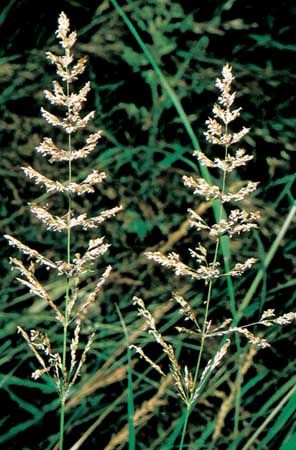
- Sexual Reproduction: Creeping bent flowers in late summer. It produces clusters of small, red spikelets that are wind-pollinated, facilitating the dispersal of seeds.12
Because of its efficient growth habit, the species is highly adaptable and has become naturalized in many regions outside its native range in Eurasia and northern Africa, where it is sometimes classified as an invasive species.12
What are some potential advantages and disadvantages of using creeping bent in lawns or golf courses?
Creeping bent (Agrostis stolonifera) is a highly specialized grass widely utilized for golf putting greens and lawns due to its unique growth characteristics.12
Advantages
- Turf Quality: When closely mowed, creeping bent develops a finely textured, firm, and spongy surface, making it an ideal choice for high-performance athletic areas like golf greens.2
- Growth Habit: Its ability to spread rapidly via stolons—growing up to 1.2 meters per season—allows it to form dense, uniform mats that can recover well from wear.12
Disadvantages
- Invasive Potential: Outside of its native range in Eurasia and northern Africa, the plant is frequently classified as an invasive species, meaning it can aggressively outcompete native vegetation and become difficult to manage in non-turf environments.12
- Maintenance Requirements: Because it is a specialized turf grass, it requires precise management to maintain its desired texture and health, which can be resource-intensive compared to hardier, less invasive lawn species.12
In what types of environments does creeping bent typically grow?
Creeping bent (Agrostis stolonifera) is a perennial grass native to Eurasia and northern Africa. In its natural habitat, it is characteristically found growing in wetlands.1
Beyond its native range, the species has become widely naturalized across many parts of the world. Because it is highly adaptable, it is often utilized as a turf grass for lawns and golf putting greens. However, in many regions where it has been introduced, it is considered an invasive species due to its aggressive growth habit, which allows it to spread rapidly via stolons and outcompete native vegetation.12
How is creeping bent used in landscaping and turf management?
Creeping bent (Agrostis stolonifera) is a highly valued perennial grass in the Poaceae family, primarily utilized for its ability to create high-quality, dense surfaces. In landscaping and professional turf management, it is most recognized as a premier choice for golf putting greens and bowling greens worldwide.12
When managed under close-mowing practices, creeping bent develops a firm, spongy, and finely textured turf that is ideal for precision sports. Its growth habit is characterized by rapid vegetative spread via stolons, which can extend up to 1.2 meters per season, allowing the grass to form uniform mats that recover effectively from wear. Beyond its use in specialized athletic facilities, it is also commonly planted as a lawn grass and has historically been utilized as forage for livestock.21
While its growth characteristics make it excellent for turf, its aggressive nature means it can become an invasive species when it escapes managed areas.12
Sources
- creeping bent — Encyclopædia Britannica
- Bentgrass — Encyclopædia Britannica
Published on · 3 min read