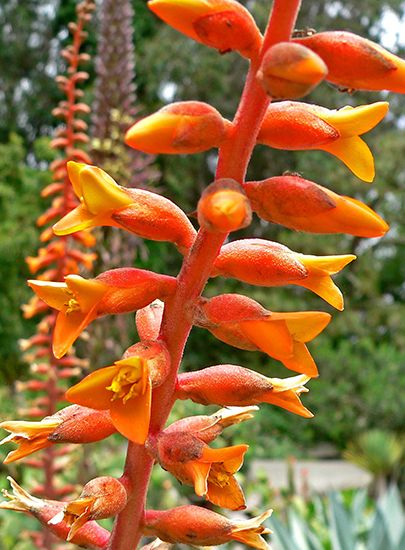
Casuarinaceae
The Casuarinaceae family, commonly known as the beefwood family, is naturally distributed across the Southern Hemisphere. These plants are primarily found in…
Where are Casuarinaceae plants primarily found in nature?
The Casuarinaceae family, commonly known as the beefwood family, is naturally distributed across the Southern Hemisphere. These plants are primarily found in Australia, Southeast Asia, Malaysia, eastern Africa, the Mascarene Islands, and Polynesia.12
They are particularly well-adapted to coastal strands and environments with poor soil, often featuring structural modifications that allow them to thrive in dry conditions. While they are native to these regions, some species have been introduced to other warm-climate countries for ornamental purposes, where they have occasionally escaped cultivation and established themselves in the wild.2
How do Casuarinaceae plants contribute to nitrogen fixation in soils?
Casuarinaceae plants contribute to nitrogen fixation through a symbiotic relationship with the actinomycete bacterium Frankia.4
These plants are classified as actinorhizal plants, meaning they form a mutualistic association with Frankia bacteria. The process occurs as follows:4
- Infection: The bacteria invade the root hairs of the host plant.4
- Nodule Formation: This invasion stimulates the plant to develop root nodules, which are specialized enlargements containing both plant cells and the bacteria.4
- Nitrogen Conversion: Within these nodules, the bacteria convert atmospheric nitrogen into ammonia, which the plant then utilizes for its growth and development.4
This process is essential for the plant’s ability to thrive in nutrient-poor soils, as it provides a direct source of usable nitrogen that would otherwise be unavailable.4
What are the key characteristics that define the Casuarinaceae plant family?
The Casuarinaceae family, or beefwood family, consists of two genera of trees and shrubs (Casuarina and Gymnostoma) that often resemble pine trees from a distance.1
Key characteristics include:
- Branch Structure: They feature slender, green, drooping branches that are deeply grooved with whorls of tiny, scalelike leaves.1
- Environmental Adaptations: Long hairs within the branch grooves protect the stomates, helping the plants survive in dry coastal strands and nutrient-poor soils.1
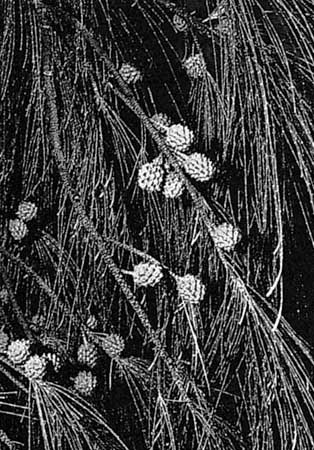
- Reproductive System: The flowers are reduced and lack petals. They are wind-pollinated and can be monoecious or dioecious. Male flowers grow in slender spikes, while female flowers form dense, globular clusters that mature into woody, conelike structures.1
- Wood Properties: Many species are known for their hard, dense, and durable wood, which is often resistant to termite damage.1
While once considered the most primitive dicotyledonous plants, modern science recognizes these features as evolutionary reductions rather than primitive traits.1
How have Casuarinaceae plants adapted to their environments?
Sources
- Casuarinaceae — Encyclopædia Britannica
- Fagales - Casuarinaceae — Encyclopædia Britannica
- Casuarinales — Merriam-Webster
- Nitrogen-fixing bacteria — Encyclopædia Britannica
Published on · 2 min read