Caudata
The order Caudata, which includes salamanders and newts, is primarily defined by the presence of a long tail and two pairs of limbs of roughly equal size.…
What are the main characteristics that define the Caudata order of amphibians?
The order Caudata, which includes salamanders and newts, is primarily defined by the presence of a long tail and two pairs of limbs of roughly equal size. While most species possess well-developed limbs, some, such as the eel-like Sirenidae, lack hind limbs.12
Key characteristics include:
- Life Cycle: Most species pass through an aquatic larval stage before undergoing metamorphosis into adult forms metamorphosis](https://www.britannica.com/science/metamorphosis) into adult forms. However, some species exhibit paedomorphosis, retaining larval features like gills throughout their lives.3
- Reproduction: While primitive species utilize external fertilization, most caudatans employ internal fertilization, often involving the male depositing a spermatophore that the female takes into her cloaca. A few species are live-bearing.34
- Diversity: There are approximately 740 living species, ranging from tiny individuals measuring less than 30 mm to giant aquatic salamanders exceeding 1.5 meters in length.12
- Defense: Many species possess toxic skin secretions or specialized glands to deter predators.4
How do salamanders and newts differ within the Caudata order?
Within the order Caudata, the distinction between “newts” and “true salamanders” is informal, as both belong to the same family, Salamandridae. Because there is little biological distinction between these groups, they are often classified together.3
Key points regarding their relationship include:
- Classification: The family Salamandridae comprises 15 genera of “true salamanders” and over 50 species of newts. The term “newt” is a generic descriptor applied to several partially terrestrial species within this family.3
- Physical Characteristics: Generally, newts are distinguished by their rougher skin, whereas many other salamanders in the family have rugose (wrinkled) skin. Both groups typically possess well-developed limbs and tails and are usually less than 20 cm in length.3
- Habitats and Life Cycles: While both groups share similar reproductive strategies—often involving internal fertilization via a spermatophore—their life histories vary. Some species remain aquatic throughout their lives, while others, such as certain North American newts, undergo a terrestrial juvenile stage (the eft stage) before returning to the water as sexually mature adults.35
- Defense: All members of the family are toxic, possessing poisonous skin or glands to deter predators. Newts, in particular, are often brightly colored to advertise this toxicity.3
What role do Caudata play in their ecosystems, and how do they interact with other species?
Members of the order Caudata—which includes salamanders and newts—are vital components of north temperate and certain tropical ecosystems, where they are often locally abundant.27
Ecological Roles and Interactions
- Trophic Position: As predators, caudatans play a significant role in regulating populations of small invertebrates. Their diet typically consists of insects, worms, and snails. In turn, they serve as a food source for various predators within their habitats.68
- Habitat Utilization: They occupy diverse niches, ranging from aquatic streams and springs to terrestrial leaf litter, rock piles, and even subterranean burrows created by mammals and invertebrates. Some species are specialized climbers, inhabiting trees or rock faces.9
- Environmental Indicators: Because they rely on moist environments and absorb water through their skin, they are highly sensitive to changes in their surroundings, making them important indicators of ecosystem health.68
Beyond their ecological contributions, these amphibians are essential subjects in scientific research, including embryology, genetics, and behavior, due to their hardiness and manageable size.2
How has the Caudata order evolved over time, and what are some notable extinct species?
The evolutionary history of the order Caudata—which includes salamanders and newts—is part of the broader development of Lissamphibia, the subclass containing all modern amphibians. While the fossil record for salamanders is relatively sparse, they are thought to have diverged from ancient amphibian lineages that transitioned from aquatic to terrestrial environments over millions of years.101112
Evolutionary Timeline
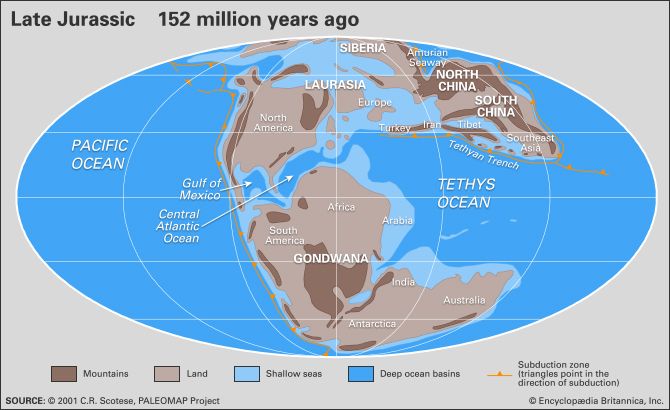
- Origins: The earliest definitive salamander fossils date to the Middle to Late Jurassic Period (approximately 174–145 million years ago), with the Karauridae family potentially representing the sister taxon to all other modern salamanders.1210
- Diversification: The most diverse group of living salamanders, the suborder Salamandroidea, also emerged near the end of the Jurassic. However, most modern families did not appear in the fossil record until the early Cenozoic Era, starting about 66 million years ago.12
Notable Extinct Species and Groups
Because the fossil record is incomplete, many extinct groups are known only through their remains:
- Karauridae: Considered one of the earliest known salamander-like groups from the Jurassic.10
- Batrachosauroididae: A group of salamanders that appeared in the Late Jurassic and persisted until the Early Pliocene.12
- Prosirenidae and Scapherpetonidae: These families are identified primarily through the fossil record, helping paleontologists trace the lineage of modern caudatans.10
- Albanerpetontids: Although they appeared during the Jurassic and were salamander-like in appearance, they are classified as a sister group to the order Caudata rather than true members of the order.12
Sources
- amphibian - Size range and diversity of structure — Encyclopædia Britannica
- Caudata — Encyclopædia Britannica
- newt — Encyclopædia Britannica
- Caudata - Life cycle and reproduction — Encyclopædia Britannica
- Caudata - Annotated classification — Encyclopædia Britannica
- salamander — Encyclopædia Britannica
- Caudata - Behaviour and ecology — Encyclopædia Britannica
- amphibian — Encyclopædia Britannica
- Caudata - Distribution and abundance — Encyclopædia Britannica
- amphibian - Evolution and classification — Encyclopædia Britannica
- Caudata - Paleontology — Encyclopædia Britannica
- giant salamander — Merriam-Webster
Published on · 4 min read