Napa Cabbage
Napa cabbage (Brassica rapa, variety pekinensis) is a form of Chinese cabbage belonging to the mustard family. It is characterized by a tight, cylindrical…
What is napa cabbage and where did it originate?
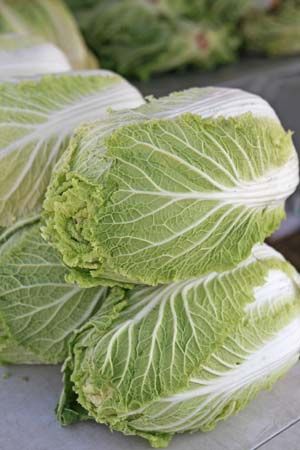
Napa cabbage (Brassica rapa, variety pekinensis) is a form of Chinese cabbage belonging to the mustard family. It is characterized by a tight, cylindrical head of crinkled, light green leaves with white midribs.12
While the plant is widely grown in eastern Asia and is a staple ingredient in the traditional Korean dish kimchi, its name likely derives from the Japanese dialect term nappa, meaning “greens”. As a cool-weather biennial typically cultivated as an annual, it is also grown in the United States and elsewhere as a salad vegetable.132
How has the cultivation of napa cabbage spread globally?
The cultivation of napa cabbage, a variety of Chinese cabbage, has expanded significantly from its origins in eastern Asia to become a global crop. While it remains a staple in Asian culinary traditions—most notably as the primary ingredient in the Korean dish kimchi—its popularity has spread to other regions, including the United States, where it is widely grown as a salad vegetable.12
This spread is largely due to the plant’s adaptability as a cool-weather biennial, though it is typically cultivated as an annual by farmers worldwide. Because the plant is sensitive to warm temperatures—which cause it to flower rapidly—its global cultivation is concentrated in regions that can provide the necessary climate conditions for its growth.1
How is napa cabbage typically used in various cuisines?
Napa cabbage is a versatile vegetable used in a variety of culinary applications, ranging from fresh salads to complex fermented dishes. Its primary uses include:
- Kimchi Production: Napa cabbage is the quintessential ingredient for kimchi, the iconic Korean side dish. It is commonly prepared as baechu (napa cabbage) kimchi, where the leaves are salted, rinsed, and coated with a mixture of red pepper flakes, garlic, ginger, onion, and various aromatics like green onions or fish sauce. It is also a key component in nabak (red water) kimchi, a refreshing, minimally spicy version fermented in a fruit-tinged brine.14
- Specialized Preparations: In traditional dishes like bossam (wrapped) kimchi, napa cabbage leaves are used to wrap a variety of ingredients, including seafood, nuts, and vegetables, before fermentation. Additionally, Korean temple cuisine utilizes napa cabbage in vegan-friendly kimchi, omitting pungent aromatics like garlic and onions in accordance with Buddhist principles.4
- Salads and General Cooking: Outside of Asian culinary traditions, napa cabbage is frequently cultivated in the United States and other regions to be used as a fresh salad vegetable, prized for its crisp texture and mild flavor.12
What are some popular napa cabbage varieties grown around the world?
While there are many regional cultivars of napa cabbage (Brassica rapa, variety pekinensis) grown globally, they are generally categorized by their growth habits and head shapes.
One of the most well-known forms is the ‘Michihli’ variety. Unlike standard napa cabbage heads, which typically reach about 30 cm (12 inches) in height, the ‘Michihli’ type is noted for its elongated, slender cylindrical shape, which can grow up to 45 cm (18 inches) tall.15
In general, napa cabbage is characterized by its tight, cylindrical head of crinkled, light green leaves and distinct white midribs. Because it is a cool-weather biennial that tends to flower rapidly in warm temperatures, farmers select specific varieties based on their local climate to ensure successful growth as an annual crop.15
Sources
- napa cabbage — Encyclopædia Britannica
- napa cabbage — Merriam-Webster
- Chinese cabbage — Encyclopædia Britannica
- Beyond the Cabbage: 10 Types of Kimchi — Encyclopædia Britannica
- Cabbage — Encyclopædia Britannica
Published on · 2 min read