Ceratosaurus
Ceratosaurus is a genus of large carnivorous dinosaurs that lived during the Late Jurassic Period, approximately 161 million to 146 million years ago, in…
What is Ceratosaurus?
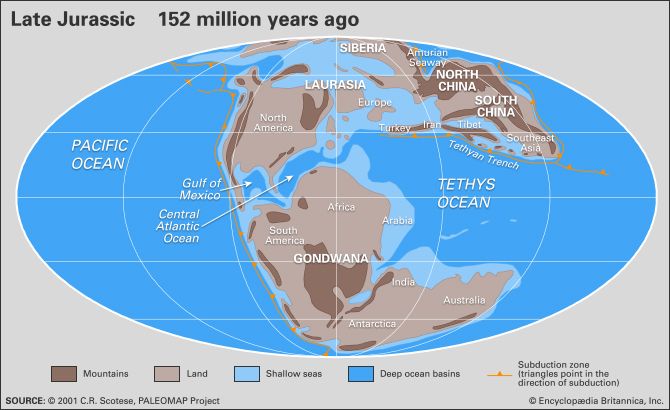
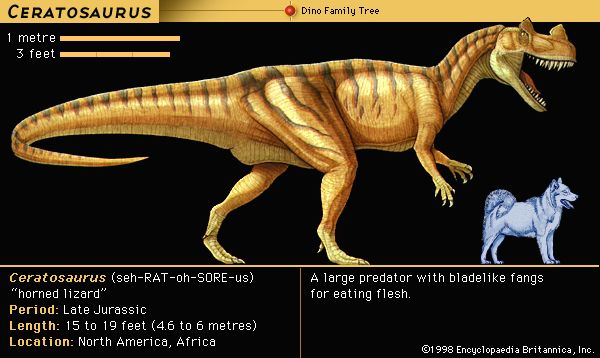
Ceratosaurus is a genus of large carnivorous dinosaurs that lived during the Late Jurassic Period, approximately 161 million to 146 million years ago, in North America and Africa.1
While it lived alongside the well-known Allosaurus, Ceratosaurus was not closely related to it. Instead, it belonged to a more primitive theropod lineage that includes abelisaurids and coelophysids. Physically, Ceratosaurus reached weights of up to two tons and was slightly smaller than Allosaurus. It is easily distinguished by a prominent “horn”—which is actually an expanded nasal crest—on its snout, as well as a row of bony plates running down its back. Additionally, it retained remnants of a fourth clawed finger, a feature not typically found in most other theropods.1
It is important not to confuse Ceratosaurus with the Ceratopsia group, which refers to a completely different, herbivorous lineage of “horned” dinosaurs like Triceratops.23
How did the nasal crest of Ceratosaurus differ from the horns of later ceratopsians?
The nasal structures of Ceratosaurus and later ceratopsians differed significantly in their biological origin, function, and anatomical context.
- Ceratosaurus: The “horn” found on this theropod was an expanded nasal crest located on its snout. As a carnivorous dinosaur, Ceratosaurus used this feature as part of its distinct cranial anatomy, which also included a row of bony plates along its back. It was not a true horn in the sense of being a separate, keratin-covered defensive weapon, but rather a bony projection of the skull.2
- Ceratopsians: In contrast, the horns of advanced ceratopsids (such as Triceratops and Centrosaurus) were prominent structures that evolved as a defining characteristic of the group. These horns were formed by the development of the nasal bones and, in many species, additional horns above the eyes. Evidence of vascular channels on these horns indicates they were covered by keratinous sheaths or soft tissue during life. Unlike the singular crest of Ceratosaurus, ceratopsian horns were often paired with a massive, bony neck frill, which served as a base for powerful neck muscles and potentially functioned in defense, species recognition, or intraspecific combat.451
What other theropod dinosaurs lived during the Late Jurassic period?
Several theropod dinosaurs lived during the Late Jurassic period, representing a diverse range of evolutionary lineages. These include:
- Allosaurus: A prominent member of the Carnosauria group, Allosaurus was a large, deadly predator that lived alongside Ceratosaurus.16
- Torvosaurus: A large carnivorous basal form classified within the Tetanurae, known for being a rapacious predator of its time.6
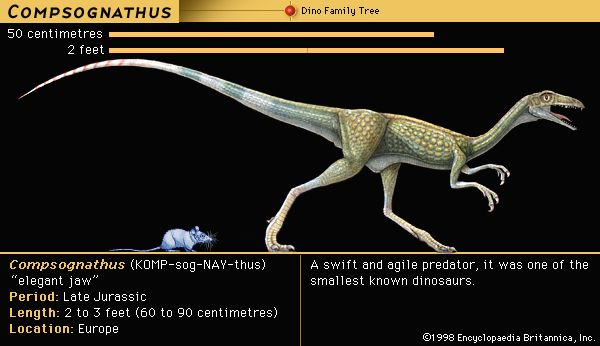
- Compsognathus: A small, basal coelurosaur that was roughly the size of a chicken.6
- Archaeopteryx: Widely considered one of the earliest known feathered dinosaurs, this creature represents the transition toward birds.76
While groups like the abelisaurids are also associated with the broader ceratosaurian lineage, their classification and presence during the Late Jurassic remain subjects of ongoing paleontological study.8
Why did Ceratosaurus retain a fourth clawed finger compared to other theropods?
Ceratosaurus retained remnants of a fourth clawed finger because it belonged to a more primitive theropod stock, such as the coelophysids and abelisaurids, which maintained this ancestral trait.1
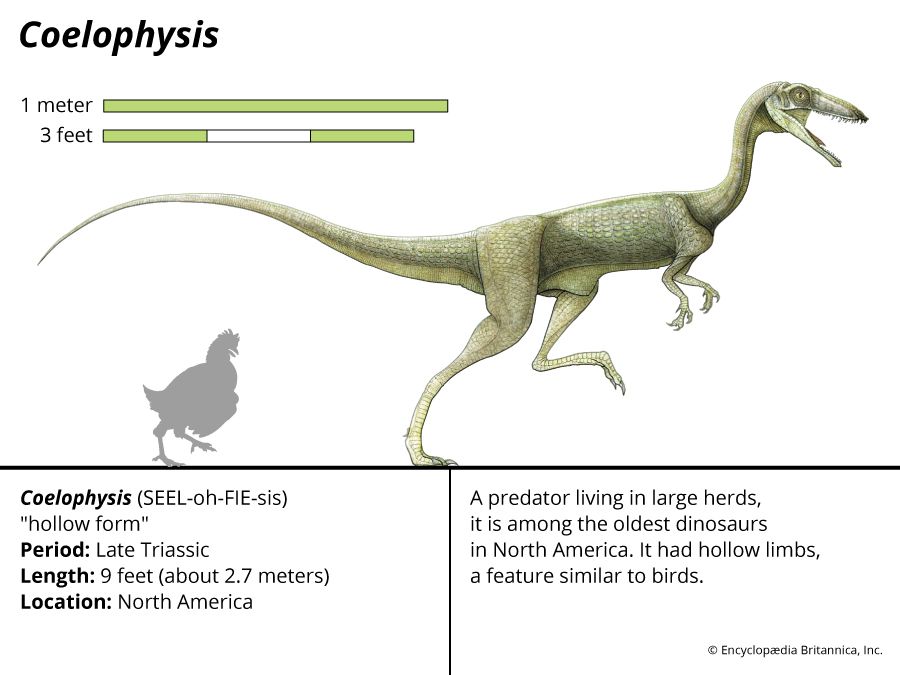
In contrast, most other theropods—specifically the tetanurans—underwent an evolutionary transition that resulted in the complete loss of the fourth and fifth digits of the hand, typically leaving them with only three fingers. While early theropods like Coelophysis possessed four fingers with the fifth reduced to a nubbin, the trend across the broader theropod lineage was toward the reduction or loss of these outer digits. Ceratosaurus is notable for preserving this primitive anatomical feature, distinguishing it from the more derived theropods that characterize the majority of the group.1910
Sources
- Ceratosaurus — Encyclopædia Britannica
- dinosaur - Ceratopsia — Encyclopædia Britannica
- dinosaur - The plant eaters — Encyclopædia Britannica
- Triceratops — Encyclopædia Britannica
- ceratopsian — Encyclopædia Britannica
- Jurassic Period - Vertebrates — Encyclopædia Britannica
- dinosaur - Tetanurae — Encyclopædia Britannica
- dinosaur - Ceratosauria — Encyclopædia Britannica
- perissodactyl - Limbs — Encyclopædia Britannica
- dinosaur - Theropoda — Encyclopædia Britannica
- tyrannosaur - Other skeletal features — Encyclopædia Britannica
Published on · 3 min read