Cetacean
Unlike terrestrial mammals, cetaceans do not breathe reflexively. Because breathing is a conscious activity for them, they would drown if they lost…
How do cetaceans breathe and sleep in the water?
Unlike terrestrial mammals, cetaceans do not breathe reflexively. Because breathing is a conscious activity for them, they would drown if they lost consciousness completely. To survive, they utilize a process called unihemispheric slow-wave sleep, where one hemisphere of the brain remains active while the other rests. This allows them to maintain enough awareness to regulate breathing and monitor their surroundings for predators or obstacles.123
When breathing, cetaceans surface to exhale through a blowhole—a nostril located on the top of the head—in an explosive ventilation known as a blow. They are highly efficient, utilizing up to 80 percent of their lung volume in a single breath. Large whales often practice surface-sleeping, where they float horizontally just below the water’s surface and periodically move their flukes to rise for air. Depending on the species and activity, intervals between breaths can range from seconds to over an hour during deep dives.34125
How do cetaceans communicate with each other?
Cetaceans communicate through a sophisticated array of vocalizations and physical displays, which vary significantly between the two main suborders: toothed whales and baleen whales.77
Mechanisms of Sound Production
- Toothed Whales: These animals communicate primarily by passing air through nasal passages located beneath the blowhole, vibrating tissues called phonic lips to produce high-pitched clicks and whistles. These sounds are focused through a fatty organ in the forehead known as the melon, which acts as an acoustic lens.78
- Baleen Whales: Unlike toothed whales, baleen whales use their larynx to produce sound. They recycle air through a U-shaped ridge of tissue, allowing them to vocalize underwater without inhaling or exhaling.7
Functions of Communication
Communication serves several vital purposes, including navigation, social bonding, and reproduction:
- Echolocation: Toothed whales use high-frequency clicks to create a biological sonar, allowing them to map their environment and detect prey.97
- Social Interaction: Vocalizations help individuals share information about identity, location, and emotional states. Some species, such as sperm whales, use rhythmic click patterns called codas that may function as a phonetic alphabet.97
- Courtship: Male baleen whales, notably humpbacks, perform elaborate, evolving songs to attract mates and assert dominance. These songs can travel across entire ocean basins, though human-made noise from shipping vessels can interfere with these long-range signals.91087
What are the defining characteristics of cetaceans?
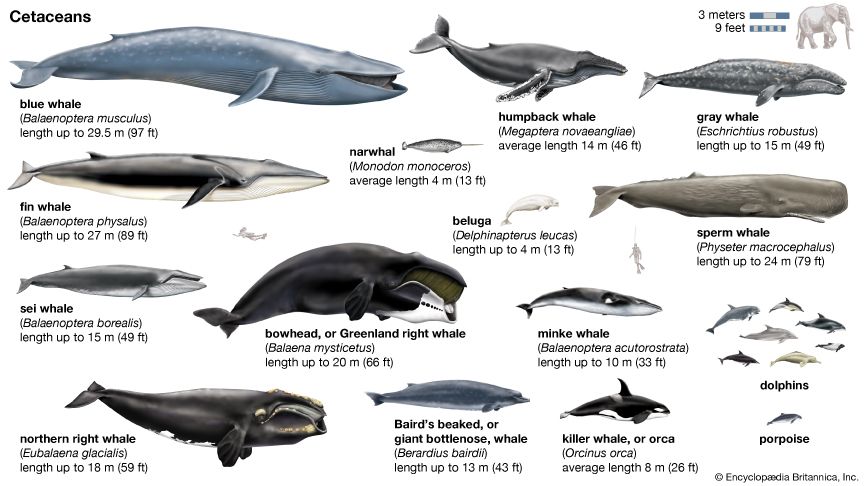
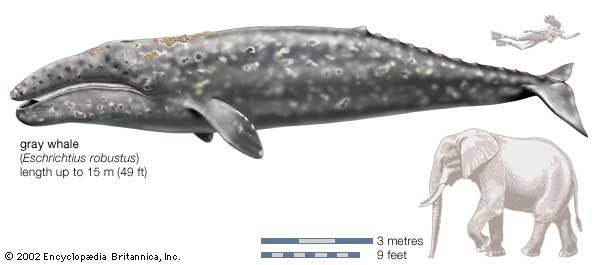
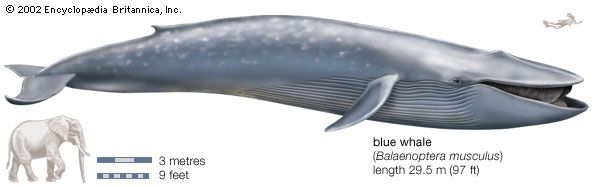
Cetaceans—an order comprising whales, dolphins, and porpoises—are entirely aquatic mammals that exhibit several defining characteristics:1213
- Mammalian Traits: Despite their fish-like appearance, they breathe air with lungs, give birth to live young, produce milk, and possess hair at some stage of life.121314
- Locomotor Adaptations: They have evolved streamlined bodies with reduced forelimbs modified into flippers and have lost their hind limbs entirely. Propulsion is generated by powerful back muscles driving horizontal tail flukes, while a dorsal fin often acts as a keel.1514
- Dietary Classification: All cetaceans are carnivorous. They are divided into two suborders based on feeding structures: toothed whales (Odontoceti), which use conical teeth to grasp prey, and baleen whales (Mysticeti), which use baleen plates to filter small organisms from the water.121613
What are some of the most famous cetaceans in popular culture and scientific research?
Several cetaceans have achieved prominence in both popular culture and scientific research due to their intelligence, unique behaviors, and complex social structures.
Famous Cetaceans in Popular Culture and Research
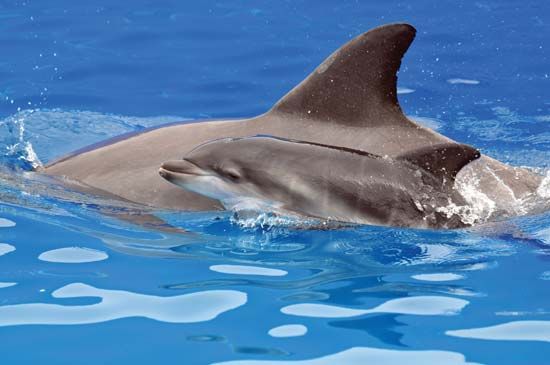
- Bottlenose Dolphin (Tursiops truncatus): Perhaps the most widely recognized cetacean, the bottlenose dolphin is a staple in marine parks and oceanariums. They are the subject of extensive scientific study regarding their intelligence, self-awareness, and long-term social memory. They have also been utilized by military programs for tasks such as mine detection.141819
- Killer Whale (Orcinus orca): Despite their name, killer whales are actually the largest members of the dolphin family. They are famous for their striking black-and-white coloration and complex, matriarchal social pods. Their intelligence and ability to recognize themselves in mirrors have made them a focal point of cognitive research.20
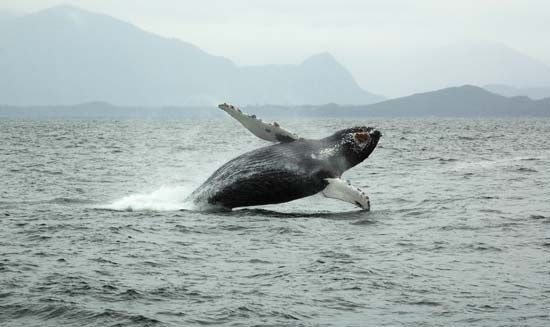
- Humpback Whale (Megaptera novaeangliae): Renowned for their acrobatic breaches and elaborate, long-distance courtship songs, humpback whales are iconic in both conservation efforts and marine biology. Their unique “bubblenetting” feeding technique is a subject of significant scientific interest.21
Cultural and Ethical Context
Beyond their scientific appeal, certain species have become symbols of conservation movements. The documentary The Cove brought global attention to the exploitation of dolphins in Japan, sparking ethical debates regarding captivity and hunting practices. Similarly, the plight of endangered species like the Ganges river dolphin highlights the ongoing challenges cetaceans face due to habitat loss and human activity.191418
Sources
- Do whales sleep? — Encyclopædia Britannica
- cetacean - Sleep — Encyclopædia Britannica
- cetacean - Respiration — Encyclopædia Britannica
- mammal - Respiratory system — Encyclopædia Britannica
- cetacean - Breathing and diving — Encyclopædia Britannica
- blowhole — Merriam-Webster
- cetacean - Sound production and communication — Encyclopædia Britannica
- Why do whales sing? — Encyclopædia Britannica
- whale vocalization — Encyclopædia Britannica
- cetacean - Courtship and mating — Encyclopædia Britannica
- cetacean - Social behaviour — Encyclopædia Britannica
- cetacean - Locomotor adaptations — Encyclopædia Britannica
- Do whales have teeth? — Encyclopædia Britannica
- cetacean — Encyclopædia Britannica
- cetacean - Paleontology — Encyclopædia Britannica
- list of dolphins, whales, and porpoises — Encyclopædia Britannica
- What Is a Marine Mammal? — Encyclopædia Britannica
- dolphin — Encyclopædia Britannica
- A Dose of Dolphin-Induced Dopamine: 8 Species of Adorable Cetacean — Encyclopædia Britannica
- humpback whale — Encyclopædia Britannica
- killer whale — Encyclopædia Britannica
- March Is Dolphin Awareness Month — Encyclopædia Britannica
- humpback whale — Merriam-Webster
Published on · 4 min read