Chagres River
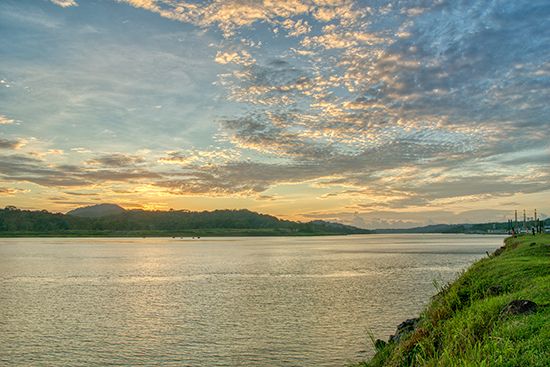
The Chagres River has been central to Panama’s history, serving as a vital geographic feature from the early colonial era to the modern industrial age.
What is the historical significance of the Chagres River in Panama’s development?
The Chagres River has been central to Panama’s history, serving as a vital geographic feature from the early colonial era to the modern industrial age.
Colonial Significance
In the early 16th century, the river’s mouth became a focal point for Spanish exploration and settlement. In 1510, the explorer Diego de Nicuesa established the settlement of Nombre de Dios at the river’s mouth, marking it as a key entry point for Spanish colonial activity on the isthmus.1
Role in the Panama Canal
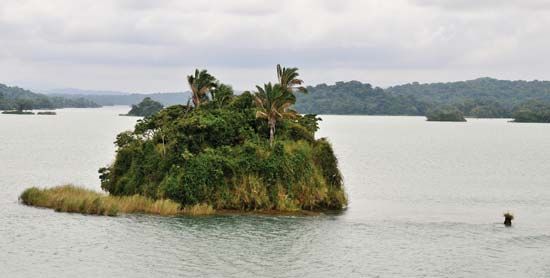
The river’s most profound impact on Panama’s development is its role in the Panama Canal system. During the canal’s construction, the river posed a significant engineering challenge due to its tendency to flood during heavy tropical rains. To manage this, engineers constructed the Gatun Dam, which created Gatun Lake. This massive artificial reservoir brought the river under control, provided a stable waterway for ships, and formed more than 20 miles of the canal’s route.23
Today, the river remains essential to the nation’s infrastructure, supplying the water necessary for canal lock operations and serving as the primary source of water for Panama City.4
How has climate change affected the Chagres River and its role in Panama’s water supply?
Climate change is increasingly impacting the Chagres River and the critical water resources it provides to both the Panama Canal and Panama City.
While the river has historically been managed through infrastructure like the Gatun Dam, anthropogenic climate change is altering regional rainfall patterns, leading to more frequent and severe water shortages. During the 2023 and 2024 drought, which was exacerbated by an El Niño event, water levels dropped so significantly that the canal was forced to restrict ship traffic and impose draft limits, threatening the canal’s economic reliability.1
These shifts highlight a growing risk of water scarcity for the more than half of Panama’s population that relies on the same water resources as the canal. Furthermore, environmental degradation, specifically deforestation within the river basin, compounds these climate-related challenges. Deforested slopes fail to absorb heavy rains, leading to increased runoff and sedimentation that can fill the lake bottom and complicate lock operations.16
How does the Chagres River’s watershed help in maintaining Panama’s biodiversity?
The Chagres River watershed is vital to Panama’s ecological health, primarily through the protection of its surrounding tropical rainforests. A significant portion of this area is preserved within the Chagres National Park, established in 1984 to safeguard the environment that sustains the river system.
These protected forests serve as essential habitats for a diverse array of wildlife. Panama’s unique position as a land bridge between North and South America has resulted in a rich intermixture of species, including mammals such as sloths, anteaters, jaguars, and tapirs. By maintaining the integrity of the watershed, the national park helps preserve the lush tropical landscapes necessary for these species to thrive.
However, the watershed faces ongoing environmental threats. Deforestation around the basin reduces the land’s ability to absorb heavy rainfall, leading to increased erosion and sedimentation that can degrade aquatic habitats and disrupt the balance of the river’s ecosystem.18
We could dive deeper into the specific conservation efforts currently being used to protect the Chagres National Park.
How does the Chagres River contribute to the operation of the Panama Canal?
The Chagres River is fundamental to the operation of the Panama Canal, serving as the primary source of water for the entire system. Its contribution is managed through strategic damming and reservoir creation:2
- Gatun Lake: By damming the river at Gatun, engineers created Gatun Lake, a massive artificial reservoir. This lake acts as the central water supply for the canal, holding the volume necessary for vessel transit and lock operations.19
- Lock Operations: Water from the lake is gravity-fed to fill the locks at both ends of the canal. It feeds the Gatun locks to the north and flows through the Gaillard Cut to fill the Pedro Miguel and Miraflores locks to the south, allowing ships to be raised and lowered between sea level and the lake’s elevation.9
- Madden Dam: The river also feeds Madden Lake (Alajuela Lake), which was created by the Madden Dam. This reservoir provides additional water storage for navigation, flood control, and the generation of hydroelectric power used by the canal.210
Sources
- Chagres River — Encyclopædia Britannica
- Gatun Lake — Encyclopædia Britannica
- How was the Panama Canal built? — Encyclopædia Britannica
- Panama Canal - American intervention — Encyclopædia Britannica
- Panama - Exploration, conquest, and settlement — Encyclopædia Britannica
- Panama Canal - Water use and the effects of climate change — Encyclopædia Britannica
- Panama - Climate of Panama — Encyclopædia Britannica
- Panama - Plant and animal life — Encyclopædia Britannica
- Gaillard Cut — Encyclopædia Britannica
- Timeline and Map of the Panama Canal — Encyclopædia Britannica
Published on · 3 min read