Gatun Lake
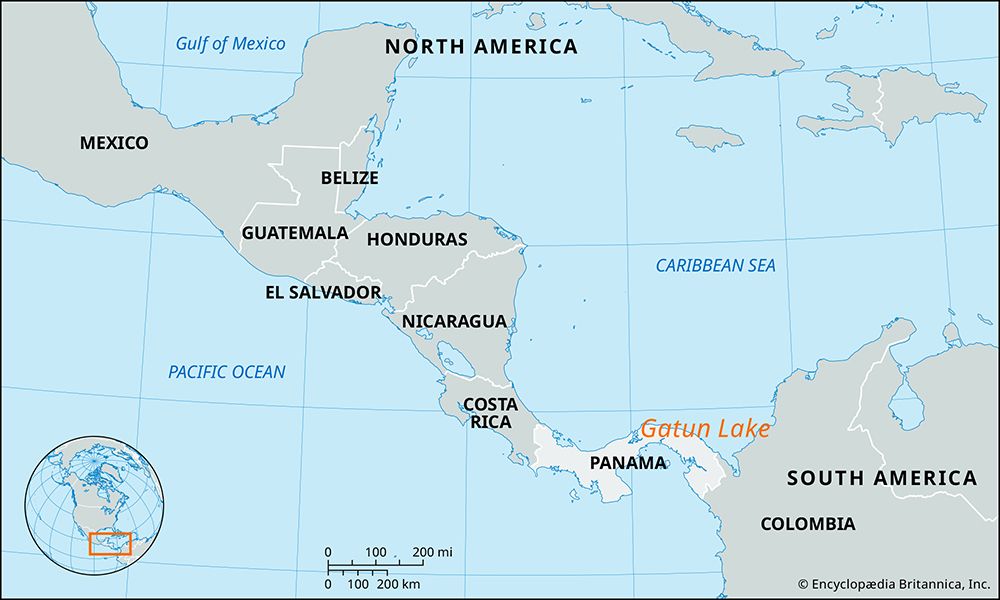
Gatun Lake is a large artificial lake located in central Panama that serves as a vital component of the Panama Canal system. Covering an area of 166 square…
What is Gatun Lake?
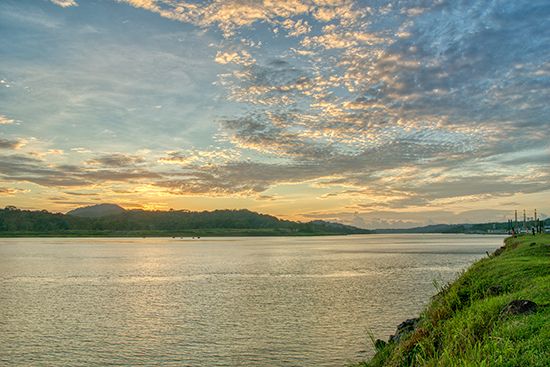
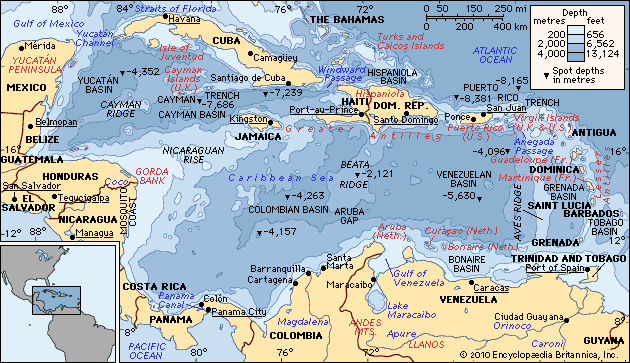
Gatun Lake is a large artificial lake located in central Panama that serves as a vital component of the Panama Canal system. Covering an area of 166 square miles (430 square km), it was created by damming the Chagres River at the north end of the lake.12
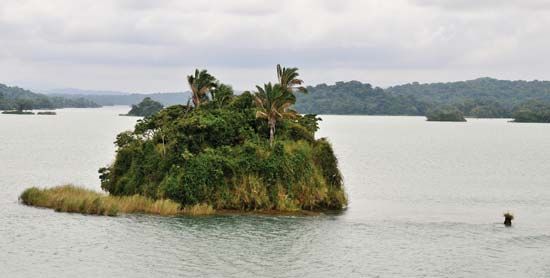
The lake’s primary function is to maintain water levels in the Gaillard Cut, ensuring sufficient depth for vessel passage and providing water for the canal’s locks during dry periods. The Gatun Dam, completed in 1912, regulates the lake’s water levels between 82 and 87 feet (25 and 26.5 meters) above sea level1. Additionally, the lake features Guacha Island, which serves as a wildlife sanctuary.1
How do the Panama Canal locks work?
The Panama Canal uses a system of locks to lift ships over the mountainous terrain of Panama and to compensate for the differing tidal levels of the Atlantic and Pacific Oceans.3
How the Locks Operate
The locks function through the gravity-fed flow of water from inland lakes, such as Gatun Lake. This water fills or empties the lock chambers, raising or lowering vessels to the necessary levels.31
- Structure: The locks are built in pairs to allow simultaneous transit in both directions. Each chamber is 1,000 feet long, 110 feet wide, and 40 feet deep.1
- Control: Movement is managed from a control tower, which regulates the flooding of chambers and the operation of massive hinged gates.1
- Safety: Larger vessels are guided by electric towing locomotives to remain centered. Fender chains and secondary gates serve as critical safety measures to prevent collisions and protect the lock infrastructure.1
Recent expansions have introduced water-saving basins that allow for a 60 percent reuse of water, significantly improving efficiency compared to the original lock systems.1
What is the history of the Chagres River?
The Chagres River is a vital waterway in Panama that rises in the Cordillera de San Blas and flows toward the Caribbean Sea5. Historically, the river posed a significant challenge to the construction of the Panama Canal due to its rapid, unpredictable flooding caused by heavy tropical rainfall.5
To manage these threats, engineers constructed the Gatun Dam in 1912, which created Gatun Lake. This massive reservoir successfully brought the river under control by accommodating its flow even during flood stages, while simultaneously providing over 20 miles of the canal’s route. Later, in 1935, the Madden Dam was built to further assist with navigation, flood control, and hydroelectric power generation.65
Today, the river remains essential as a primary source of water for the canal’s operations and Panama City’s water supply. However, it faces modern challenges, including deforestation in its basin, which leads to increased sedimentation and threatens water quality.6
What kind of wildlife lives in the Panama Canal region?
The Panama Canal region serves as a critical land bridge between North and South America, resulting in a unique and rich intermixture of wildlife. The area’s diverse habitats, including tropical rainforests and artificial water bodies like Gatun Lake, support a wide array of species.71
Mammals and Reptiles
The region hosts a blend of fauna derived from both continents. Common mammals include:
- South American origins: Sloths, anteaters, and armadillos.7
- North American origins: Jaguars, tapirs, and deer.7
- Other species: Monkeys, iguanas, and various snakes are widespread throughout the forests.5
Birds and Aquatic Life
Panama is exceptionally diverse in bird life, hosting both resident and migratory species. The canal region also features significant aquatic biodiversity. Gatun Lake, for instance, contains Guacha Island, which is specifically designated as a wildlife sanctuary. Additionally, the broader Panamanian landscape supports giant sea turtles that nest on the country’s beaches.781
Sources
- Gatun Lake — Encyclopædia Britannica
- Gatun Lake — Merriam-Webster
- Panama Canal: Top Questions — Encyclopædia Britannica
- Panama Canal - Locks — Encyclopædia Britannica
- Chagres River — Encyclopædia Britannica
- Panama Canal - American intervention — Encyclopædia Britannica
- Panama - Plant and animal life — Encyclopædia Britannica
- Central America - Plants and animals — Encyclopædia Britannica
- Panama — Encyclopædia Britannica
- Darién — Encyclopædia Britannica
Published on · 3 min read