Cho Oyu
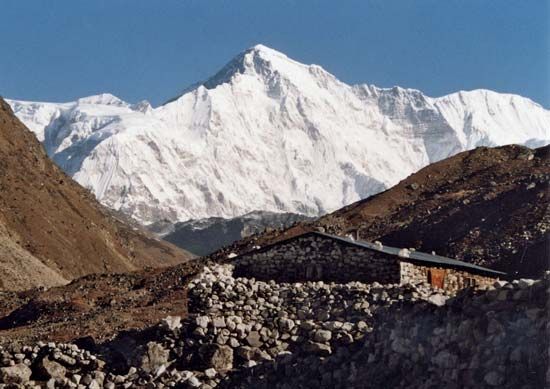
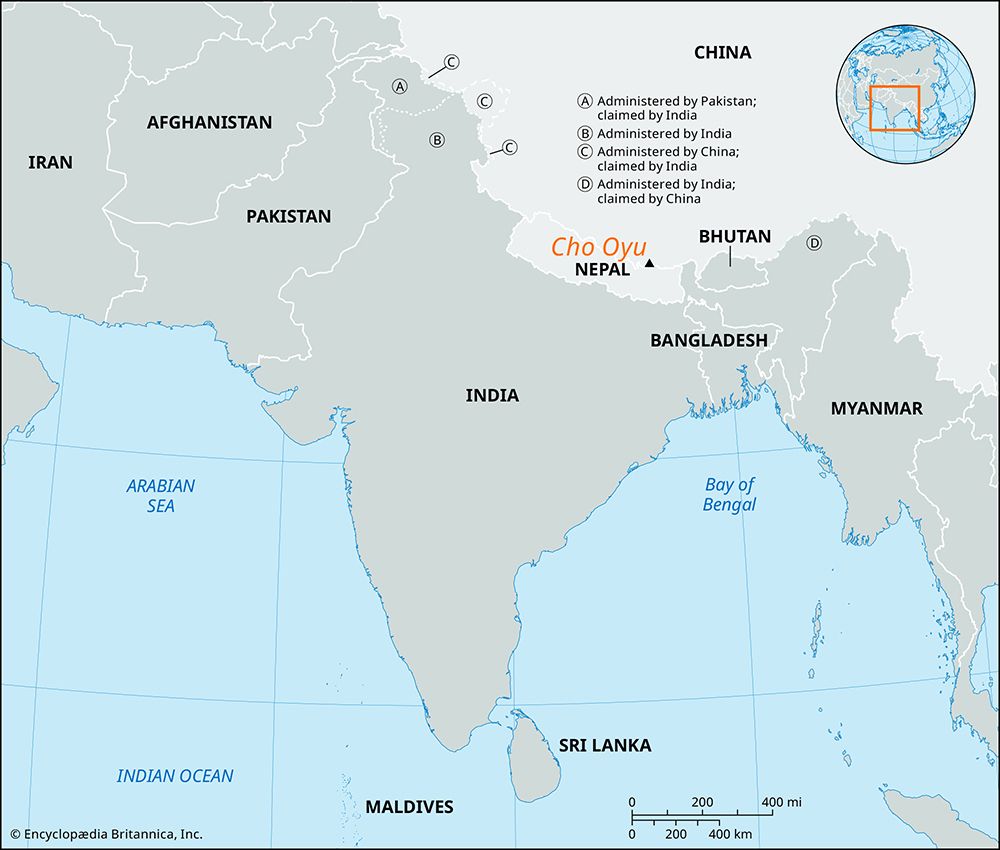
Cho Oyu is the world's sixth-highest mountain, reaching an elevation of 26,906 feet (8,201 meters). Located in the Himalayas along the border between Nepal…
What is Cho Oyu?
Cho Oyu is the world’s sixth-highest mountain, reaching an elevation of 26,906 feet (8,201 meters). Located in the Himalayas along the border between Nepal and Tibet (China), it sits approximately 20 miles northwest of Mount Everest.12
The mountain is situated near the Nangpa La, a high glacier pass that has historically served as a trade route between Tibet and the Khumbu valley. Due to its challenging glacial terrain and harsh climate, the summit remained unclimbed until October 19, 1954, when an Austrian expedition—including Herbert Tichy, Sepp Jöchler, and the Sherpa Pasang Dawa Lama—successfully reached the top.1
What are the other eight-thousander mountains?
The term “eight-thousander” refers to the 14 mountains on Earth that rise more than 8,000 meters (26,247 feet) above sea level. While your query implies there are specific “other” mountains to list, the provided search results do not contain a comprehensive list of all 14 peaks.
I can confirm that Cho Oyu and Mount Everest are both classified as eight-thousanders due to their elevations exceeding 8,000 meters. However, the Britannica knowledge base provided does not currently list the remaining 12 mountains that complete this group.
How do Sherpas contribute to Himalayan expeditions?
The Sherpa people have become essential to mountaineering expeditions in the Himalayas due to their exceptional high-altitude adaptation and physical endurance. While they traditionally viewed the high peaks as sacred homes of the gods and avoided climbing them, they began participating in expeditions during the early 20th century, initially providing vital surveying and portering services.45
Their contributions include:
- Logistics and Portering: Sherpas are capable of carrying large loads of cargo over long distances, a skill that proved indispensable for early exploration and continues to support modern climbing efforts.4
- Technical Expertise: Many have developed superior climbing and trekking skills, becoming central to the successful ascent of various Himalayan peaks.5
- Expedition Support: Their livelihood has become increasingly dependent on these expeditions, and they often serve as guides for foreign clients.45
- Cultural Stewardship: Sherpas often advocate for the protection of the mountains, attempting to prevent activities they consider profane or polluting, such as the burning of garbage.5
What is the significance of the Nangpa La pass?
The Nangpa La is a high-altitude glacier saddle, situated at 19,050 feet (5,806 meters) just south of the mountain Cho Oyu.
Its primary significance lies in its historical role as a vital trade route connecting Tibet with the Khumbu valley in Nepal. By providing a passage through the formidable terrain of the Himalayas, the pass has long served as a critical link for movement and commerce between these two regions.
Sources
- Cho Oyu — Encyclopædia Britannica
- Cho Oyu — Merriam-Webster
- The World’s Highest Mountains by Continent — Encyclopædia Britannica
- Mount Everest - Habitation — Encyclopædia Britannica
- Sherpa — Encyclopædia Britannica
Published on · 2 min read