Cherimoya
The cherimoya (Annona cherimola) is a tree belonging to the custard apple family (Annonaceae). Native to frost-free, high-elevation regions of tropical…
What is Cherimoya?
The cherimoya (Annona cherimola) is a tree belonging to the custard apple family (Annonaceae). Native to frost-free, high-elevation regions of tropical America, it is widely cultivated in the Old World tropics for its edible fruit.12
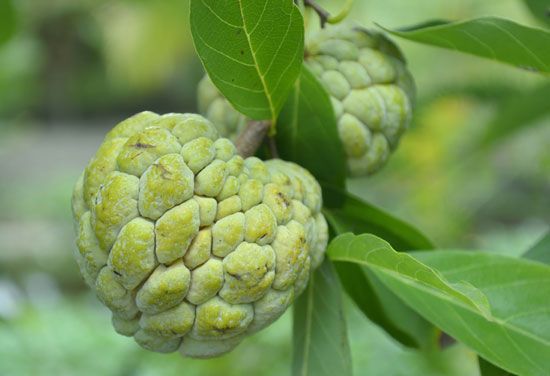
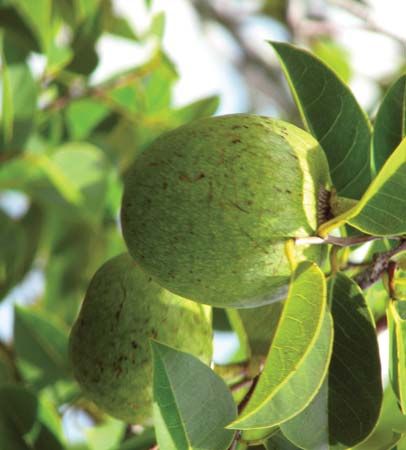
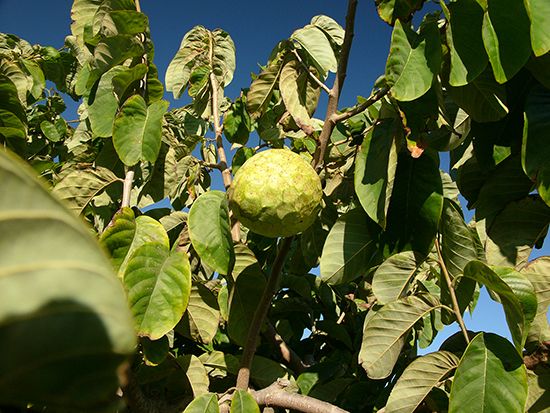
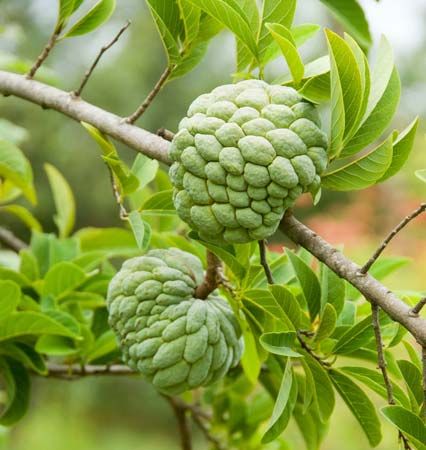
The fruit is large, globose, and pale green, featuring either a smooth surface or round protrusions. Its white, pulpy flesh offers a sweet, acidic flavor and contains several black, bean-sized seeds. It is typically consumed fresh or as a juice. Notably, the skin and seeds contain a neurotoxin called annonacin and should not be ingested; however, the crushed seeds are sometimes used as insecticides or as a topical treatment for parasitic skin conditions.13
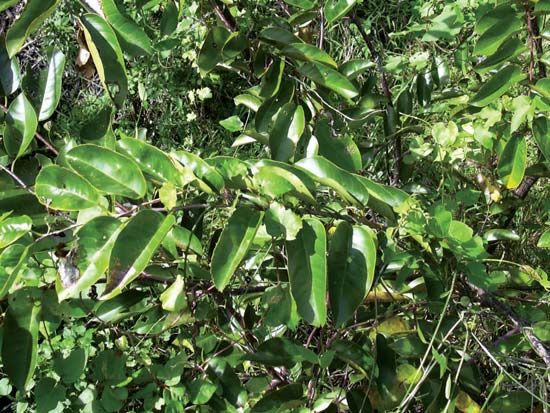
The tree itself grows up to 9 meters tall and produces fragrant, white flowers. It is also closely related to the atemoya, a hybrid created by crossing the cherimoya with the sweetsop.1
What is an atemoya and how is it related to the cherimoya?
The atemoya (Annona ×atemoya) is a tropical fruit produced by hybridizing the cherimoya (Annona cherimola) with the sweetsop (Annona squamosa).14
The relationship between the two is defined by this parentage: the atemoya was specifically developed to combine the desirable traits of both species. While the atemoya retains the characteristic flavor of the cherimoya, it offers distinct agricultural advantages, including improved durability for shipping and a reduced tendency for the fruit to split compared to the sweetsop. The name itself reflects this lineage, derived from a combination of “ate” (a Tagalog term for sweetsop) and “cherimoya.”154
Both fruits belong to the Annonaceae family and the genus Annona, which consists of tropical trees and shrubs known for their edible, compound fruits.12
What are some other fruits in the Annonaceae family?
The Annonaceae family, also known as the custard apple or annona family, includes a wide variety of tropical trees and shrubs prized for their pulpy, often edible fruits. Beyond the cherimoya and atemoya, several other notable species belong to this family:6
- Soursop (Annona muricata): A tropical tree native to the Americas that produces large, spiny, green-skinned fruits. Its fibrous, white flesh is known for a flavor profile reminiscent of mango and pineapple.76
- Sweetsop (Annona squamosa): Also called the sugar apple, this plant produces a yellowish-green fruit with a segmented rind that separates when ripe. It is valued for its sweet, custard-like pulp.68
- Custard Apple (Annona reticulata): Often called the bullock’s-heart, this tree produces globose fruits with creamy, sweet, custard-like flesh.6
- Pawpaw (Asimina triloba): Native to the eastern United States, this is the largest tree-borne fruit native to North America. Its golden, custard-like flesh has a tropical flavor similar to bananas and mangoes.96
- Alligator Apple (Annona glabra): Also known as the pond apple, this tree produces edible but poor-flavored fruits. Its roots are frequently used as rootstock for grafting other, less hardy Annona species.6
Why do cherimoya trees require hand pollination in cultivation?
Cherimoya trees often require hand pollination in cultivation because their natural pollination process is inefficient in many regions where they are grown. The cherimoya flower is protogynous, meaning the female parts (stigmas) mature and become receptive before the male parts (anthers) release pollen. This temporal separation, combined with a lack of specialized native insect pollinators in non-native growing areas, frequently results in poor fruit set.
In their native tropical environments, these flowers are typically pollinated by specific beetles or flies. However, when cultivated outside of these ecosystems, these natural agents are often absent or insufficient. Consequently, growers manually collect pollen and apply it to the receptive stigmas to ensure successful fertilization, which is essential for achieving the desired fruit size, shape, and flavor. This labor-intensive practice is a common management strategy to overcome the limitations of natural pollination and ensure a reliable harvest.111
Sources
- Cherimoya — Encyclopædia Britannica
- Cherimoya: Top Questions — Encyclopædia Britannica
- custard apple — Encyclopædia Britannica
- Annona — Merriam-Webster
- atemoya — Merriam-Webster
- sweetsop — Merriam-Webster
- Soursop — Encyclopædia Britannica
- pawpaw — Encyclopædia Britannica
- Annonaceae — Encyclopædia Britannica
- sweetsop — Encyclopædia Britannica
- Major types of pollinators - Beetles and flies — Encyclopædia Britannica
- Pollination - Beetles and flies — Encyclopædia Britannica
- Fruit farming - Pollination — Encyclopædia Britannica
Published on · 3 min read