Jackfruit
The jackfruit (Artocarpus heterophyllus) is an evergreen tree in the Moraceae family, native to tropical Asia. It is recognized as the largest tree-borne…
What is jackfruit?
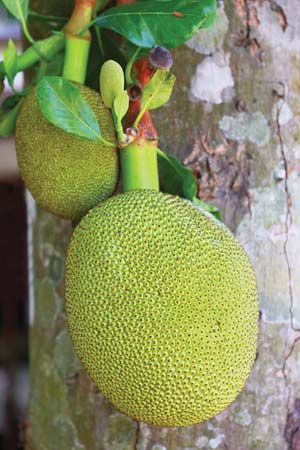
The jackfruit (Artocarpus heterophyllus) is an evergreen tree in the Moraceae family, native to tropical Asia. It is recognized as the largest tree-borne fruit in the world, capable of reaching up to 60 cm (2 feet) in length and weighing as much as 18 to 36 kg (40 to 80 pounds).123
The fruit is aggregate and ellipsoidal, featuring a bumpy rind that encloses a stringy core and multiple “bulbs” of edible, seed-containing flesh. Its culinary uses are versatile:1
- Unripe fruit: Often cooked and consumed as a vegetable.13
- Ripened fruit: Eaten fresh, with a flavor profile often described as a combination of apple, pineapple, mango, and banana.13
- Seeds: These are also cooked and eaten locally.1
Beyond its fruit, the tree provides durable wood and serves as a staple food crop in regions like Bangladesh and Southeast Asia. In recent years, processed jackfruit has also gained popularity globally as a meat substitute.1
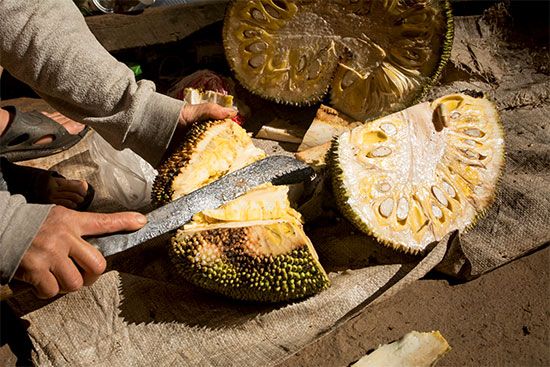
Why is jackfruit often used as a meat substitute in cooking?
Jackfruit is frequently utilized as a meat substitute because of its unique texture and versatility in culinary applications. When the fruit is unripe, it possesses a firm, stringy consistency that, when cooked, can mimic the texture of shredded or pulled meat, making it a popular plant-based alternative in various dishes.14
The use of jackfruit as a meat substitute aligns with broader movements toward vegetarianism, which often seek to provide plant-based options that simulate the form and flavor of animal products. By adopting such alternatives, individuals can participate in diets that may offer environmental and ethical benefits, such as reducing the resource-intensive demands of livestock farming and addressing concerns regarding animal welfare.4
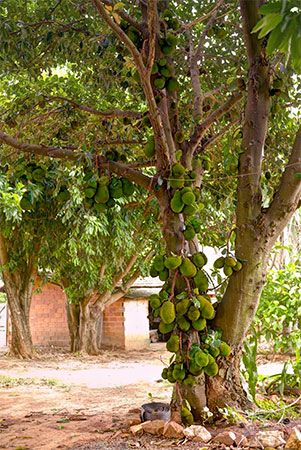
What are some other tropical fruits that grow on trees?
Many tropical fruits grow on trees, offering a diverse range of flavors and culinary uses. Here are several examples:
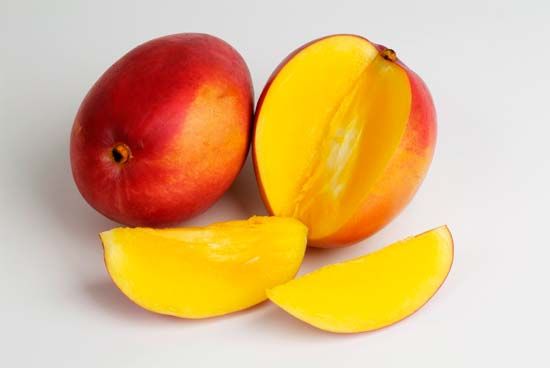
- Mango: Indigenous to southern Asia, this popular fruit is now cultivated in many tropical environments, including Brazil and Florida.5
- Durian: Known for its pungent odor and custard-like pulp, this fruit grows on trees in countries like Indonesia, the Philippines, and Malaysia.6
- Custard Apple: Various species in the Annona genus, such as the sweetsop and cherimoya, produce sweet, aromatic pulp often compared to ice cream.7
- Soursop: A heart-shaped, spiny fruit native to the American tropics, often used to make refreshing drinks and custards.7
- Breadfruit: A staple crop in tropical Asia and the South Pacific, related to the jackfruit.6
- Papaya: A well-known tropical fruit that grows on a tree-like plant.78
- Avocado: A nutrient-dense fruit that grows on trees in tropical and subtropical climates.8
- Mangosteen: Highly esteemed for its delicious, delicate flesh.8
How does the taste of jackfruit change as it ripens?
The taste and culinary use of jackfruit change significantly as it matures. When the fruit is unripe and greenish, it has a neutral flavor and a firm, stringy texture, which is why it is commonly cooked as a vegetable or used as a meat substitute.
As the fruit ripens and turns brown, the pulp surrounding the seeds develops a sweet, acidic flavor. In this state, the fruit is typically eaten fresh rather than used in savory cooking.1
Sources
- jackfruit — Encyclopædia Britannica
- 8 Fruits to Try Before You Die — Encyclopædia Britannica
- jackfruit — Merriam-Webster
- vegetarianism — Encyclopædia Britannica
- Magnoliales - Fruit — Encyclopædia Britannica
- Mango: Top Questions — Encyclopædia Britannica
- list of culinary fruits — Encyclopædia Britannica
- list of plants in the family Bromeliaceae — Encyclopædia Britannica
- durian — Encyclopædia Britannica
Published on · 3 min read