Chestnut
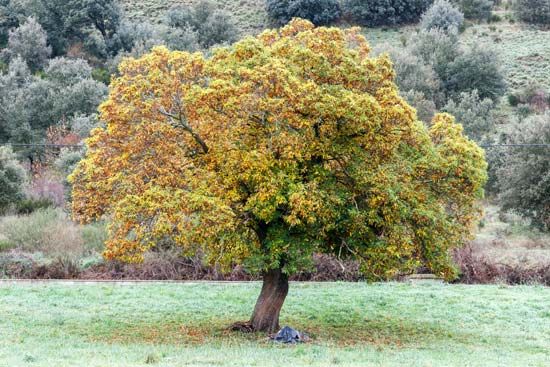
The genus Castanea comprises seven species of deciduous trees native to temperate regions of the Northern Hemisphere. It is important to note that trees such…
What are the main species of chestnut trees, and where are they primarily found?
The genus Castanea comprises seven species of deciduous trees native to temperate regions of the Northern Hemisphere. It is important to note that trees such as the horse chestnut belong to a different genus (Aesculus) and are not true chestnuts.12
The primary species of the genus Castanea include:
- American chestnut (C. dentata): Formerly widespread across eastern North America, it has been largely decimated by chestnut blight.1
- American chinquapin (C. pumila): A smaller tree or shrub found throughout the eastern and southern United States.1
- European chestnut (C. sativa): Native to Eurasia and northern Africa, it is valued for both its timber and edible nuts.1
- Chinese chestnut (C. mollissima): Native to China, it is known for its resilience and is often used in breeding programs.1
- Japanese chestnut (C. crenata): Native to Japan, it is a smaller tree found at lower elevations.1
- Henry chinquapin (C. henryi) and Seguin’s chestnut (C. seguinii): Both are native to China, with the former used for timber and ornament.1
How did the chestnut blight affect American chestnut populations in the early 20th century?
The chestnut blight, caused by the fungus Cryphonectria parasitica, was accidentally introduced to North America from Asia and first observed in 1904 at the New York Zoological Gardens.34
The disease spread rapidly through wind, rain, birds, and insects, devastating the American chestnut (Castanea dentata), which was previously a dominant species in the Appalachian Mountains and across eastern North America. By 1925, the blight had decimated populations across a 1,600-km (1,000-mile) range, and by 1930, it had destroyed virtually all mature trees.345
The loss of an estimated four billion trees had profound ecological and economic consequences, as the American chestnut was a vital source of timber and provided abundant mast for wildlife. Because the species lacked natural resistance to the fungus, the blight fundamentally altered forest structures and remains a significant example of the destructive impact of invasive plant diseases.45
What are some common pests and diseases that affect chestnut trees besides the chestnut blight?
While the chestnut blight is the most devastating disease to affect chestnut trees, they are also susceptible to various other threats common to forest environments. Every part of a tree—from its roots and trunk to its leaves and seeds—can be subject to attack by insects, fungi, bacteria, and viruses.4
Common Threats to Forest Trees
- Heartrot Fungi: These fungi are particularly destructive as they decay the wood of trees. They typically gain entry through wounds caused by fire scars, broken limbs, or other damage to the tree’s protective bark or tissue.4
- Bark Beetles: Insects such as species of Dendroctonus and Ips are among the most destructive pests. They bore into the tree and feed just beneath the bark, creating channels that disrupt the flow of nutrients to the roots, which can lead to the death of the tree.4
- Defoliating Caterpillars: Outbreaks of caterpillars, such as the spongy moth, can cause significant damage by consuming foliage, often requiring foresters to implement monitoring or control measures.4
In general, foresters manage these risks by promoting vigorous tree growth through thinning and selective cutting, which reduces the host material available for pests. In cases of extreme potential loss, they may employ sanitation harvests or, less frequently, chemical treatments to limit the spread of infestations.4
What is a chestnut plant?
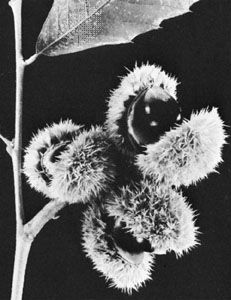
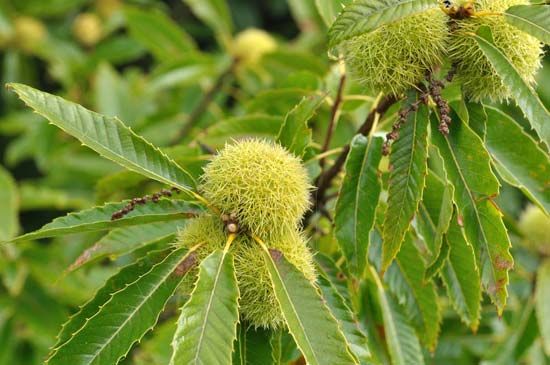
A chestnut is any of seven species of deciduous trees or shrubs belonging to the genus Castanea in the beech family (Fagaceae). These plants are native to temperate regions of the Northern Hemisphere and are characterized by their burlike, prickly outer husks that contain one to seven edible nuts.18
Physically, most species are tall with furrowed bark and lance-shaped, toothed leaves. Their male flowers typically grow in long, upright catkins.1
While the term “chestnut” specifically refers to the genus Castanea, it is sometimes used colloquially for unrelated plants such as the horse chestnut, the Moreton Bay chestnut, and various water chestnuts. Notable species include the American chestnut, the European chestnut, the Chinese chestnut, and the Japanese chestnut, many of which are valued for their timber, ornamental beauty, or as food sources.1
Sources
- chestnut — Encyclopædia Britannica
- horse chestnut — Encyclopædia Britannica
- chestnut blight — Merriam-Webster
- Chestnut blight — Encyclopædia Britannica
- Plant - Dispersal and colonization — Encyclopædia Britannica
- Plant disease - Control — Encyclopædia Britannica
- forestry - Insect and disease control — Encyclopædia Britannica
- chestnut — Merriam-Webster
Published on · 3 min read