Earthnut
The term "earthnut" is a common name applied to various plants that produce edible roots, tubers, or subterranean pods.
What is earthnut?
The term “earthnut” is a common name applied to various plants that produce edible roots, tubers, or subterranean pods.1
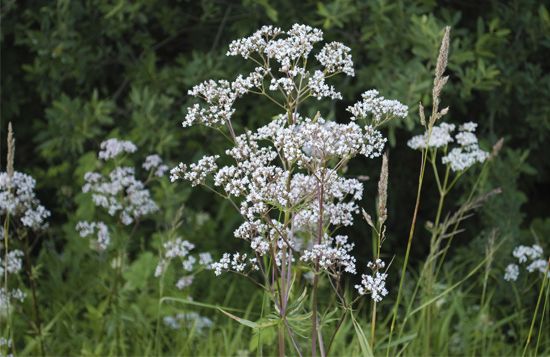
Most specifically, it refers to Conopodium majus (formerly C. denudatum), a plant in the carrot family. This perennial grows throughout the British Isles and parts of Europe, producing small, edible tubers that are often compared to the flavor of roasted chestnuts.21
Additionally, the term is used to describe several other unrelated species, including:
- The peanut (Arachis hypogaea), which is also frequently called a groundnut.23
- The yellow nutsedge (Cyperus esculentus).13
- The heath pea (Lathyrus tuberosa), sometimes referred to as the earthnut pea.13
- Occasionally, the term is used to refer to truffles.1
How do peanuts grow underground?
Peanuts (Arachis hypogaea) do not grow underground in the same way as root vegetables like potatoes or carrots. Instead, they exhibit a unique botanical phenomenon known as geocarpy.4
The process begins above ground with the pollination of the plant’s golden-yellow flowers. Once the flower withers, a specialized, stalklike structure called a “peg” emerges from the base of the flower. This peg grows downward toward the soil, carrying the fertilized ovules within its sturdy tip.4
Once the peg tip penetrates the soil—sometimes reaching depths of 10 cm (4 inches) or more—it begins to develop into the characteristic pod. These developing pods can even absorb mineral nutrients directly from the soil, functioning somewhat like roots. Because of this, the plant requires well-drained soil with sufficient calcium to ensure the pods develop properly.4
What are the differences between tubers and true nuts?
Tubers and true nuts are fundamentally different in their botanical structure and function.
Tubers
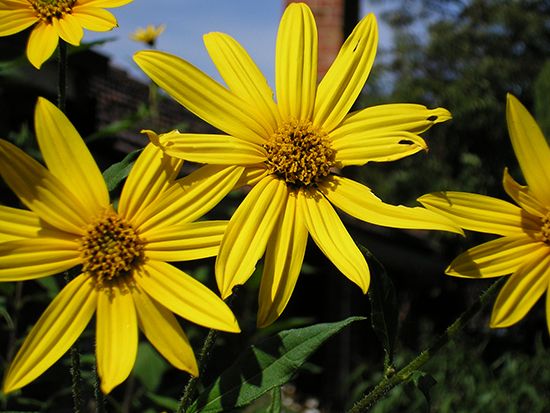
A tuber is a specialized, thickened stem that grows underground. Its primary purpose is to store starch, serving as a resting stage that allows a plant to survive through unfavorable conditions like winter. Because they are modified stems, tubers typically feature small scale leaves and buds capable of developing into new plants. Common examples include the potato and the Jerusalem artichoke.5
True Nuts
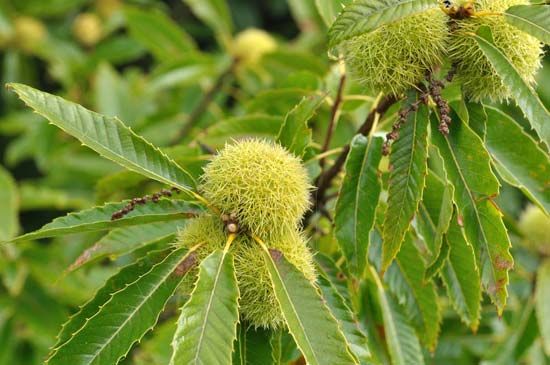
In botany, a nut is a dry, hard fruit that does not split open at maturity to release its single seed. Unlike tubers, which are vegetative storage organs, nuts are reproductive bodies. They develop from more than one carpel and possess a tough, woody wall. Examples of true nuts include the chestnut, hazelnut, and acorn.6
Many items commonly called “nuts” in a culinary sense, such as peanuts (which are legumes) or walnuts (which are drupes), do not meet the strict botanical definition of a true nut.63
What other plants belong to the carrot family?
The carrot family, known scientifically as Apiaceae (or the parsley family), comprises approximately 3,820 species of flowering plants. These plants are typically aromatic herbs characterized by hollow stems, taproots, and flat-topped flower clusters called umbels.78
The family includes a wide variety of plants used as vegetables, herbs, spices, and ornamentals, as well as several highly poisonous species. Notable members include:8
- Vegetables: Celery, celeriac, parsnip, fennel, and lovage.78
- Herbs and Spices: Parsley, coriander/cilantro, dill, cumin, caraway, anise, and angelica.78
- Ornamentals and Wildflowers: Queen Anne’s lace and sea holly.78
- Poisonous Species: Poison hemlock, water hemlock, and giant hogweed, which can cause severe skin irritation7.8
Sources
- earthnut — Merriam-Webster
- earthnut — Encyclopædia Britannica
- Groundnut — Encyclopædia Britannica
- Peanut — Encyclopædia Britannica
- Tuber — Encyclopædia Britannica
- Nut — Encyclopædia Britannica
- list of plants in the family Apiaceae — Encyclopædia Britannica
- Apiaceae — Encyclopædia Britannica
Published on · 2 min read