Chinquapin
The term "chinquapin" refers to several species of trees and shrubs within the beech family (Fagaceae), primarily categorized under three genera: Castanea…
What are the main species of chinquapin trees and where are they found?
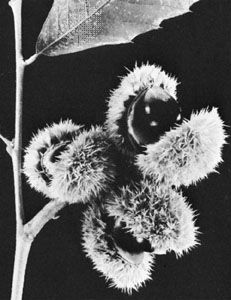
The term “chinquapin” refers to several species of trees and shrubs within the beech family (Fagaceae), primarily categorized under three genera: Castanea, Castanopsis, and Chrysolepis.1
Key Species and Distribution
- Genus Castanea: These deciduous trees are characterized by hairy leaves and single-seeded burs.1
- Genus Castanopsis: This group includes approximately 110 evergreen species found primarily in tropical and mountain forests across Asia.12
- Genus Chrysolepis: These are evergreen species native to western North America.1
It is important to note that the name “chinquapin” is sometimes applied to unrelated plants, such as the water chinquapin (American lotus) or various oak species.1
What is a chinquapin tree and what family does it belong to?
A chinquapin is a collective name for several species of trees and shrubs that belong to the beech family (Fagaceae).1
These plants are categorized into three primary genera:
- Castanea: Deciduous trees, such as the American chinquapin, which are known for their hairy leaves and single-seeded burs.1
- Castanopsis: A group of approximately 110 evergreen species native to [Asia].1
- Chrysolepis: North American evergreen species, including the golden chinquapin and the bush chinquapin.1
It is important to note that the name “chinquapin” is sometimes used for unrelated plants, such as the water chinquapin (the American lotus) or certain types of oak trees.1
What are some of the challenges facing chinquapin trees, such as diseases or environmental threats?
Chinquapin trees, particularly those within the genus Castanea, face significant challenges from environmental and biological threats. The most prominent of these is chestnut blight, a destructive fungal disease caused by the pathogen Cryphonectria parasitica.15
Impact of Chestnut Blight
- Origin and Spread: Introduced to the United States from Asia in the early 1900s, the fungus spread rapidly via wind, rain, and wildlife.5
- Pathology: The disease manifests as cankers on the bark and cambium of the tree. These sores can grow quite large and are often characterized by tiny, orange spore-cases known as pycnidia.5
- Consequences: The blight has had a devastating effect on the American chinquapin, leading to a notable decline in its populations. Historically, this same pathogen was responsible for the near-total destruction of mature American chestnut trees by 1930.15
While these trees provide valuable timber and serve as keystone species in various ecosystems, their survival remains threatened by the persistent nature of this introduced fungus.15
Are there any cultural or historical significance associated with chinquapin trees?
Chinquapin trees hold historical and cultural significance, particularly in North America. The name itself is derived from the Virginia Algonquian word chechinquamin, which refers to the tree’s edible nut. This etymology highlights the long-standing relationship between Indigenous peoples and the plant, which has been recognized and utilized since at least the early 17th century.1
Beyond its linguistic roots, the chinquapin has played a practical role in American history. The durable wood of the American chinquapin (Castanea pumila) has been historically valued for its utility in infrastructure, serving as a material for fence posts, railroad ties, and telephone poles. Additionally, the nuts produced by these trees have been consumed locally for generations, further cementing their place in the regional landscape.3
While the term “chinquapin” is primarily associated with the beech family, it is also used colloquially to describe unrelated plants, such as the American lotus (water chinquapin) and certain species of oak, reflecting the name’s deep integration into local botanical nomenclature.3
Sources
- chinquapin — Encyclopædia Britannica
- Fagales - Economic and ecological importance — Encyclopædia Britannica
- chinquapin — Merriam-Webster
- golden chinquapin — Merriam-Webster
- chestnut blight — Merriam-Webster
Published on · 3 min read