Cheviot
The term "Cheviot" refers to both a geographic region and a breed of livestock, as well as the textile derived from that animal's fleece.
What is Cheviot?
The term “Cheviot” refers to both a geographic region and a breed of livestock, as well as the textile derived from that animal’s fleece.
- Geography: The Cheviot Hills are a highland range forming the border between Scotland and Northumberland, England. The range features steep, rounded hills and deep glens.12
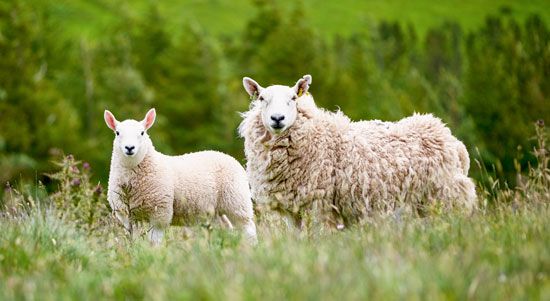
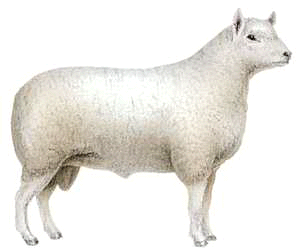
- Livestock: The Cheviot is a hardy, white-faced breed of sheep that originated in these hills. Known for their alert appearance and lack of wool on their heads and legs, they are valued for their lean meat and high-quality wool.3
- Textile: Cheviot is a woollen fabric originally produced from the wool of Cheviot sheep. It is characterized by a crisp, slightly rough texture and is often used in sportswear and tweed production.43
What are the main differences between woollen and worsted fabrics?
The primary differences between woollen and worsted fabrics stem from the preparation of the fibers and the spinning process used to create the yarn.
- Fiber Preparation: Worsted yarns are made from long-staple fibers that are combed to remove short fibers and ensure the remaining ones lie parallel to each other. In contrast, woollen yarns are typically made from shorter fibers that are not combed or aligned in parallel.567
- Spinning and Texture: Because the fibers in worsted yarn are parallel, they form a tight, smooth, and compact yarn. Worsted yarns are also more tightly twisted than woollen yarns. Woollen-spun yarns, by comparison, are looser, fuzzier, and airier.56
- Characteristics and Uses:
How did the geography of the Cheviot Hills influence the development of the sheep breed?
The geography of the Cheviot Hills—a region characterized by steep, hilly terrain—played a fundamental role in shaping the development of the Cheviot sheep breed.
Historically known as “long hill sheep,” these animals evolved to thrive in the challenging, rugged environment of the borderlands between Scotland and England. Their physical hardiness is a direct result of this landscape, which favored animals capable of navigating hilly pastures. This resilience was further demonstrated when the breed was introduced to the hilly terrain of Caithness in 1791; the sheep flourished there, confirming their suitability for such environments.
The breed’s development was also influenced by human efforts to refine these traits. Breeders, such as James Robson in the 18th century, crossed the original “long hill” stock with other breeds to improve carcass quality while maintaining the hardiness required for the hills. Over time, this selective breeding, combined with the environmental pressures of their native range, resulted in a breed noted for its alert appearance, resistance to diseases like foot rot, and ability to be raised successfully on pasture.
What are some other famous breeds of sheep known for their wool?
Sheep breeds are generally classified by the type of wool they produce: fine, medium, or long. Beyond the Cheviot, several other breeds are renowned for their fleece characteristics.101112
Fine Wool Breeds
These breeds are primarily raised for their high-quality, soft wool.11
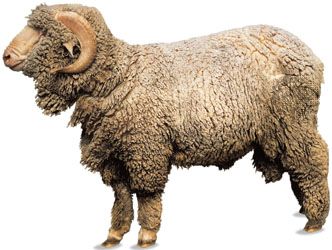
- Merino: Originating in Spain, this is the most famous fine-wool breed, known for its beautifully crimped, soft fleeces.101311
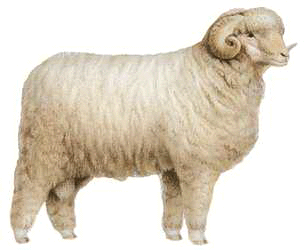
- Rambouillet: Developed in France from Merino stock, this breed is larger and smoother-bodied, thriving in the western ranges of the United States.101112
Long Wool Breeds
Developed largely in England, these breeds produce long, coarse fibers often used for rugs and heavy fabrics.1012
- Lincoln: Recognized as the world’s largest sheep, it produces a heavy, coarse, and long fleece.1011
- Cotswold: Known for its large size and coarse, curly fleece.1011
- Leicester: A massive, white-faced breed prized for its heavy fleece.1011
- Romney: A versatile breed whose wool is used for a wide variety of products.1011
Medium and Carpet Wool Breeds
Sources
- Cheviot: Top Questions — Encyclopædia Britannica
- cheviot — Encyclopædia Britannica
- Cheviot — Encyclopædia Britannica
- Cheviot Hills — Encyclopædia Britannica
- worsted knitting yarn — Encyclopædia Britannica
- wool — Encyclopædia Britannica
- 7 More Knitting Words to Keep You Warm | Worsted — Merriam-Webster
- Animal breeding - Breeding and variation — Encyclopædia Britannica
- Animal breeding - Breeding objectives — Encyclopædia Britannica
- Livestock farming - Breeds — Encyclopædia Britannica
- Merino — Encyclopædia Britannica
- Sheep — Encyclopædia Britannica
- Sheep breeds — Encyclopædia Britannica
Published on · 3 min read