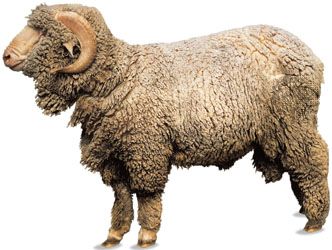
Rambouillet
Sorry, the Britannica knowledge base does not contain the specific annual average wool production weight for a Rambouillet sheep.
What is the average wool production of a Rambouillet sheep per year?
Sorry, the Britannica knowledge base does not contain the specific annual average wool production weight for a Rambouillet sheep.
While the provided information confirms that Rambouillet sheep are the largest of the fine-wool breeds and are known for producing relatively heavy fleeces, it does not provide a specific numerical average for their annual yield.12
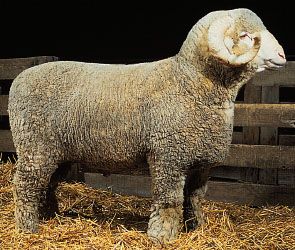
How does the Rambouillet breed compare to other fine-wool sheep breeds?
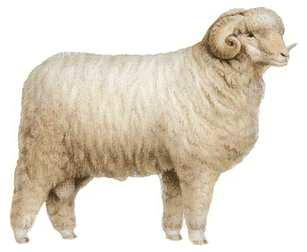
The Rambouillet is a fine-wool breed developed in France during the 18th century through selective breeding of Spanish Merino sheep. When compared to other fine-wool breeds, the Rambouillet is distinguished by several key characteristics:13
- Size and Conformation: The Rambouillet is the largest of the fine-wool breeds. Compared to its Merino ancestor, the Rambouillet is generally larger and less wrinkled.134
- Wool Characteristics: Like the Merino, the Rambouillet is primarily raised for its high-quality fine wool. While the Merino is noted for its excellent, fine, and soft fleeces, the Rambouillet is also recognized for producing relatively heavy fleeces.213
- Adaptability and Use: Rambouillets are highly prevalent on the western ranges of the United States, where they are valued for their hardiness and ability to thrive in range conditions. Beyond wool production, the breed is noted for its rapid lamb growth, and ewes are frequently crossbred with medium- or long-wool rams to produce high-quality market lambs.14
What are the primary uses of Rambouillet sheep in modern agriculture?
In modern agriculture, Rambouillet sheep serve several primary functions, primarily centered on their utility in range production and their value in crossbreeding programs.
- Wool Production: As a fine-wool breed, Rambouillets are highly valued for their relatively heavy, high-quality fleeces. They are a cornerstone of the sheep industry, particularly on the western ranges of the United States, where they are favored for their hardiness and ability to thrive in diverse range conditions.12
- Market Lamb Production: The breed is noted for its rapid lamb growth, allowing producers to reach satisfactory market weights between six and nine months of age.1
- Crossbreeding: Rambouillet ewes are extensively crossbred with medium-wool or long-coarse-wool rams. This practice is used to produce choice market lambs and rugged breeding ewes that possess both the hardiness of the Rambouillet and the desirable wool or meat characteristics of other breeds.15
Because of their adaptability and productivity, Rambouillets remain a dominant breed in large-scale range operations, where they are maintained for both their wool and their contribution to the meat market.15
What role has the Rambouillet breed played in the development of other sheep breeds?
The Rambouillet breed has played a foundational role in the development of new sheep breeds, particularly those designed for the Western ranges of the United States. By serving as a primary fine-wool parent in crossbreeding programs, the Rambouillet has contributed its hardiness, rapid growth, and high-quality wool to the creation of versatile, dual-purpose breeds.17
Key breeds developed using Rambouillet genetics include:
- Columbia: Developed in the United States starting in 1912, this breed was created by crossing Lincoln rams with Rambouillet ewes. The resulting breed is a large, hardy, open-faced sheep that provides a high yield of fine wool and satisfactory mutton conformation.87
- Targhee: This breed was developed through similar intercrossing of Lincoln and Rambouillet sheep. It was specifically bred to be a hardy range animal that balances good mutton production with a heavy fleece of moderately fine wool.97
These breeds demonstrate the Rambouillet’s enduring influence in modern agriculture, as they successfully combine the fine-wool characteristics of the Rambouillet with the meat-producing traits of long-wool breeds.7
Sources
- Rambouillet — Encyclopædia Britannica
- Sheep — Encyclopædia Britannica
- Livestock farming - Breeds — Encyclopædia Britannica
- Sheep breeds — Encyclopædia Britannica
- Rambouillet — Encyclopædia Britannica
- Livestock farming - Management — Encyclopædia Britannica
- Suffolk — Encyclopædia Britannica
- rambouillet — Merriam-Webster
- Columbia sheep — Merriam-Webster
- Targhee — Merriam-Webster
- Origins of agriculture - Sheep — Encyclopædia Britannica
Published on · 3 min read