Merino
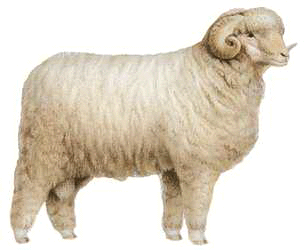
The Merino is a breed of fine-wool sheep that originated in Spain and is highly regarded for its exceptional fleece quality.
What are the distinctive characteristics of Merino sheep?
The Merino is a breed of fine-wool sheep that originated in Spain and is highly regarded for its exceptional fleece quality.12
Key characteristics of the breed include:
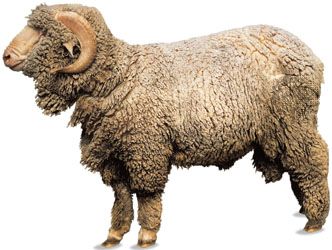
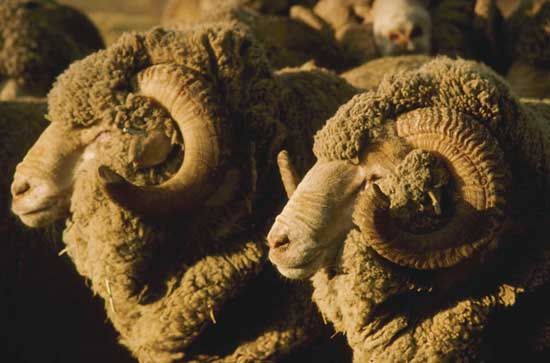
- Wool Quality: They are prized for their excellent, fine, and soft fleeces, which feature beautifully crimped fibers.12
- Physical Appearance: Merinos have white faces and legs. They can be either horned or hornless and typically possess a heavily-wooled head.123
- Adaptability: The breed is particularly well-adapted to semiarid climates and nomadic pasturing.1
- Conformation: While they vary in size and the extent of skin folds, modern breeding trends favor medium-sized sheep with fair mutton conformation and a minimum of skin folds. Although they have significant wool growth on their faces, it is rarely extensive enough to cause wool blindness.1
Because of their superior wool, Merinos have served as essential foundation stock for the development of many other sheep breeds worldwide.1
Where did Merino sheep originate and how did they spread globally?
The Merino originated in Spain, where it was developed from stock native to the region before the Christian era. Known as early as the 12th century, the breed may have been a Moorish importation.12
For a long period, medieval Spain attempted to maintain a strict monopoly on the breed to protect its valuable fine-wool production. Despite these efforts, the Merino gradually spread into France, Italy, and across the rest of Europe.2
Over time, the breed’s exceptional adaptability to semiarid climates and nomadic pasturing facilitated its global expansion. Today, the Merino is prominent in many countries, including Australia, the United States, Russia, South Africa, Argentina, and Germany. Its influence is further cemented by its role as essential foundation stock; through selective mating and crossbreeding, the Merino has been instrumental in the development of numerous other sheep breeds worldwide, such as the French Rambouillet and the Corriedale.124
How does the quality of Merino wool compare to other types of wool?
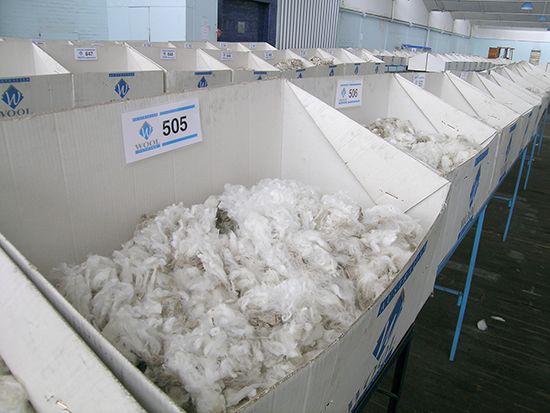
Merino wool is classified as a fine wool, distinguishing it from other categories such as medium, long, and carpet wools. Its quality is defined by several key characteristics that set it apart from coarser varieties:5
- Fiber Fineness: Wool fibers generally range from 16 to 40 microns in diameter. Merino wool is prized for being exceptionally fine and soft, contributing to its high value in textile production.251
- Crimp and Texture: Merino fleeces are noted for being beautifully crimped. Fine wools exhibit high levels of waviness—up to 30 waves per inch—which encourages fibers to cling together, creating strong, insulating, and resilient yarns.12
- Performance: Like all wool, Merino is composed of the protein keratin and is highly absorbent, capable of retaining 16 to 18 percent of its weight in moisture. Its resilience allows fabrics to resist wrinkling and retain their shape, while its low density enables the manufacture of lightweight garments.2
In contrast, other wool types serve different purposes:
- Long wools (e.g., Lincoln, Cotswold) produce long, coarse fibers suitable for rugs and heavy fabrics.5
- Carpet wools (e.g., Scottish Blackface) are coarser and often possess higher luster than fine wools.25
How has selective breeding influenced the development of Merino sheep?
Selective breeding has played a pivotal role in shaping the Merino into the versatile, high-performing breed recognized today. Historically, the development of the breed was managed by organizations like the Mesta, which prioritized stock breeding as a central economic pillar in medieval Spain.1
Modern breeding efforts have focused on refining the animal’s physical traits to balance wool production with meat quality. Key influences of selective breeding include:
- Conformation and Skin Folds: Breeders have moved toward developing medium-sized sheep that possess a fair mutton conformation while minimizing skin folds, which simplifies management and shearing.6
- Foundation Stock: Through selective mating, the Merino has served as the essential genetic foundation for creating new, specialized breeds. By crossing Merino ewes with other breeds, such as the Lincoln or Leicester, breeders have successfully developed animals like the Corriedale, which are better suited for diverse environments and dual-purpose production of both meat and wool.64
- Adaptability: Selection has ensured the breed remains well-adapted to semiarid climates and nomadic pasturing, allowing it to thrive in varied global regions.6
Sources
- Merino — Encyclopædia Britannica
- Livestock farming - Breeds — Encyclopædia Britannica
- Sheep breeds — Encyclopædia Britannica
- Origins of agriculture - Sheep — Encyclopædia Britannica
- wool — Encyclopædia Britannica
- Mesta — Encyclopædia Britannica
Published on · 3 min read