Chinampa
The chinampa system, often called "floating gardens," was a highly specialized and intensive agricultural method used primarily in the Valley of Mexico.…
How did the chinampa system compare to other agricultural methods used in pre-Columbian America?
The chinampa system, often called “floating gardens,” was a highly specialized and intensive agricultural method used primarily in the Valley of Mexico. Unlike the more extensive swidden (slash-and-burn) agriculture practiced across diverse environments in the Americas, chinampas were stationary, artificial islands constructed from layers of vegetation, dirt, and mud within shallow lakes.123
Compared to other methods, the chinampa system offered unique advantages:
- High Productivity: Because the surrounding lake water provided constant moisture and nutrient-rich organic waste, these fields supported intensive, year-round cultivation and multiple harvests annually.12
- Environmental Adaptation: While swidden agriculture relied on clearing and burning forests to temporarily boost soil fertility, chinampas allowed for permanent, high-density land use in wetland areas.13
- Resource Management: Unlike rain-fed fields or simple irrigation, chinampas integrated water transportation and irrigation into a single, efficient system, which was vital for supporting the dense populations of urban centers like those of the Aztec Empire.23
What role did chinampas play in Aztec society beyond just food production?
Beyond their primary role in food production, chinampas were fundamental to the strategic, economic, and political stability of the Aztec Empire. Their integration into the landscape of the Valley of Mexico provided several critical functions:
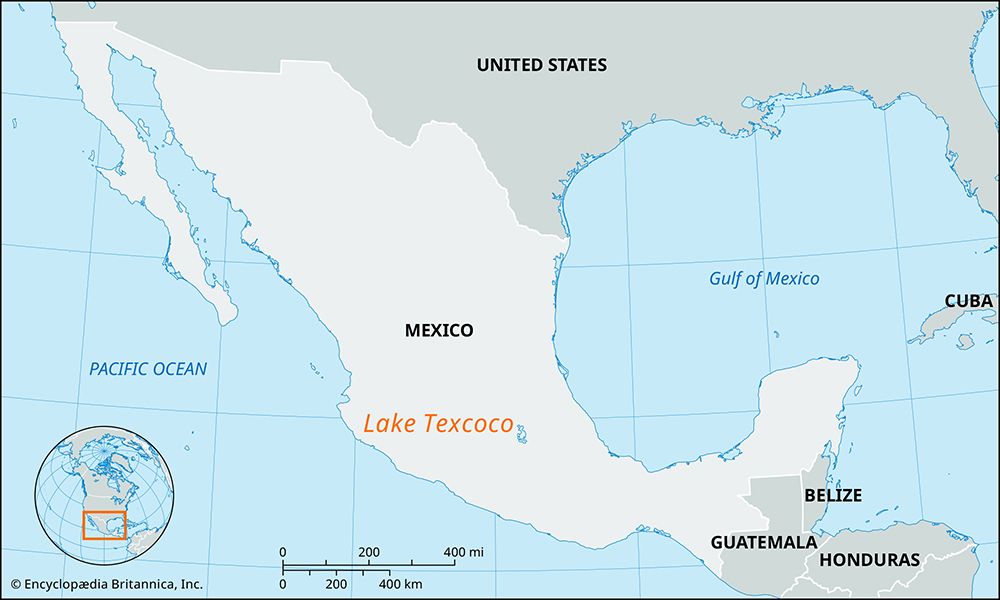
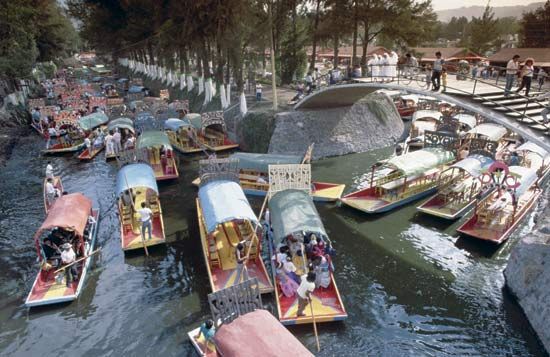
- Economic and Political Unification: The chinampa system relied on a network of natural and artificial canals that connected the lakes of the Valley of Mexico (such as Texcoco and Xochimilco). This infrastructure facilitated extensive water transportation, which served as the primary means of moving goods and people in the absence of the wheel or domesticated pack animals, thereby fostering early economic and political cohesion across the region.29
- Urban Development: The high productivity of these raised fields supported a massive concentration of population, allowing for the development of large, dense urban centers like Tenochtitlán. By providing a reliable, year-round food supply, chinampas enabled the Aztecs to sustain a specialized society that included merchants, artisans, and a complex bureaucracy.2910
- Resource Management: The canals associated with chinampas were part of a broader water management strategy that included aqueducts for fresh water and levees for flood control. This sophisticated engineering allowed the Aztecs to transform an uninviting, swampy island into a thriving, defensible capital city.10
How did the chinampa system contribute to the growth and sustainability of Tenochtitlan?
The chinampa system was a cornerstone of the Aztec Empire, providing the agricultural foundation necessary for the growth and sustainability of Tenochtitlán. By transforming swampy, waterlogged areas into highly productive, stationary artificial islands, the Aztecs achieved an extraordinarily intensive level of farming that supported the densest population in Mesoamerican history.21110
Key contributions to the city’s success included:
- High Productivity: The chinampas utilized nutrient-rich lake mud and organic waste as fertilizer, while the surrounding water provided constant irrigation. This allowed for multiple harvests annually, ensuring a reliable food supply for a population that reached hundreds of thousands.2110
- Urban Expansion: Tenochtitlán grew from two small islands into a massive metropolis through the continuous construction and consolidation of chinampas. This process allowed the city to expand into the surrounding lake, creating a unique urban landscape.1110
- Economic Support: The high yields from these fields supported a large class of non-food-producing specialists, including craftspeople, merchants, and administrators. This economic surplus enabled the development of complex social structures and a vast trade network.1110
- Strategic Infrastructure: The canals integrated into the chinampa system facilitated efficient water transportation, which was vital for moving goods to markets like Tlatelolco and maintaining the city’s economic and political cohesion.21210
What are chinampas and how were they created in ancient Mesoamerica?
A chinampa is a small, stationary, artificial island constructed in freshwater lakes for agricultural use, often referred to as “floating gardens.”12
These islands were created through a precise process of land reclamation in swampy areas:
- Foundation: Builders constructed a base using a mat of reeds, twigs, or other vegetation, known in Nahuatl as chinamitl.13
- Layering: Layers of dirt, mud, and decaying organic matter were piled onto these mats to build up narrow, rectangular islands, typically 6 to 10 meters wide and 100 to 200 meters long.113
- Dredging: Rich, nutrient-dense soil was dredged from the bottom of the lake and added to the ridges, creating fertile plots separated by canals.213
This system allowed for intensive, highly productive cultivation. The surrounding water provided constant irrigation, while the decomposing organic waste in the mud acted as a natural fertilizer, enabling multiple harvests throughout the year.12
Sources
- Chinampa — Encyclopædia Britannica
- Aztec - Aztec agriculture — Encyclopædia Britannica
- Origins of agriculture - Mesoamerica — Encyclopædia Britannica
- Pre-Columbian civilizations: Top Questions — Encyclopædia Britannica
- Origins of agriculture - South America — Encyclopædia Britannica
- Origins of agriculture - The Americas — Encyclopædia Britannica
- Origins of agriculture - Irrigation — Encyclopædia Britannica
- history of technology - Irrigation — Encyclopædia Britannica
- Mexico - The rise of the Aztecs — Encyclopædia Britannica
- Mexico City - Ancient foundations — Encyclopædia Britannica
- Pre-Columbian civilizations - Agriculture — Encyclopædia Britannica
- Pre-Columbian civilizations - Tenochtitlán — Encyclopædia Britannica
- chinampa — Merriam-Webster
Published on · 4 min read