Lake Texcoco
While Lake Texcoco was once a vast system of interconnected lakes in the Valley of Mexico, it has been largely drained since the 17th century to accommodate…
What remnants or evidence of Lake Texcoco can still be seen in modern-day Mexico City?
While Lake Texcoco was once a vast system of interconnected lakes in the Valley of Mexico, it has been largely drained since the 17th century to accommodate urban expansion. Today, remnants and evidence of the lake remain visible in several ways:123
- Salt Marshes: A small area of the original lake still exists east of Mexico City, characterized by salt marshes.13
- Unstable Soil and Sinking: Because much of the city is built upon the former lake bed, the underlying clay sheets are prone to compression. This has caused parts of the city to sink over time as underground aquifers are depleted.43
- Saline Deposits: The reclaimed land is largely unfit for agriculture due to high salinity, a direct legacy of the lake’s former presence.13
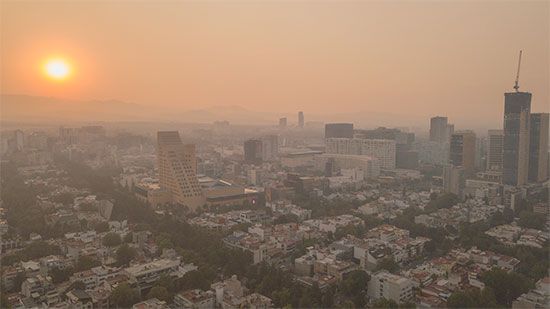
- Air Quality: The dry lake beds contribute to the city’s air pollution, as dust is occasionally blown over the urban area from these exposed surfaces.13
- Lacustrine Plains: Approximately one-fourth of the city and Federal District consists of these former lake plains, which define the landscape of the downtown area.2
What was the geographical location and size of Lake Texcoco before it was drained?
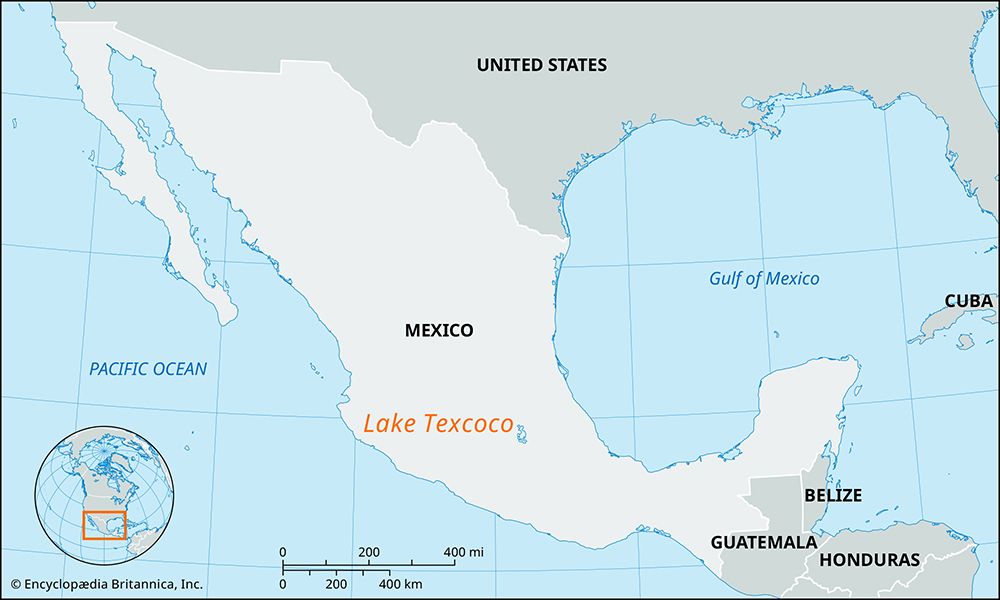
Lake Texcoco was located in the central region of Mexico, specifically within the Anáhuac, or the Valley of Mexico. It was one of five interconnected lakes that occupied the basin where present-day Mexico City is situated.16
While the provided search results do not specify the exact square mileage or dimensions of the lake before it was drained, historical records confirm it was a significant body of water that hosted the Aztec capital, Tenochtitlán, on its islands. The lake served as a central feature of the valley’s geography until drainage efforts began in the early 17th century to reclaim land for agriculture and urban development.16
How has the draining of Lake Texcoco affected the environment and geology of the Mexico City area?
The draining of Lake Texcoco, which began in the 17th century, has profoundly altered the environment and geology of the Mexico City area.
Geological Impact
The city is largely built upon the soft, clay-rich sediments of the former lake bed. Because the natural wetlands and lakes that once absorbed rainfall have been eliminated, very little precipitation now recharges local aquifers. To meet water demands, the city relies heavily on extracting groundwater. This continuous depletion causes the underlying clay sheets to compress and crack, resulting in the city sinking—in some areas by as much as 40 cm (16 inches) annually. This subsidence has also damaged infrastructure, including water supply pipes, leading to significant water loss through leaks.14
Environmental Consequences
- Soil Salinity: The anticipated conversion of the lake bed into rich farmland failed because the soil proved too saline for cultivation.7
- Air Quality: The exposed, dry lake beds serve as a source of dust, which is frequently blown over the urban area, exacerbating the city’s air pollution problems.78
- Water Scarcity: The loss of natural water-retention systems has contributed to severe economic water scarcity, leaving the region highly vulnerable to drought.4
How did the Spanish conquest of the Aztecs impact Lake Texcoco and its surrounding areas?
The Spanish conquest, led by Hernán Cortés in 1521, initiated a radical transformation of Lake Texcoco and its surrounding environment. While the Aztec rulers had previously commissioned flood-control levees and aqueducts to manage the lake’s waters, the Spanish colonial administration significantly expanded these systems over the following centuries to drain the basin.138
This systematic drainage was driven by the desire to reclaim land for urban development and agriculture. However, the project resulted in several unintended consequences:
- Agricultural Failure: It was hoped that the drained lake bed would provide vast areas of rich farmland, but the soil proved too saline for successful cultivation.1
- Geological Instability: The removal of the water caused the soft, clay-rich lake bed to settle and drop, leading to significant structural damage to buildings constructed upon it.1
- Environmental Degradation: The exposed, dry lake bed became a source of dust that is occasionally blown over the urban area, contributing to the severe air pollution experienced in modern Mexico City.1
Sources
- Lake Texcoco — Encyclopædia Britannica
- Mexico - The rise of the Aztecs — Encyclopædia Britannica
- Mexico City - City site — Encyclopædia Britannica
- Mexico City: Top Questions — Encyclopædia Britannica
- Anáhuac — Encyclopædia Britannica
- Texcoco — Encyclopædia Britannica
- water scarcity - Mechanisms — Encyclopædia Britannica
- Mexico City - City layout — Encyclopædia Britannica
- Mexico City - Ancient foundations — Encyclopædia Britannica
Published on · 3 min read