Chum Salmon
The chum salmon (Oncorhynchus keta), also known as the dog salmon, is a species of Pacific salmon found in the northern Pacific and Arctic oceans. These fish…
What is chum salmon?
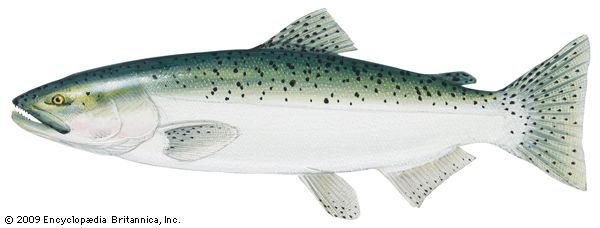
The chum salmon (Oncorhynchus keta), also known as the dog salmon, is a species of Pacific salmon found in the northern Pacific and Arctic oceans. These fish are typically metallic bluish-green while in the ocean and can reach lengths of about 3.5 feet (1 meter).1234
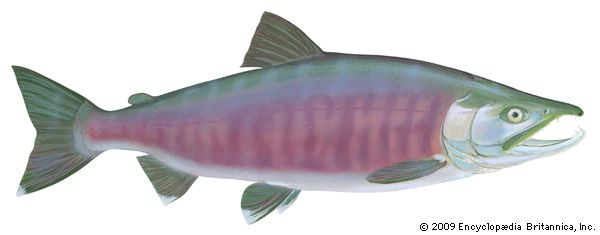
During the autumn spawning season, chum salmon undergo significant physical changes. Males develop large, sharp teeth and their coloration shifts to dark green or brown with distinct reddish-purple vertical stripes. They are known for their impressive migrations, sometimes traveling more than 3,200 km (2,000 miles) up rivers like the Yukon River to reach their spawning grounds.3452
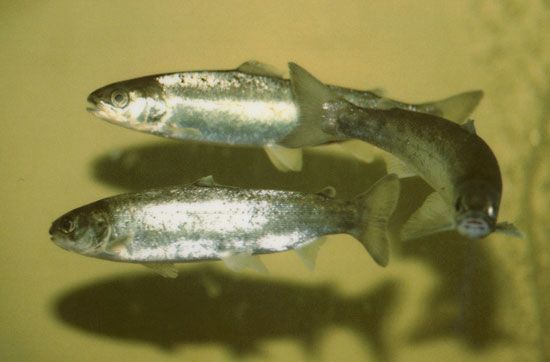
Chum salmon typically weigh between 10 and 12 pounds (4.5–5.5 kg) and represent a significant portion of the annual commercial fishery for Pacific salmon. Unlike some other species, young chum salmon migrate to the sea within a few weeks of hatching.2
Why are chum salmon sometimes called dog salmon?
The term “dog salmon” is a common alternative name for the chum salmon. This moniker is primarily attributed to the dramatic physical transformation male chum salmon undergo when they enter freshwater to spawn.
During this phase, the males develop large, prominent, and sharp teeth that resemble those of a canine, which is the reason for the “dog” designation. This physical change is accompanied by a shift in coloration, as the fish turn dark green or brown with distinct reddish-purple vertical stripes.3
What are the different stages of a salmon’s life cycle?
The life cycle of a salmon is a complex process that typically involves transitions between freshwater and marine environments. While life cycles can vary between species and even populations, the general stages for anadromous salmon are as follows:
- Spawning and Incubation: Salmon spawn in freshwater streams, where females lay large, demersal eggs in nests on the stream bottom. These eggs are fertilized externally and rely on the stream’s cold, oxygenated water for development.678
- Hatching and Fry: Upon hatching, the young salmon, known as fry, initially rely on their yolk sacs for nourishment. Once the yolk is absorbed, they begin to feed and grow.8
- Migration to the Ocean: In many species, the fry eventually migrate downstream to the open ocean. This journey can span hundreds or even thousands of miles. The ocean serves as the primary site for growth and maturation, where the fish spend much of their adult lives.678
- Return and Spawning: Driven by biological programming, adult salmon return to their natal freshwater streams to reproduce. During this strenuous upstream migration, they stop eating and rely on stored energy reserves. They undergo significant physiological changes, such as the development of secondary sex characteristics, before spawning and eventually dying—a strategy known as semelparity.678
We could dive deeper into the specific differences between anadromous salmon and those that spend their entire lives in freshwater.
How do salmon navigate back to their home rivers to spawn?
Salmon navigate back to their natal streams through a remarkable combination of sensory mechanisms, with olfaction playing the most critical role once they reach their home river system.910
During their early development, young salmon undergo imprinting, a process where they memorize the specific chemical signature of their home stream, created by local vegetation, substrate, and other salmon populations. This memory remains dormant until the fish matures and begins its return journey, at which point hormonal changes—specifically involving thyroxine and reproductive hormones—increase the sensitivity of their olfactory receptors, allowing them to detect and follow these unique chemical cues.9
For the long-distance portion of their migration from the open ocean, salmon likely rely on other navigational tools. While the exact methods are still being studied, evidence suggests they may use geomagnetic orientation or celestial cues, such as the position of the Sun, to steer toward the correct coastal region. Some species, such as the sockeye salmon, have been shown to utilize magnetic fields to navigate from the ocean toward their spawning grounds.911
Sources
- chum salmon — Merriam-Webster
- chum salmon — Encyclopædia Britannica
- dog salmon — Merriam-Webster
- salmon — Encyclopædia Britannica
- chum — Merriam-Webster
- 14 Questions About Aquatic Animals Answered - Is it true that a salmon will always return to its birthplace? — Encyclopædia Britannica
- Why do salmon die after spawning? — Encyclopædia Britannica
- protacanthopterygian - Life cycle and reproduction — Encyclopædia Britannica
- Chemoreception - Homing — Encyclopædia Britannica
- Migration - Anadromous fish — Encyclopædia Britannica
- Homing — Encyclopædia Britannica
Published on · 3 min read