Cinchona
Cinchona is a genus comprising approximately 23 species of evergreen trees and shrubs within the madder family (Rubiaceae), native to the Andes of South…
What is Cinchona?
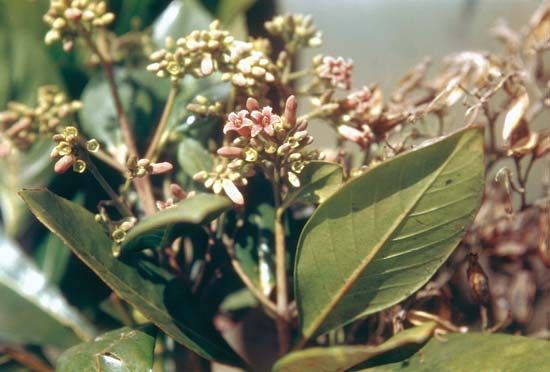
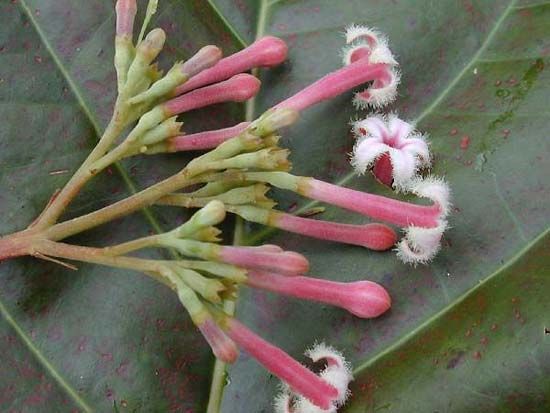
Cinchona is a genus comprising approximately 23 species of evergreen trees and shrubs within the madder family (Rubiaceae), native to the Andes of South America.12
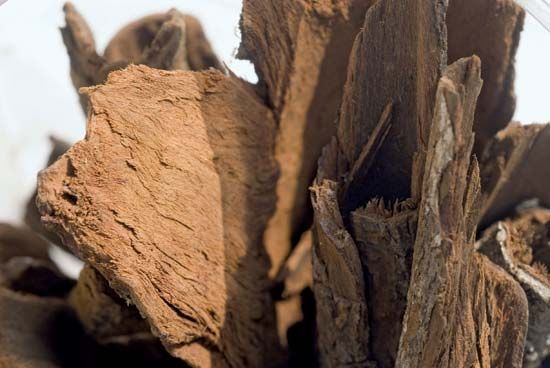
The plant is historically significant for its bark, which contains alkaloids such as quinine and quinidine. For centuries, quinine served as the primary effective treatment for malaria, marking a milestone in the development of specific drug therapy. Following the extraction of quinine alkaloids in 1820, the plant became a vital global resource, leading to its cultivation in regions such as Java, India, and Sri Lanka. Today, while quinine remains a key antimalarial, quinidine is also utilized to treat cardiac rhythmic disorders. The genus is named after the Countess of Chinchón, the wife of a 17th-century Peruvian viceroy.12
How does quinine work to treat malaria?
Quinine functions as an alkaloid that treats malaria by interfering with the growth and reproduction of Plasmodium parasites while they inhabit red blood cells.3
When administered, the drug effectively clears these parasites from the blood, leading to a rapid alleviation of symptoms. However, quinine does not provide a complete cure because it fails to eliminate parasites residing in other body tissues. Consequently, these surviving parasites can eventually reinvade the bloodstream, causing a relapse of the disease.3
Due to this limitation, newer synthetic drugs like chloroquine and primaquine were developed to offer more comprehensive treatment. Nevertheless, quinine remains a critical medical tool, particularly in regions where parasites have developed resistance to synthetic alternatives.3
What are some other plants that have been used for medicine?
Throughout history, numerous plants have been utilized for their medicinal properties, many of which remain foundational to modern pharmacology. Through the field of ethnobotany, researchers study how indigenous cultures have used these plants for centuries, often identifying compounds that are later refined into life-saving drugs.45
Key examples of medicinal plants include:
- Pacific Yew (Taxus brevifolia): This tree is the source of taxol, a significant anticancer drug.4
- Ma Huang (Ephedra): Used in traditional Chinese medicine, this plant contains ephedrine, which is now widely used to treat asthma and cold or allergy symptoms.67
- Huperzia serrata: A moss that yields huperzine A, an agent studied for its potential in treating Alzheimer disease.7
- Digitalis: Derived from plants containing compounds that act as cardiac stimulants, this has been used to treat various heart-related ailments.64
- Mint Family (Lamiaceae): This family includes many plants valued for medicinal or curative properties, such as rosemary, lavender, and hyssop.8
- Opium Poppy: Historically used by physicians like Galen, its derivatives remain essential for pain relief.6
How did the discovery of quinine change global travel and exploration?
The discovery of quinine from cinchona bark fundamentally transformed global travel and exploration by providing the first effective remedy for malaria, a disease that had previously posed a lethal barrier to Europeans in tropical regions.31
For three centuries, quinine served as the only reliable treatment for the infection, marking the first successful use of a chemical compound to combat an infectious disease. By allowing travelers and colonialists to survive in malaria-prone environments, the drug facilitated increased movement and settlement in the tropics. The high demand for this “lifesaving drug” eventually led to the smuggling of cinchona seeds from South America to Asia in the 1850s and 1860s, where Dutch and British naturalists established large-scale plantations in Java, India, and Sri Lanka. This cultivation made quinine more widely available, further stabilizing the health of those operating in previously inaccessible territories.31
Sources
- cinchona — Encyclopædia Britannica
- cinchona — Merriam-Webster
- quinine — Encyclopædia Britannica
- pharmaceutical industry - Medicines of ancient civilizations — Encyclopædia Britannica
- pharmaceutical industry - Lead compounds from natural products — Encyclopædia Britannica
- traditional Chinese medicine - Genetics research and drug development — Encyclopædia Britannica
- drug cult - History of drug use in religion — Encyclopædia Britannica
- Lamiaceae — Encyclopædia Britannica
- Ethnobotany — Encyclopædia Britannica
- traditional Chinese medicine - Herbal therapy — Encyclopædia Britannica
- Ayurveda — Encyclopædia Britannica
- ethnobotany — Merriam-Webster
Published on · 3 min read