Dipper
The term "dipper" refers to several distinct concepts depending on the context:
What is Dipper?
The term “dipper” refers to several distinct concepts depending on the context:
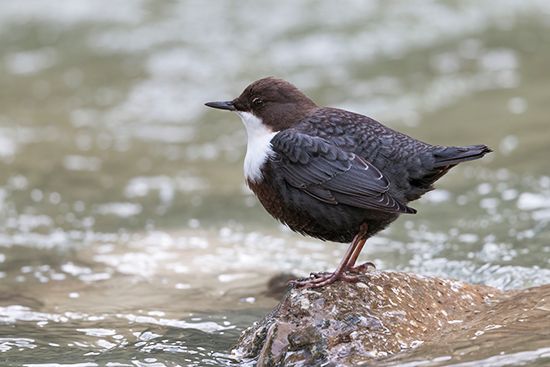
- Biology: A dipper (genus Cinclus) is a type of songbird known for its ability to hunt insects by walking underwater in rushing streams and for its characteristic body-bobbing behavior.1
- Astronomy: The term describes two prominent asterisms formed by bright stars:
- Utensils: A dipper is also a common kitchen tool, such as a ladle or scoop, used for serving food or liquids.4
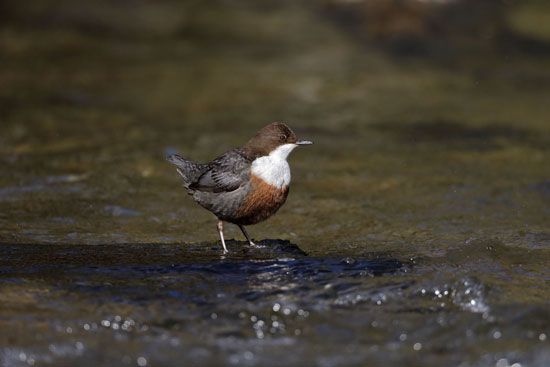
How do dipper birds manage to walk underwater?
Dippers, also known as water ouzels, are unique songbirds that forage for insects by walking along the beds of rushing streams.1
While it was once hypothesized that these birds used their wings as hydroplanes to propel themselves underwater, scientific investigation has clarified this behavior. Research indicates that while dippers do flap their wings while submerged, their ability to “bottom walk” or move underwater is primarily dependent on the velocity of the water flowing past their wings, rather than the active movement of the wings themselves.5
What is the difference between the Big Dipper and the Little Dipper?
The Big Dipper and the Little Dipper are both asterisms—patterns of stars that are not official constellations themselves but are recognizable parts of larger ones.47
- The Big Dipper: This group of seven bright stars is located within the larger constellation Ursa Major. It is one of the most prominent features of the northern sky, and two of its stars, Dubhe and Merak, are known as “pointers” because they align to help locate the North Star.84910
- The Little Dipper: This is a smaller group of seven stars situated within the Ursa Minor constellation. Unlike the Big Dipper, the Little Dipper includes the North Star, also known as Polaris, at the end of its handle.1112
While both patterns resemble a ladle or dipper, they differ in their size, their parent constellations, and their relationship to the celestial pole.12
Why is the North Star located in the Little Dipper?
The North Star, or Polaris, is located at the end of the handle of the Little Dipper simply because that is where the star happens to be positioned in our current sky.
The Little Dipper is an asterism formed by seven stars within the constellation Ursa Minor. Polaris marks the approximate position of the north celestial pole—the point in the sky directly above Earth’s North Pole—which makes it appear stationary while other stars seem to rotate around it.
It is important to note that this alignment is temporary. Due to the precession of Earth’s axis, the orientation of our planet’s rotation changes over a cycle of approximately 26,000 years. Consequently, different stars serve as the North Star over long periods; for example, Thuban was the pole star when the pyramids were built, and Vega will hold that position in about 12,000 years.
Sources
- Dipper — Encyclopædia Britannica
- dipper — Merriam-Webster
- The Little Dipper — Encyclopædia Britannica
- The Big Dipper — Encyclopædia Britannica
- Locomotion - Tetrapodal vertebrates — Encyclopædia Britannica
- lungfish - Evolution — Encyclopædia Britannica
- Did you know? — Merriam-Webster
- Ursa Major — Encyclopædia Britannica
- Asterism — Encyclopædia Britannica
- Ursa Major — Merriam-Webster
- the Little Dipper — Merriam-Webster
- asterism — Merriam-Webster
- Polaris — Encyclopædia Britannica
- Ursa Minor — Encyclopædia Britannica
- Astronomical map - The celestial sphere — Encyclopædia Britannica
Published on · 3 min read