Hirundinidae
Hirundinidae is a songbird family within the order Passeriformes that includes approximately 90 species of swallows and martins. These small, streamlined…
What is Hirundinidae?
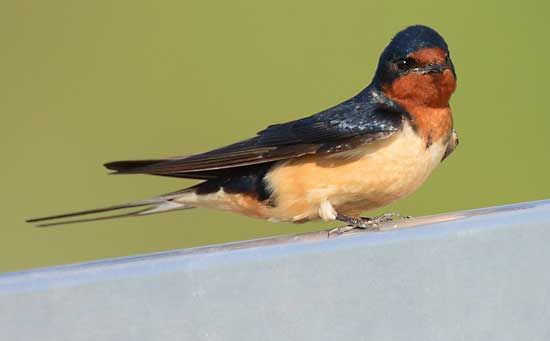
Hirundinidae is a songbird family within the order Passeriformes that includes approximately 90 species of swallows and martins. These small, streamlined birds are found globally, excluding polar regions and certain remote islands.123
Key characteristics of the family include:
- Physical Traits: They possess long, pointed wings, short flat bills, and small, weak feet. They are unique among songbirds for having complete bronchial rings.12
- Flight and Diet: Renowned for their strong, agile flight, they spend significant time in the air catching insects.12
- Nesting: Depending on the species, they may nest in tree cavities, burrow into sandbanks, or construct nests using mud plastered onto ledges or walls.2
While many species exhibit plain plumage, some display metallic blue or green markings. Well-known members include the barn swallow, often recognized by its forked tail, and the purple martin, the largest swallow species in North America.21
How do swallows build their mud nests?
Swallows construct their nests using a variety of methods, with some species specifically known for their skill in building with mud. To create these structures, swallows often plaster mud onto vertical surfaces, such as walls or ledges.2
Certain species, particularly the 10 members of the genus Petrochelidon, such as the cliff swallow, are noted for building elaborate, flask-shaped or jug-like mud nests, often situated under eaves or on cliffs. To ensure the structural integrity of these mud-built homes, these birds frequently utilize their saliva as a specialized cement or binding agent. This allows them to create durable, enclosed environments to house their eggs and young.245
Why are swallows considered beneficial to humans?
Swallows are considered beneficial to humans primarily because they are highly agile passerine birds that spend much of their time in the air capturing insects. By consuming large quantities of flying insects, they help regulate insect populations in their environments.6
While the provided search results do not explicitly detail the specific economic or agricultural impact of swallows on human pest control, they note that many dipteran insects—which serve as a food source for birds—can act as vectors for serious diseases or function as agricultural pests. By preying on these insects, swallows contribute to the natural balance of food chains. It is important to note that swallows are often confused with swifts, which are unrelated but share similar aerial habits; unlike some swiftlets, swallows are not commercially harvested for their nests.27
What are some other examples of passerine birds?
Passerines, or perching birds, make up the largest order of birds, comprising approximately 5,700 species. While the term “perching” describes their foot structure, it is important to clarify that “perching ducks” are not passerines; they belong to the order Anseriformes.89
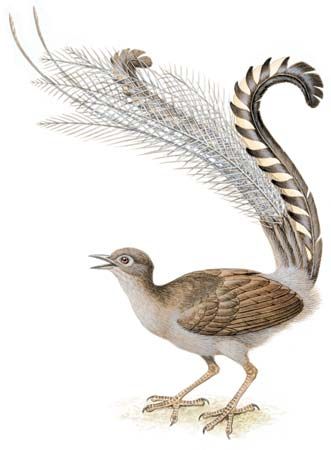
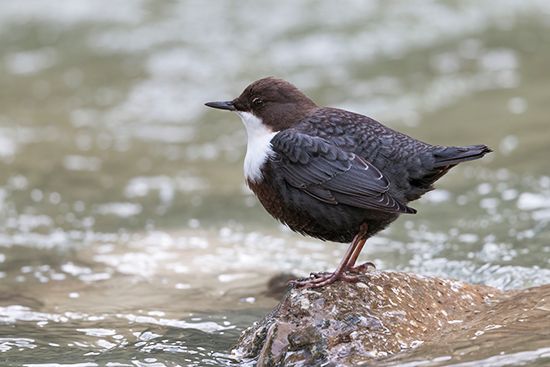
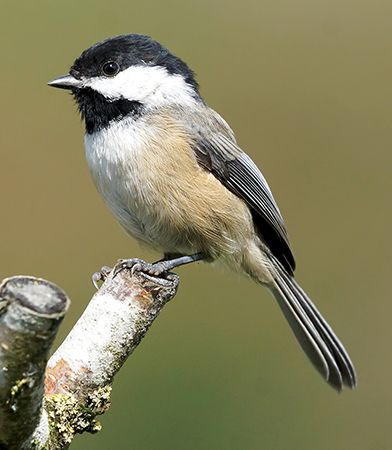
Passerines are incredibly diverse in size and behavior, ranging from tiny species like wrens and titmice to larger birds like ravens and lyrebirds. They are categorized into two main suborders: the suboscines (such as flycatchers) and the oscines, which are commonly known as songbirds.10811
Examples of passerine birds include:
Sources
- Hirundinidae — Encyclopædia Britannica
- Swallow — Encyclopædia Britannica
- Hirundinidae — Merriam-Webster
- Nest — Encyclopædia Britannica
- cliff swallow — Merriam-Webster
- Diptera: Top Questions — Encyclopædia Britannica
- Apodiform - Importance to humans — Encyclopædia Britannica
- Passeriform — Encyclopædia Britannica
- Suboscine — Encyclopædia Britannica
- Passeriform - Size range and structural diversity — Encyclopædia Britannica
- Perching duck — Encyclopædia Britannica
Published on · 2 min read