Cinder Cone
Cinder cones are common volcanic landforms found in many regions worldwide. Notable examples include:
Where are some notable examples of cinder cones found around the world?
Cinder cones are common volcanic landforms found in many regions worldwide. Notable examples include:
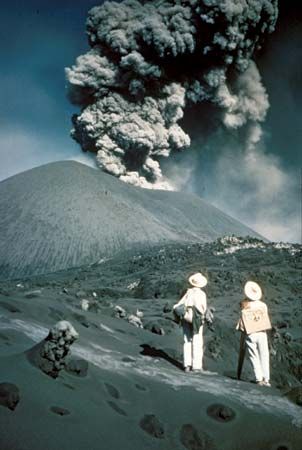
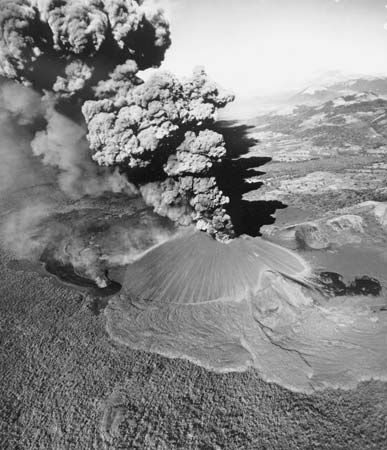
- Parícutin: Located in Mexico, this is one of the youngest volcanoes on Earth. It famously emerged from an open field in 1943 and grew into a significant cone during nearly a decade of continuous eruptions.12
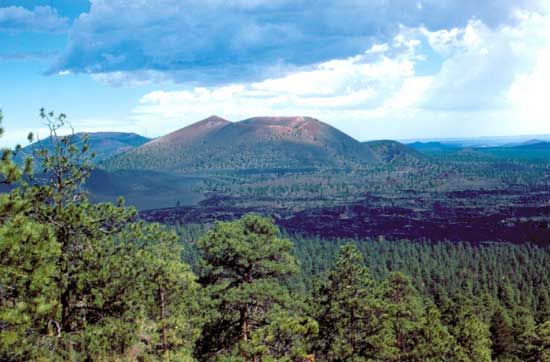
- Sunset Crater Volcano National Monument: Situated in Arizona, U.S., this truncated cone formed following eruptions that began around 1064–65 CE. It is known for its brilliantly hued summit crater.3
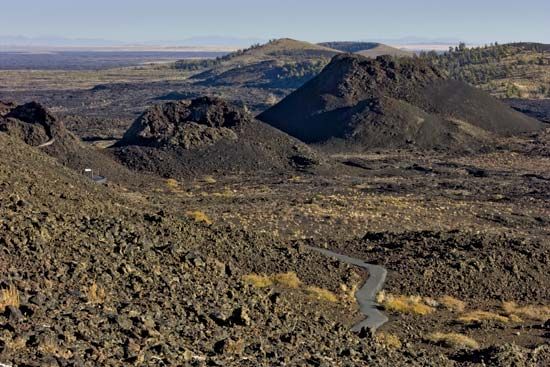
- Craters of the Moon National Monument and Preserve: This area in Idaho, U.S., features a vast landscape of more than 35 volcanic craters and numerous cones scattered along a major rift.4
- Cerro Negro: Located in Nicaragua, this is a classic example of a steep, relatively small pyroclastic cone built from loose volcanic fragments.1
What is a cinder cone and how does it form in geological terms?
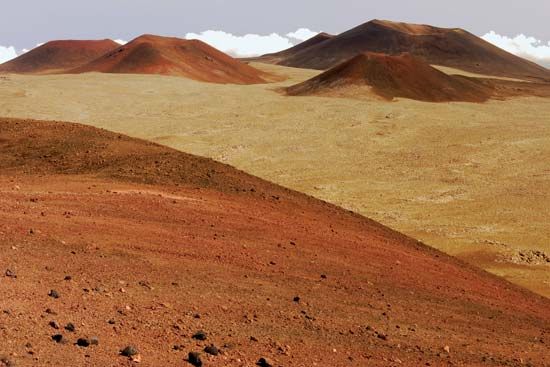
A cinder cone is a steep, conical volcanic landform built from the accumulation of loose pyroclastic fragments, primarily cinder or scoria, around a central volcanic vent.
These structures form through explosive eruptions of mafic or intermediate lavas, such as basalt or basaltic andesite. During these eruptions—often characterized as Vulcanian or Hawaiian—magma is ejected into the air, where it cools sufficiently to remain as loose, non-welded fragments upon landing. These fragments pile up around the vent, typically forming a bowl-shaped crater at the summit. The exterior slopes of the cone generally maintain an angle of about 30°, representing the angle of repose where the loose material remains in equilibrium.
While some cones, like Parícutin, can grow significantly during a single, continuous eruptive period, they are often relatively small. Because the material is highly permeable, rainwater typically sinks into the cone rather than eroding the slopes, allowing these features to endure for long periods.
What role do cinder cones play in the larger geological landscape?
Cinder cones serve as significant, albeit often short-lived, components of the geological landscape. They are found in nearly all volcanic districts and frequently appear as clusters within volcanic fields, where scattered magma conduits lead to the formation of numerous small, individual vents rather than a single, massive volcano.25
Beyond their role as independent features, cinder cones often function as secondary structures. They frequently develop along the flanks of larger shield volcanoes, acting as vents for localized eruptive activity. While many are ephemeral, they are surprisingly enduring landscape features; because their composition of loose cinder is highly permeable, rainwater typically infiltrates the cone rather than eroding its slopes.24
Geologically, these cones can represent a transitional phase. While some remain small and active for only a single eruptive period, others may evolve into more complex structures like stratovolcanoes if activity persists at the same vent for thousands of years.4
What types of rocks and materials are typically found in cinder cones?
Cinder cones are primarily composed of loose, non-welded pyroclastic fragments that accumulate around a volcanic vent. The specific materials and rock types typically found in these structures include:
- Cinder and Scoria: The cones are built largely from cinder or scoria. Scoria is a dark-colored, glassy igneous rock characterized by numerous vesicles—small, bubble-like cavities formed by escaping gas during eruption.2
- Mafic and Intermediate Lavas: The fragments are derived from mafic or intermediate magmas, most commonly basalt or basaltic andesite.85
- Volcanic Debris: Because the fragments cool significantly during their flight through the air, they do not weld together upon landing, resulting in a highly permeable, loose deposit.85
While these cones are defined by these pyroclastic materials, lava flows may also occasionally breach the sides of the cone or emerge from its base through tunnels.8
Sources
- Sunset Crater Volcano National Monument — Encyclopædia Britannica
- cinder cone — Encyclopædia Britannica
- Craters of the Moon National Monument and Preserve — Encyclopædia Britannica
- cinder cone — Merriam-Webster
- volcano - Pyroclastic cones — Encyclopædia Britannica
- Paricutín — Encyclopædia Britannica
- Uruapan: Top Questions — Encyclopædia Britannica
- scoria — Encyclopædia Britannica
- volcano - Volcanic fields — Encyclopædia Britannica
Published on · 3 min read