Cineraria
Cineraria refers to a group of ornamental plants developed from species within the Asteraceae family, specifically the genus Senecio and its relatives.
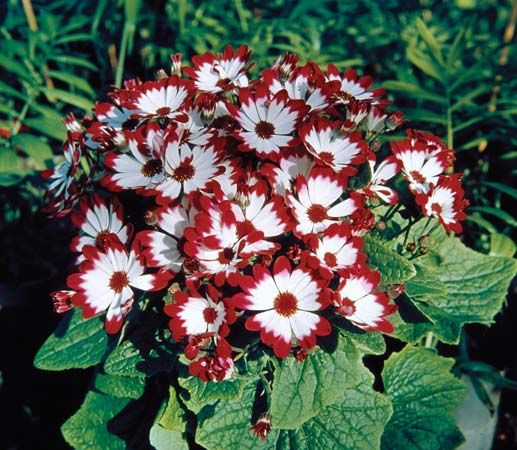
What is Cineraria?
Cineraria refers to a group of ornamental plants developed from species within the Asteraceae family, specifically the genus Senecio and its relatives.1
There are two primary categories of these plants:
- Garden species: This includes plants like dusty miller (S. cineraria), which are often grown for their foliage.1
- Greenhouse varieties: Derived from S. cruentus (also known as Pericallis cruenta), these are popular as potted plants. They are characterized by heart-shaped leaves and clusters of vibrant, star-shaped flowers that bloom in a variety of colors.12
The name is derived from the Latin word cinerarius, meaning “of ashes,” a reference to the plant’s appearance. Both types are typically grown from seed and are widely cultivated for their aesthetic appeal.21
What are the characteristics of the Asteraceae family?
The Asteraceae family, commonly known as the aster, daisy, or composite family, is one of the largest groups of angiosperms, comprising over 1,620 genera and 25,000 species of trees, shrubs, and herbaceous plants.34
Key Characteristics
- Composite Flower Heads: The most distinct feature is the grouping of flowers into compact inflorescences (heads) that resemble single flowers. Each head is subtended by an involucre of small, modified leaves called bracts.5
- Florets: A single head can contain over 1,000 individual flowers, or florets. These are categorized by type:
- Floral Anatomy: The calyx is highly modified into a pappus, consisting of scales, awns, or bristles. The ovary is compound with a single locule and a basal ovule, which is a key diagnostic feature.5
- Fruit: The family produces one-seeded achene fruits.4
How does the dusty miller plant get its name?
The dusty miller plant derives its name from its distinctive appearance, specifically its ashy-gray or white, tomentose (hairy or woolly) leaves. This unique foliage gives the plant a dusty or powdery look, reminiscent of a miller covered in flour.7
The term is applied to several different plants that share this characteristic grayish foliage, most notably Senecio cineraria (also known as cineraria) and the herbaceous Artemisia stelleriana.78
What are the best conditions for growing greenhouse plants?
To successfully grow plants in a greenhouse, growers must create a controlled environment that replicates or optimizes the conditions nature provides in open fields. Key factors include:9
- Temperature Regulation: Greenhouses are categorized by their nighttime temperature requirements. Cool greenhouses (7–10 °C) support plants like azaleas and carnations, while warm greenhouses (10–13 °C) are ideal for orchids and ferns. Tropical hothouses (16–21 °C) accommodate plants like palms. Heating is typically managed via steam, hot water, or electric systems, while ventilation and shading prevent overheating.10911
- Light Control: Light is essential for photosynthesis and influences flowering through photoperiodism flowering through photoperiodism. Growers manipulate day length using supplemental lighting or shading to induce flowering out of season.1412
- Soil and Nutrition: Because greenhouse space is valuable, growers use scientific soil management, including crop rotation and precise fertilizer application, to ensure optimal nutrient balance.1314
- Environmental Management: Advanced operations may regulate relative humidity and supplement carbon dioxide levels to boost photosynthetic efficiency.911
Sources
- Cineraria — Encyclopædia Britannica
- cineraria — Merriam-Webster
- Asteraceae — Encyclopædia Britannica
- Asteraceae - Economic importance — Encyclopædia Britannica
- list of plants in the family Asteraceae — Encyclopædia Britannica
- Asteraceae - Flowers — Encyclopædia Britannica
- dusty miller — Merriam-Webster
- Groundsel — Encyclopædia Britannica
- greenhouse — Encyclopædia Britannica
- Agricultural technology - Greenhouses — Encyclopædia Britannica
- horticulture - Structures — Encyclopædia Britannica
- Agricultural technology - Fertilizing and conditioning the soil — Encyclopædia Britannica
- horticulture - Soil management — Encyclopædia Britannica
- horticulture - Light control — Encyclopædia Britannica
Published on · 3 min read