Azalea
Azaleas are a group of plants belonging to the genus Rhododendron within the heath family (Ericaceae). They are widely cultivated as ornamentals, with many…
What are the main characteristics of azalea plants?
Azaleas are a group of plants belonging to the genus Rhododendron within the heath family (Ericaceae). They are widely cultivated as ornamentals, with many varieties originating from species native to Asia and North America.1
Key characteristics include:
- Foliage: Unlike many other rhododendrons, which are typically evergreen, azaleas are generally deciduous.12
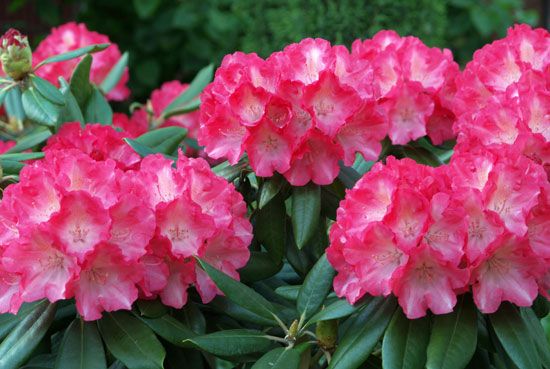
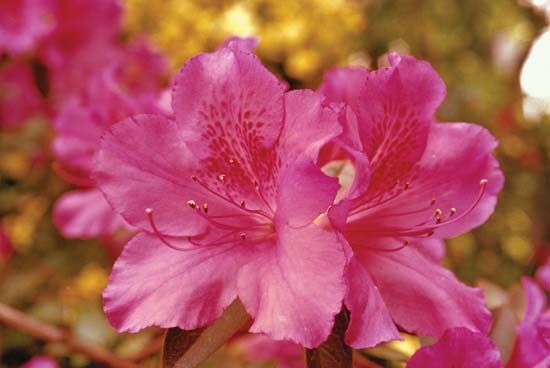
- Flowers: Their flowers are distinctively funnel-shaped and often two-lipped. They are frequently fragrant and typically feature only five projecting stamens, whereas other rhododendrons usually possess ten or more and tend to have bell-shaped blooms.1
- Growth: They grow as shrubs, with heights varying significantly by species—ranging from small varieties like the flame azalea (0.5 to 2 metres) to larger types like the sweet azalea (3 to 6 metres).1
How many species of azalea exist, and what are some popular varieties?
While the exact number of species is not explicitly defined in the provided data, azaleas are classified as specific species within the genus Rhododendron. Because they were formerly placed in their own genus, Azalea, they are often categorized by their distinct physical traits rather than a single fixed count.1
Popular Varieties
Horticulturists have bred hundreds of forms, but several well-known species and varieties are frequently cultivated:
- North American Species:
- Horticultural Forms:
What is the difference between azaleas and rhododendrons?
While azaleas were formerly classified in their own genus, Azalea, they are now recognized as specific species within the genus Rhododendron. Because they belong to the same genus, the distinction between them is based on physical characteristics rather than a strict biological separation, and intermediate forms do exist.1
The primary differences between azaleas and other rhododendrons include:
- Foliage: Azaleas are typically deciduous, whereas other rhododendrons are generally evergreen.1
- Flower Shape: Azalea flowers are usually funnel-shaped and somewhat two-lipped, while other rhododendron flowers are more commonly bell-shaped.1
- Stamens: Azalea flowers typically feature only 5 projecting stamens, compared to 10 or more found in other rhododendrons.1
- Fragrance: Azalea blooms are frequently fragrant, a trait less common in many other rhododendron varieties.1
What are the main differences between deciduous and evergreen plants?
The primary difference between deciduous and evergreen plants lies in their leaf-retention habits and environmental adaptations.
Deciduous Plants
Deciduous plants are characterized by their seasonal shedding of leaves, typically in autumn or during a dry season.45
- Adaptation: This habit is an evolutionary response to stressful environmental conditions, such as freezing winter temperatures or water scarcity, where leaves would be unable to function or would be susceptible to damage.65
- Energy Efficiency: Because these leaves are often relatively thin and delicate, they do not require a large input of chemical energy to produce. Shedding them allows the plant to enter a period of dormancy, conserving resources until favorable conditions return in the spring.65
- Appearance: These forests undergo dramatic seasonal changes, shifting from bare branches in winter to lush green canopies in summer and vibrant colors in autumn.5
Evergreen Plants
Evergreen plants retain their foliage throughout the year and into the following growing season.4
- Adaptation: These plants are often found in environments where photosynthesis is possible year-round or where the cost of replacing leaves is too high. Their leaves are typically thicker and more leathery than those of deciduous plants, often appearing as needles or scales in conifers appearing as needles or scales in conifers.64
- Durability: Because these leaves are built to be long-lasting, they are more resistant to water loss and environmental stress, allowing the plant to carry out photosynthesis whenever conditions are suitable.46
- Persistence: A single leaf may remain on an evergreen tree for two years or longer, and leaf fall can occur during any season rather than being restricted to a specific time of year.4
Sources
- azalea — Encyclopædia Britannica
- azalea — Merriam-Webster
- tree azalea — Merriam-Webster
- Evergreen — Encyclopædia Britannica
- Temperate forest - Flora — Encyclopædia Britannica
- Temperate forest - Environment — Encyclopædia Britannica
- Leaf — Encyclopædia Britannica
- Deciduous forest — Encyclopædia Britannica
Published on · 3 min read