Citron
The citron (Citrus medica) is a small evergreen tree or shrub in the Rutaceae family that produces a large, fragrant fruit. While it belongs to the same…
What is a citron fruit and how does it differ from other citrus fruits?
The citron (Citrus medica) is a small evergreen tree or shrub in the Rutaceae family that produces a large, fragrant fruit. While it belongs to the same genus as other citrus fruits, it possesses distinct characteristics.12
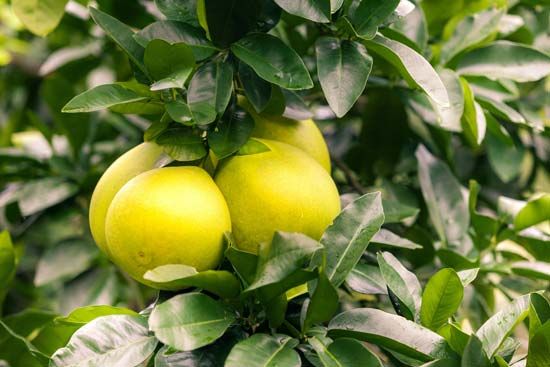
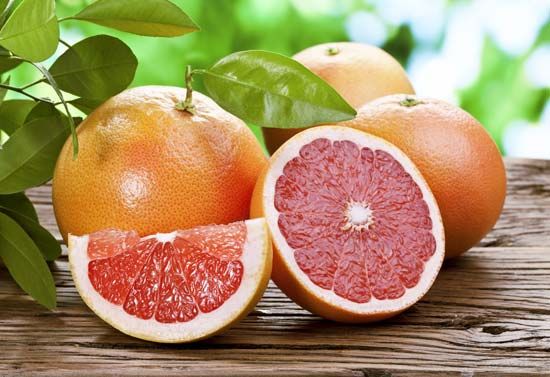
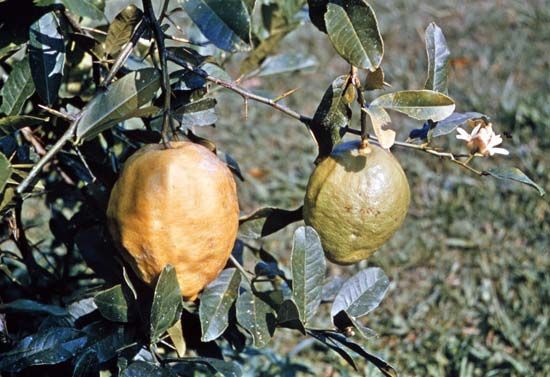
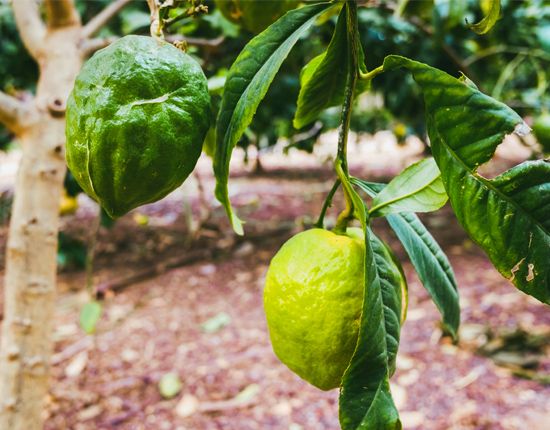
Unlike many common citrus fruits—such as oranges, lemons, or grapefruits—which are prized for their juicy, segmented pulp, the citron is defined by its exceptionally thick, fleshy, white rind. Its pulp is relatively firm, somewhat dry, and generally not consumed directly, whereas the rind is often cured in brine and candied for use in confections. Physically, the citron fruit is typically oval or oblong, furrowed, and features a protuberant tip, growing to about 12 to 15 cm in length.123
What role does citron play in religious and cultural practices?
The citron holds significant importance in religious and cultural practices, most notably within Judaism. Known as the etrog, it is one of the four species of plants mandated for use during Sukkot, the Feast of Booths, which celebrates the autumn harvest and gratitude to God.41
Ritual Significance
For these religious rites, the etrog must be physically perfect in both its stem and body. During the festival, the etrog is held in the left hand, while a bundle consisting of a palm branch (lulav), myrtle (hadas), and willow (arava) is held in the right.4
The ritual involves several key actions:
- Processions: On the seventh day of Sukkot, the four species are carried seven times around the synagogue.4
- Symbolism: During the recitation of the Hallel (specified Psalms), the etrog and lulav are waved in all directions—upward, downward, and toward the four cardinal points—to symbolize the omnipresence of God.4
Historically, the etrog has also served as a widely recognized symbol of the Jewish faith.4
How is citron cultivated and what are the ideal growing conditions for this fruit?
The citron (Citrus medica) is cultivated primarily in Mediterranean countries and the West Indies, thriving in tropical and warm regions. As an evergreen shrub or small tree, it typically reaches a height of about 3.5 meters (11.5 feet) and features irregular, spreading, and spiny branches.12
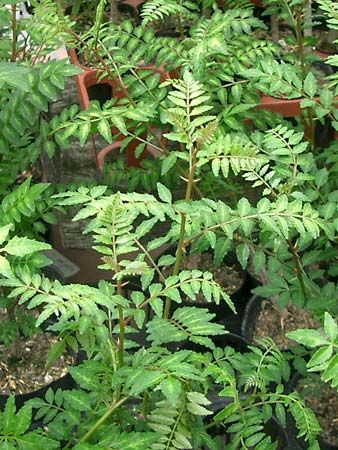
While specific soil and irrigation requirements are not detailed in the provided search results, the plant is known to be a member of the Rutaceae family, which generally favors well-drained environments and consistent warmth. Like other citrus species, the citron is sensitive to extreme cold, which is why its cultivation is concentrated in temperate and tropical climates. The plant is characterized by its large, pale green, serrate leaves and fragrant flowers, which vary in color depending on the variety—ranging from purple-tinged in acidic types like the Diamante to creamy white in sweet varieties like the Corsican.132
What is the significance of the citron in the Jewish festival of Sukkoth?
In the Jewish festival of Sukkot, the etrog (citron) serves as one of the four essential plant species used to express gratitude to God for the earth’s bounty. To be ritually acceptable, the fruit must be physically perfect in both its stem and body.45
During the seven-day festival, the etrog is held in the left hand, while a bundle of palm, myrtle, and willow is held in the right. Practitioners wave these four species in all six directions—upward, downward, and toward the four cardinal points—during the recitation of the Hallel (Psalms of praise) to symbolize the omnipresence of God. On the seventh day, known as Hoshana Rabba, the four species are carried in a sevenfold circuit around the synagogue platform. Historically, the etrog has also functioned as a widely recognized symbol of Judaism.45
Sources
- citron — Encyclopædia Britannica
- Citrus — Encyclopædia Britannica
- citron — Merriam-Webster
- etrog — Encyclopædia Britannica
- Sukkot — Encyclopædia Britannica
Published on · 3 min read