Civilian Conservation Corps
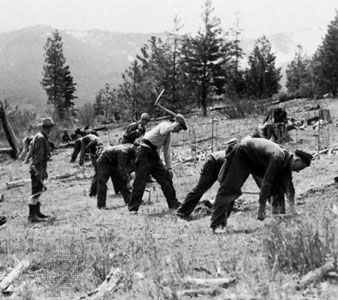
The Civilian Conservation Corps (CCC) was established in 1933 as a New Deal program with two primary, dual-purpose objectives:
What was the primary purpose of the Civilian Conservation Corps (CCC) when it was established?
The Civilian Conservation Corps (CCC) was established in 1933 as a New Deal program with two primary, dual-purpose objectives:
- Relieving Unemployment: The program’s main goal was to provide gainful employment to the large population of idle young men who were unable to secure jobs during the Great Depression.1
- Resource Conservation: The second purpose was to protect and restore the natural resources of the United States, including the preservation of forest lands and the restoration of agricultural topsoil lost during the Dust Bowl.1
While the program provided essential economic relief, it is important to note that despite legislative efforts to prevent racial discrimination, the CCC practiced widespread segregation, often confining African American and Native American participants to separate camps confining African American and Native American participants to separate camps.1
What lasting impact did the CCC have on American society and the environment?
The Civilian Conservation Corps (CCC) left a profound and enduring legacy on both American society and the environment. By providing work for more than 3,000,000 men during the Great Depression, the program served as a vital social welfare experiment that offered economic relief, vocational training, and character development to a generation of young men.1
Environmental Impact
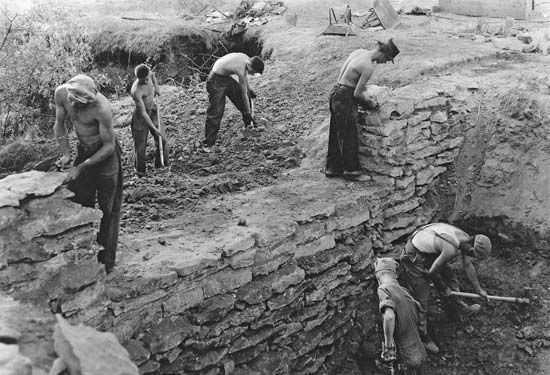
The physical contributions of the CCC were immense, fundamentally altering the American landscape through massive conservation efforts:
- Reforestation and Fire Control: Workers planted more than 2.3 billion trees and spent millions of person-days fighting forest fires and conducting fire prevention operations.1
- Soil and Water Conservation: To combat the Dust Bowl, the corps built 6,660,000 check dams to control soil erosion and constructed thousands of large diversion dams.1
- Infrastructure Development: The CCC constructed 126,000 miles of roads and trails, 45,000 bridges and buildings, and extensive telephone lines. Much of the infrastructure within the National Park System and numerous state parks—including cabins and artificial lakes—remains a testament to their labor.1
- Shelterbelts: In collaboration with other agencies, the CCC helped plant over 200 million seedlings to create 18,000 miles of windbreaks, which were instrumental in halting wind erosion across the Great Plains.2
While the program was highly successful in its material accomplishments, it is important to acknowledge that it also reflected the societal prejudices of its time, as segregation was widely practiced, often isolating African American and Native American participants in separate camps.1
How did the CCC program come to an end, and what factors contributed to its conclusion?
The Civilian Conservation Corps (CCC) concluded its operations on June 30, 1942, after nine years of service. Its dissolution was primarily driven by the shifting national priorities necessitated by the United States’ entry into World War II in December 1941.1
Several factors contributed to the program’s end:
- Military Mobilization: Following the U.S. entry into the war, the urgent needs of the armed forces took precedence, leading to the termination of the agency.1
- Labor Market Shifts: As the defense industry expanded, there was an increased demand for labor. Many young men who might have otherwise joined or remained in the CCC left the program to pursue higher-paying factory jobs related to the war effort.1
- Redirection of Efforts: Prior to its formal closure, the CCC had already begun shifting its focus toward defense-related projects, such as building airfields, clearing land for military facilities, and constructing roads for army and navy installations.1
By the time the program ceased operations, it had provided employment for more than 3,000,000 men and left a lasting material legacy across the country’s forests and parks.1
How did the CCC program impact the lives of young men who participated?
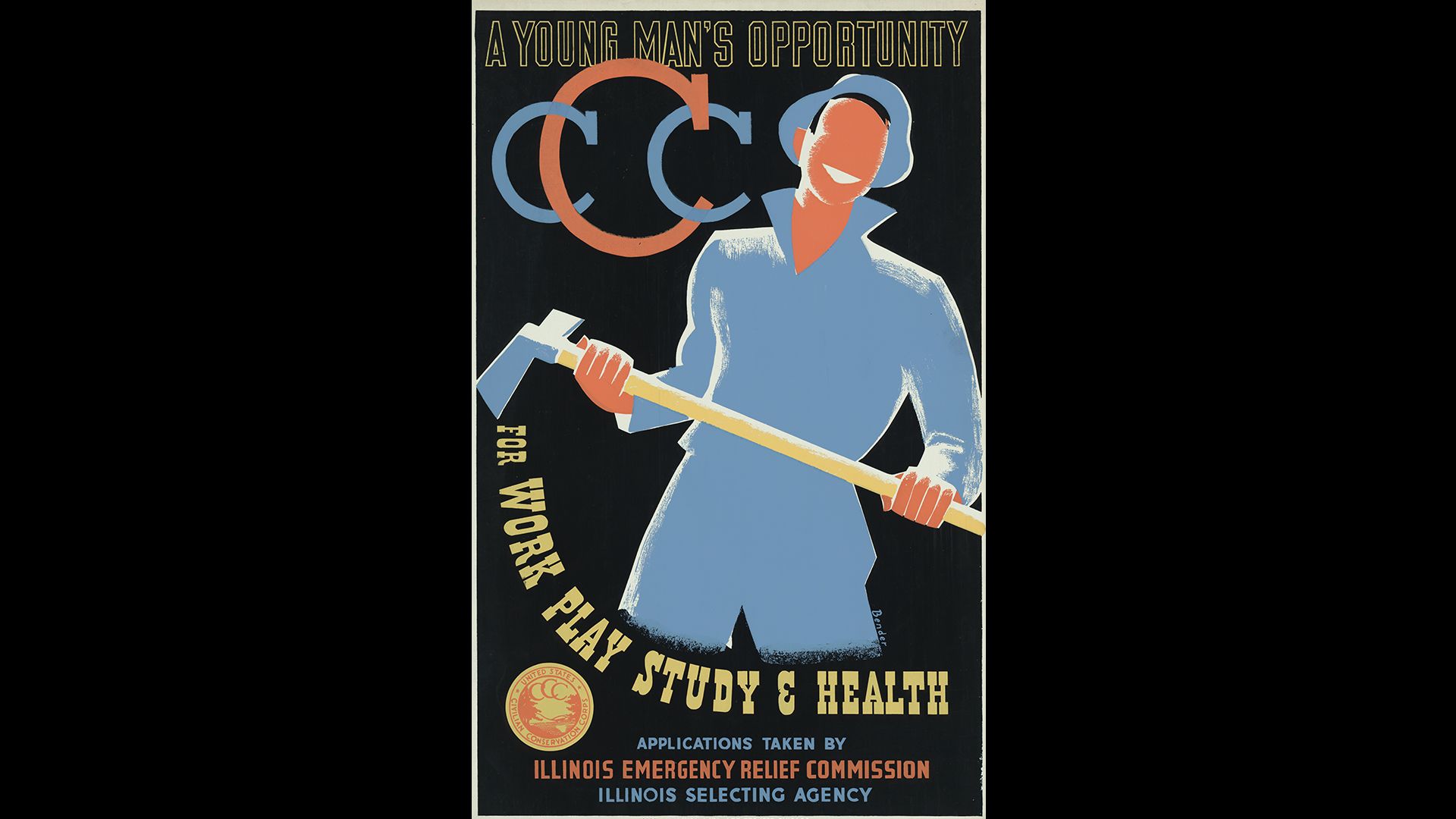
The Civilian Conservation Corps (CCC) significantly impacted the lives of the more than 3,000,000 young men who participated in the program during the Great Depression. By providing gainful employment, the CCC offered a vital lifeline to a generation struggling to find work, while simultaneously fostering personal growth through a semi-military camp environment.1
The program’s impact on participants included:
- Economic Support: Enrollees received a monthly cash allowance of $30. While they kept $5 for personal expenses, the remaining $25 was sent directly to their families, providing essential financial relief during the economic crisis.1
- Education and Skill Development: Participants gained valuable experience in manual labor and, later in the program, became eligible for leadership, industrial safety, and vocational courses. These opportunities improved their prospects for future employment in the private sector.1
- Character Building: The structured, semi-military regime of the work camps was designed to instill discipline and character, offering a sense of purpose and stability to young men who had previously been idle.1
- Basic Needs: Beyond wages, the program ensured that participants were provided with food, medical care, and other necessities.1
Sources
- Civilian Conservation Corps — Encyclopædia Britannica
- Dust Bowl - Expansion of federal authority — Encyclopædia Britannica
- Civil Works Administration — Encyclopædia Britannica
Published on · 4 min read