Clean Air Act
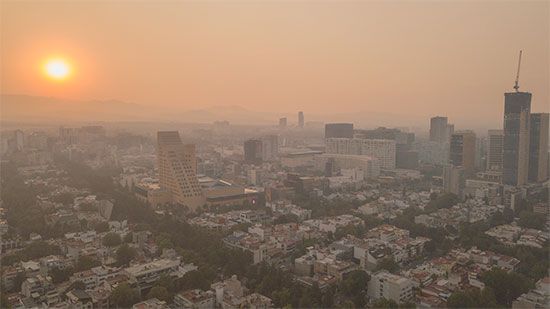
The Clean Air Act (CAA) is a foundational U.S. federal law enacted in 1970 to prevent air pollution, protect the ozone layer, and promote public health.
What is the Clean Air Act?
The Clean Air Act (CAA) is a foundational U.S. federal law enacted in 1970 to prevent air pollution, protect the ozone layer, and promote public health.1
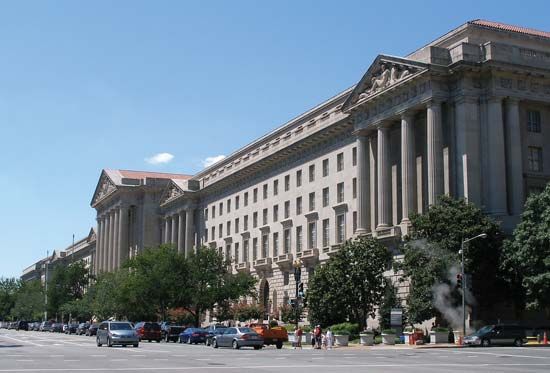
The act empowered the Environmental Protection Agency (EPA) to establish national regulatory programs, including National Ambient Air Quality Standards (NAAQS). These standards set limits on six major “criteria” pollutants: sulfur dioxide, nitrogen dioxide, particulate matter, carbon monoxide, ground-level ozone, and lead.1
Beyond setting emissions limits for industrial facilities and motor vehicles, the CAA has been amended to address specific environmental threats, such as acid rain and the depletion of the ozone layer through the phase-out of chlorofluorocarbons. While the act has significantly reduced air pollution levels over the decades, its scope and authority regarding greenhouse gas emissions have been subject to evolving legal interpretations and regulatory changes.12
When was the Clean Air Act created in the United States?
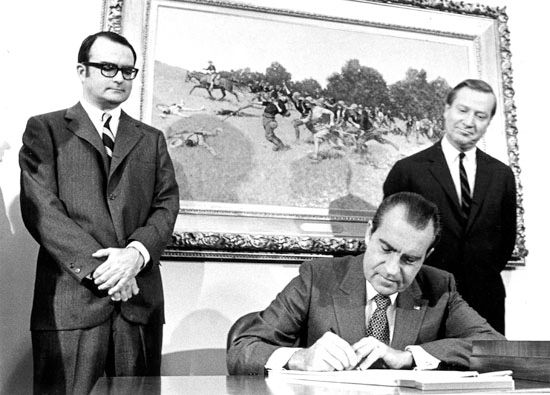
The Clean Air Act (CAA) was signed into law in the United States on December 31, 1970.1
This landmark legislation was designed to prevent air pollution and protect public health by empowering the Environmental Protection Agency (EPA) to establish national regulatory programs. While the act was passed in 1970, it has been significantly expanded through subsequent amendments to address evolving environmental challenges, such as acid rain and the depletion of the ozone layer.1
Why was the Clean Air Act needed?
The Clean Air Act (CAA) was needed to address the widespread, ineffective, and inconsistent environmental regulations that existed at the state and local levels prior to 1970. Before its passage, there was no unified federal framework to effectively combat the rising threat of air pollution caused by industrial entities and motor vehicles.12
The act was essential for several key reasons:
- Establishing National Standards: It empowered the Environmental Protection Agency (EPA) to create National Ambient Air Quality Standards (NAAQS), providing a consistent, enforceable baseline for air quality across the entire country.12
- Protecting Public Health: It targeted six major “criteria” pollutants—including lead, carbon monoxide, and particulate matter—that posed direct risks to human health and the environment.1
- Federal Enforcement: It moved beyond voluntary guidelines, introducing federal permits and criminal penalties to ensure that large industrial polluters were held accountable for their emissions.1
- Addressing Global Threats: Later amendments were necessary to tackle specific environmental crises, such as acid rain and the depletion of the ozone layer.12
What types of air pollution does the Clean Air Act address?
The Clean Air Act (CAA) addresses a wide range of pollutants to protect public health and the environment. Its regulatory framework primarily focuses on two categories:
Criteria Pollutants
The U.S. Environmental Protection Agency (EPA) has designated six “criteria” pollutants, which serve as indicators of overall air quality:34
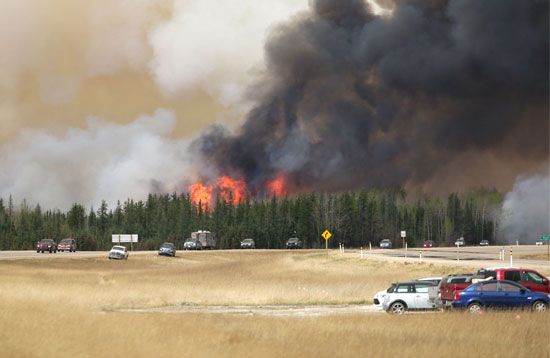
- Carbon monoxide (CO): Emitted by automobile exhaust, fires, and industrial processes.54
- Lead (Pb): Historically from leaded gasoline; now primarily from metal processing and waste incineration.54
- Nitrogen dioxide (NO₂): Produced by electricity generation, industrial processes, and vehicle emissions.54
- Particulate matter: Tiny solid or liquid particles from smokestacks, construction, and combustion.34
- Sulfur dioxide (SO₂): Primarily from fossil-fuel combustion and power plants.54
- Ground-level ozone (O₃): Formed by chemical reactions between nitrogen oxides and volatile organic compounds in sunlight.34
Hazardous Air Pollutants (Air Toxics)
Beyond criteria pollutants, the Clean Air Act regulates “air toxics”—hazardous substances known to cause cancer, genetic mutations, or other serious health effects. Following 1990 amendments, the list of regulated substances expanded to 189, including:6
- Arsenic
- Asbestos
- Benzene
- Mercury
- Formaldehyde
- Vinyl chloride
Sources
- Clean Air Act — Encyclopædia Britannica
- Environmental Protection Agency — Encyclopædia Britannica
- National Ambient Air Quality Standards — Encyclopædia Britannica
- The six criteria air pollutants — Encyclopædia Britannica
- air pollution - Air toxics — Encyclopædia Britannica
- Emissions trading — Encyclopædia Britannica
- air pollution - Criteria pollutants — Encyclopædia Britannica
Published on · 3 min read