Greenhouse Gas
Changes in land use, particularly deforestation and the conversion of land for agriculture, significantly impact greenhouse gas concentrations by disrupting…
How do changes in land use, such as deforestation, impact greenhouse gas concentrations?
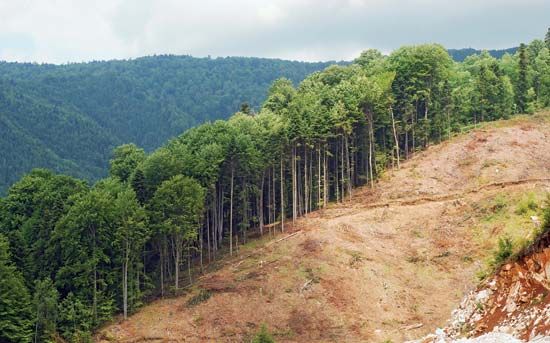
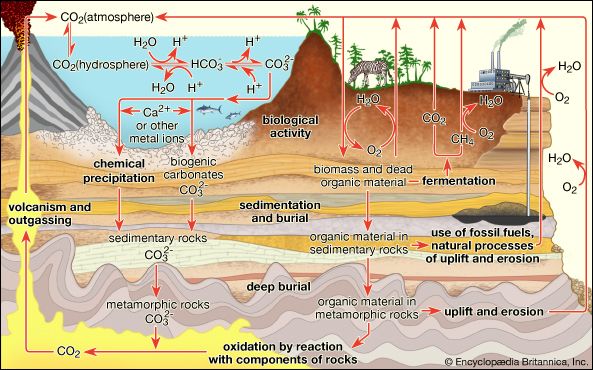
Changes in land use, particularly deforestation and the conversion of land for agriculture, significantly impact greenhouse gas concentrations by disrupting the natural carbon cycle.
Forests and soils act as vital carbon sinks, sequestering carbon through photosynthesis and storing it in biomass and soil humus. When forests are cleared or burned, this stored carbon is released into the atmosphere as carbon dioxide (CO₂). Furthermore, clearing land reduces the planet’s future capacity to absorb CO₂, effectively turning a carbon sink into a carbon source.1234
Beyond CO₂, land-use changes also influence other potent greenhouse gases. Soil processes are responsible for significant emissions of methane and nitrous oxide, and agricultural practices—such as the application of nitrogen-containing fertilizers—can further alter the soil’s ability to process these gases. Consequently, these human-driven changes in vegetation cover and soil management exacerbate the greenhouse effect, contributing to global warming.15
What are greenhouse gases and which ones are the most significant contributors to the greenhouse effect?
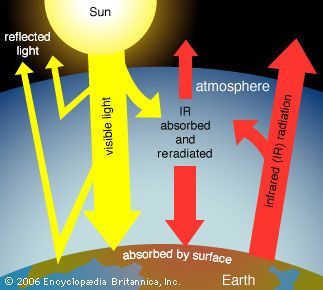
Greenhouse gases are atmospheric gases that absorb infrared radiation emitted from Earth’s surface and reradiate it back toward the ground. This process, known as the greenhouse effect, is essential for maintaining the planet’s temperature, though human activities have significantly increased these concentrations, driving climate change.67
The most significant contributors include:
- Water vapor: The most potent greenhouse gas. Its concentration is primarily determined by air temperature rather than direct human activity; as the surface warms, increased evaporation leads to higher concentrations in the atmosphere.6
- Carbon dioxide (CO₂): The most prominent greenhouse gas. While natural sources and sinks historically balanced each other, human activities—such as burning fossil fuels and deforestation—have created an excess that drives global warming.67
- Methane (CH₄): A highly potent gas that is more effective at trapping heat than CO₂ but exists in lower concentrations and has a shorter atmospheric residence time.6
- Surface-level ozone (O₃): A result of air pollution, distinct from the protective stratospheric ozone layer.6
- Nitrous oxide and fluorinated gases: Trace gases, including hydrofluorocarbons, produced largely by industrial activities.6
What are the main sources of greenhouse gas emissions, both natural and human-made?
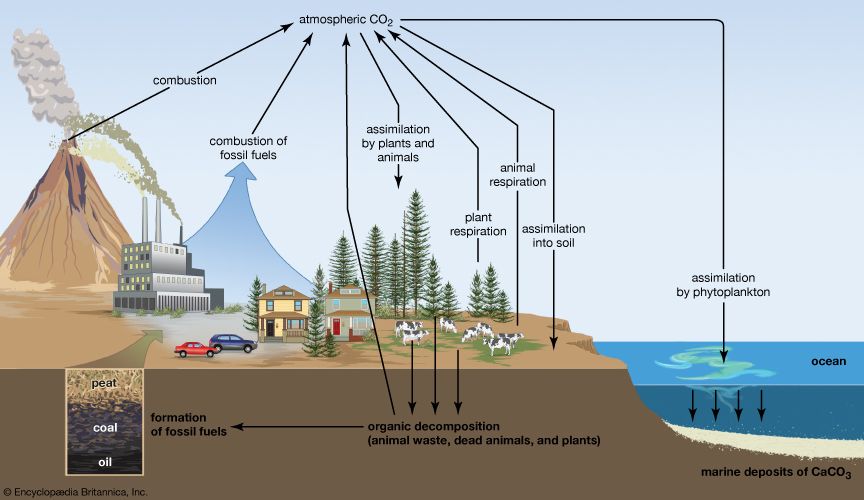
Greenhouse gas emissions originate from both natural processes and human activities. Understanding these sources is essential for addressing climate change, as human-driven emissions have significantly altered the Earth’s energy balance.86
Natural Sources
Natural processes have historically maintained a balance of greenhouse gases, keeping the planet habitable.6
- Biological and Geological Processes: Carbon dioxide (CO₂) is released through volcanic activity, the decay of organic matter, and the respiration of aerobic organisms.4
- Water Vapor: As the most potent greenhouse gas, its concentration is naturally regulated by air temperature; warmer surfaces lead to increased evaporation.4
- Methane (CH₄): Natural emissions come from wetlands, termites, seafloor seepage, and methane hydrates in permafrost.4
- Nitrous Oxide (N₂O): Small background concentrations occur due to natural biological reactions in soil and water.4
- Ozone (O₃): Stratospheric ozone can naturally subside toward the Earth’s surface.4
Human-Made Sources
Since the Industrial Revolution, human activities have increased greenhouse gas concentrations, exceeding the capacity of natural carbon sinks to offset them exceeding the capacity of natural carbon sinks to offset them.84
- Fossil Fuel Combustion: The burning of coal, petroleum, and natural gas for energy is the primary driver of CO₂ and methane emissions.49
- Land-Use Change: Deforestation and agricultural expansion release stored carbon and reduce the planet’s capacity to absorb CO₂.410
- Agriculture and Waste: Livestock farming, rice cultivation, and decomposition in landfills are major sources of methane.410
- Industrial Processes: The production of cement and the use of fluorinated gases (such as hydrofluorocarbons) are significant human-made contributors.49
What are some strategies and technologies being developed to reduce greenhouse gas emissions?
To address the challenge of global warming, societies are increasingly adopting strategies and technologies aimed at reducing greenhouse gas emissions. These efforts generally fall into two categories: mitigation, which focuses on lowering emissions, and adaptation, which prepares societies for a changing climate.11
Energy Transition and Efficiency
A primary strategy is the shift from fossil fuels to less carbon-intensive energy sources. This includes the expansion of renewable energy such as wind, solar, and hydropower. Additionally, improving energy efficiency in vehicles—through the adoption of electric and hybrid-electric vehicles—and in household appliances is a critical component of reducing personal and industrial carbon footprints.1112
Carbon Capture and Storage (CCUS)
Carbon capture, utilization, and storage (CCUS) involves separating CO₂ from industrial emissions or the atmosphere and storing it in deep geological formations or the ocean. While this technology is costly, it is being developed to mitigate emissions from sources that are difficult to decarbonize.1314
Waste Management and Biogas
Anaerobic digestion is a process that breaks down organic waste—such as livestock manure and food scraps—in the absence of oxygen. This generates biogas, which can be captured and used for heating, cooking, or electricity, providing a renewable energy source while preventing methane from escaping into the atmosphere.15
Policy Instruments
Governments use various policy tools to incentivize these changes, including:
- Carbon taxes: Encouraging less carbon-intensive energy use.11
- Cap-and-trade: A market-based system where a central authority limits total emissions and allows polluters to trade permits, ensuring reductions are achieved at the lowest cost.16
- International agreements: Protocols like the Kyoto Protocol set clear reduction targets and provide mechanisms for international cooperation.16
Sources
- soil - Soils and global warming — Encyclopædia Britannica
- Global warming - Carbon dioxide — Encyclopædia Britannica
- Carbon sequestration — Encyclopædia Britannica
- Climate change - Human activities — Encyclopædia Britannica
- Global warming - Carbon cycle feedbacks — Encyclopædia Britannica
- 5 Notorious Greenhouse Gases — Encyclopædia Britannica
- Greenhouse gas — Encyclopædia Britannica
- Climate change - Greenhouse gases — Encyclopædia Britannica
- Climate change - The human impact: Fossil fuels and greenhouse gas emissions — Encyclopædia Britannica
- Global warming - The greenhouse effect — Encyclopædia Britannica
- Global warming policy - Mitigation and adaptation — Encyclopædia Britannica
- Geoengineering - Carbon burial — Encyclopædia Britannica
- environmental policy - Global policy agreements — Encyclopædia Britannica
- decarbonization - Shift to renewables — Encyclopædia Britannica
- air pollution control - Carbon sequestration — Encyclopædia Britannica
- anaerobic digestion — Encyclopædia Britannica
Published on · 5 min read