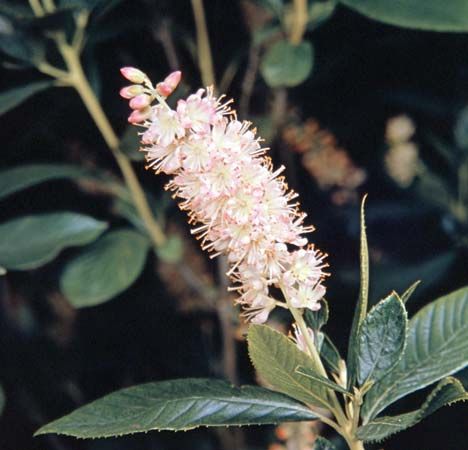
Clethra
The Clethra genus consists of 65 species of flowering trees and shrubs belonging to the family Clethraceae. Often referred to as white alders, these plants…
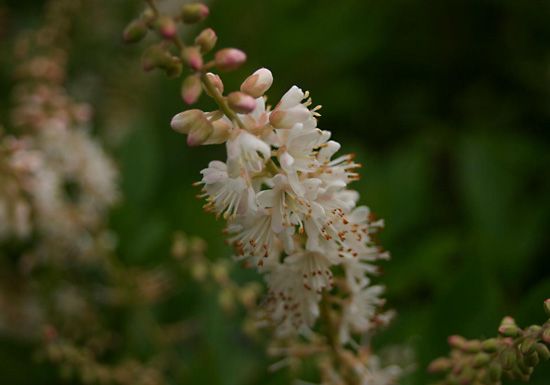
How many species are included in the Clethra genus, and what are some of the most common or notable species?
The Clethra genus consists of 65 species of flowering trees and shrubs belonging to the family Clethraceae. Often referred to as white alders, these plants are widely cultivated for their fragrant, white flower spikes.1
Three notable species are native to North America:
- C. alnifolia: Commonly known as sweet-pepper bush or summer sweet, this shrub grows on the eastern Coastal Plain. It typically reaches 1 to 3 metres in height and is noted for foliage that turns yellow or orange during the autumn.1
- C. acuminata: Known as cinnamon clethra, this species is found in the mountainous and hilly regions of southeastern North America. It grows to approximately 4.5 metres and is prized for its attractive cinnamon-brown bark.1
- C. tomentosa: This species is found in the same geographic region as C. alnifolia.1
These plants are characterized by their alternate, often toothed leaves, which may be either deciduous or persistent.1
What are the distinguishing characteristics of plants in the Clethra genus?
Plants in the Clethra genus, belonging to the family Clethraceae, are woody trees and shrubs characterized by several distinct features:
- Foliage: The leaves are arranged spirally and are often clustered at the ends of branches. They are typically toothed and can be either deciduous or persistent (evergreen).13
- Flowers: These plants are widely recognized for their small, fragrant, white flowers. The blossoms are usually arranged in spikes or inflorescences located at the ends of the branchlets.13
- Growth Habit: Members of the genus are woody plants that vary in size, ranging from small shrubs to trees. Some species, such as C. acuminata, are particularly valued for ornamental traits like attractive cinnamon-brown bark.13
- Distribution: The genus is diverse, with 65 species found across North and South America, Asia, and the island of Madeira.13
What are the traditional or modern uses of Clethra plants, if any?
The primary use of plants within the Clethra genus is ornamental cultivation. Because they produce handsome, fragrant spikes of white flowers, these trees and shrubs are frequently grown in gardens and landscapes for their aesthetic appeal.12
Specific species are valued for additional ornamental characteristics:
- C. alnifolia (sweet-pepper bush) is popular for its foliage, which transitions to vibrant yellow or orange hues during the autumn months.1
- C. acuminata (cinnamon clethra) is particularly prized by gardeners for its attractive, cinnamon-brown bark in addition to its floral display.1
- C. arborea (lily of the valley tree) is also cultivated as an ornamental plant.2
Beyond their role in horticulture, these plants are recognized for their botanical features, such as their capsular fruits and stellate pubescence, but they are not widely documented for traditional medicinal or industrial uses in the provided sources.3
What are the typical growth patterns and sizes of Clethra plants?
Plants in the Clethra genus exhibit diverse growth patterns as woody, deciduous or evergreen plants. They are characterized by spiral, often toothed leaves that typically cluster at the ends of their branches.123
Regarding their size, these plants range from small shrubs to trees, with specific species showing distinct growth habits:
- C. alnifolia (sweet-pepper bush): This species typically grows to a height of approximately 1 to 3 metres (3 to 10 feet).1
- C. acuminata (cinnamon clethra): Found in mountainous regions, this species reaches heights of about 4.5 metres (15 feet).1
The genus as a whole is defined by its woody structure, featuring stellate pubescence and capsular fruits with three locules. Their flowers are generally small and fragrant, arranged in spikes or racemose inflorescences at the ends of the branchlets.4312
Sources
- Clethra — Encyclopædia Britannica
- Clethra — Merriam-Webster
- Clethraceae — Encyclopædia Britannica
- Ericales - Clethraceae — Encyclopædia Britannica
Published on · 3 min read