Cleveland Bay
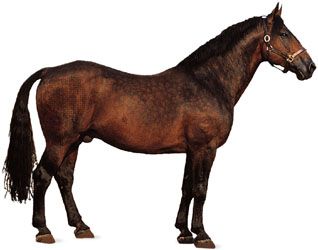
The Cleveland Bay is a distinct breed of horse characterized by its notable strength, endurance, and beauty. While the provided information highlights its…
How does the Cleveland Bay compare to other similar horse breeds in terms of temperament and abilities?
The Cleveland Bay is a distinct breed of horse characterized by its notable strength, endurance, and beauty. While the provided information highlights its historical role as a favored coach horse and its current utility in performance sports, it does not contain specific comparative data regarding the temperament or abilities of other horse breeds.1
Historically, the Cleveland Bay is recognized for its prepotency—the ability to pass its desirable traits to both purebred and crossbred offspring. Because of this, it is frequently crossed with other breeds, most notably the Thoroughbred, to produce versatile animals suited for hunting, driving, jumping, and the three-day event. Today, the breed remains a popular choice for ceremony and competition due to its robust build and reliable nature.1
We could dive deeper into the specific physical characteristics of the Cleveland Bay or explore the history of other draft and coach horse breeds if you are interested.
Where did the Cleveland Bay horse originate, and how has its history shaped its development?
The Cleveland Bay originated in the Cleveland Hills of North Yorkshire, England, during the Middle Ages. Initially developed as a robust pack and saddle horse, the breed evolved significantly during the 17th and 18th centuries through crosses with lighter Andalusian and Arabian horses, which helped refine its character.
By the 19th century, the breed’s development was shaped by its high demand as a versatile British cavalry mount and a premier coach horse. Its reputation for strength, endurance, and “prepotency”—the ability to consistently pass on its desirable traits to offspring—made it a staple in both Britain and the United States.
Today, the breed is recognized as the oldest in Britain and continues to be valued for its substantial build and reliability. It is frequently crossed with the Thoroughbred to produce high-performing horses for hunting, jumping, and the three-day event, while remaining a popular choice for ceremonial harness work.
Are there any famous Cleveland Bay horses in history or popular culture?
While the Cleveland Bay is a historically significant and highly regarded breed known for its strength, endurance, and prepotency, the available records do not identify specific individual horses of this breed that have achieved fame in history or popular culture.
The breed’s reputation is primarily defined by its collective utility as a premier coach horse during the 19th and early 20th centuries, its service as a British cavalry mount, and its ongoing role in modern performance sports like the three-day event. Its influence is largely attributed to its ability to consistently pass on desirable traits to its offspring, particularly when crossed with the Thoroughbred, rather than the celebrity of any single animal.
What are the primary uses of Cleveland Bay horses in modern times?
In modern times, the Cleveland Bay remains a versatile and highly valued breed, primarily utilized in the following capacities:
- Performance and Sport: Due to their strength and endurance, they are frequently crossed with other breeds, most notably the Thoroughbred, to produce high-quality horses for three-day eventing, hunting, jumping, and general riding.1
- Driving: The breed is widely used for carriage driving, both in competitive equestrian events and for ceremonial purposes.14
- Versatility: Beyond specialized sport, they continue to be kept as harness horses, maintaining their historical reputation for reliability and substantial build.1
Their enduring popularity is largely attributed to their prepotency, which allows them to consistently pass on their desirable physical characteristics to their progeny, making them an essential component in modern breeding programs for sport horses.1
Sources
- Cleveland Bay — Encyclopædia Britannica
- Cleveland bay — Merriam-Webster
- Standardbred — Encyclopædia Britannica
- horse - Other light breeds — Encyclopædia Britannica
Published on · 3 min read