Clianthus
Clianthus species, commonly known as parrot’s bill or kakabeak, are striking ornamental shrubs that thrive best in specific environmental conditions. To…
What are the ideal growing conditions for Clianthus plants in a garden setting?
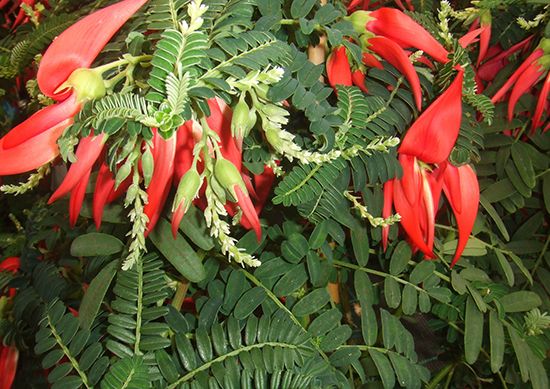
Clianthus species, commonly known as parrot’s bill or kakabeak, are striking ornamental shrubs that thrive best in specific environmental conditions. To successfully cultivate these plants in a garden setting, consider the following requirements:
- Climate: They prefer warm, dry climates.1
- Soil: These plants require sandy, well-drained soils to remain healthy.1
- Growth Habit: Clianthus can be trained as vines and typically reach heights of 1–2 metres (3–6 feet).1
- Maintenance: It is recommended to prune the shoots once the flowering period has concluded.1
Because these plants are considered endangered species in the wild, cultivating them as ornamentals is a meaningful way to support their continued presence. Note that if you are interested in the related Sturt’s desert pea, it is often grafted onto C. puniceus rootstock to improve its resistance to root rot.1
What are some common names for Clianthus plants, and why were they given these names?
Clianthus plants are known by several descriptive common names, each reflecting their unique appearance or history:
- Glory Pea: The genus name Clianthus is derived from the New Latin combination of the Greek words kleos (glory) and anthos (flower), referring to the plant’s striking, brilliant red blossoms.23
- Kaka Beak (or Kaka Bill): This name is given to Clianthus puniceus and C. maximus because their flowers feature a long, pointed keel that resembles the beak of the kaka, a parrot native to New Zealand kaka, a parrot native to New Zealand.43
- Parrot’s Bill: Similar to “kaka beak,” this name highlights the distinctive, curved shape of the flowers, which mimic the appearance of a bird’s bill.3
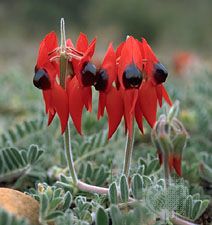
- Sturt’s Desert Pea: Formerly classified as Clianthus formosus (now Swainsona formosa), this plant was named in honor of the explorer Charles Sturt, who encountered the species in the dry regions of Australia.43
These plants are celebrated for their vivid, pendulous flowers and are often cultivated as ornamentals despite their rarity in the wild.13
Are there any conservation concerns for Clianthus species, and if so, what efforts are being made to protect them?
Both Clianthus puniceus (parrot’s bill) and C. maximus (kakabeak) are currently classified as endangered species in the wild. Their rarity makes the preservation of their genetic diversity a critical priority for environmentalists and botanists.1
Efforts to protect such threatened plants are largely driven by botanical gardens, which serve as vital scientific institutions for conservation. These organizations maintain living collections that act as a safeguard against extinction, ensuring that rare species remain viable even when their natural habitats are compromised.5
Key conservation strategies include:
- Genetic Preservation: Gardens exchange seeds and pollen to maintain healthy, diverse populations.5
- Seed Banking: Many institutions store seeds in specialized banks to protect against the loss of biodiversity.5
- Research and Education: Through herbaria and laboratory research, scientists study these plants to better understand their ecological needs and historical distribution, which informs future restoration projects.5
How long do Clianthus plants typically live, and what is their growth cycle like?
Clianthus plants are characterized as evergreen shrubs that can grow to heights of 1 to 2 meters (3 to 6 feet), though some specimens can exceed 12 feet when trained as vines.14
Regarding their growth cycle, these plants are perennial, meaning they live for multiple years. Their development is marked by the production of pinnately compound leaves and the emergence of brilliant, downward-turning red flowers. In cultivation, the growth cycle is typically managed by gardeners who prune the shoots once the flowering period has concluded. Because they are native to warm, dry climates, they thrive best in sandy, well-drained soils.1
While they are hardy in suitable conditions, they are susceptible to root rot, which is why the related Sturt’s desert pea is often grafted onto Clianthus rootstock to improve resilience.1
Sources
- Clianthus — Encyclopædia Britannica
- Sturt's desert pea — Merriam-Webster
- clianthus — Merriam-Webster
- kaka beak — Merriam-Webster
- How Botanical Gardens Save Plants with Science — Encyclopædia Britannica
Published on · 3 min read