Cliff
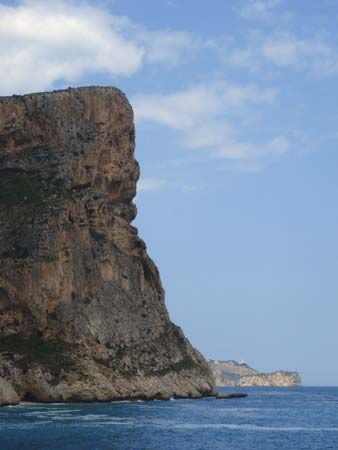
A cliff is a steep, nearly vertical slope composed of earth materials, most commonly a rock face. These formations can be categorized by their origins:
What is cliff?
A cliff is a steep, nearly vertical slope composed of earth materials, most commonly a rock face. These formations can be categorized by their origins:1
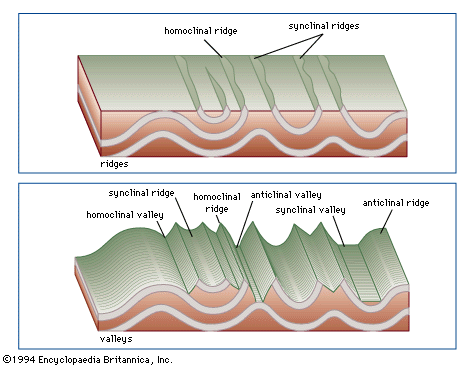
- Structural cliffs: These form due to fault displacement or when a resistant layer of cap rock prevents uniform downcutting.1
- Erosional cliffs: These develop along valley walls or shorelines, where erosion is most intense at the base of the slope.1
Sea cliffs are a prominent type of erosional landform. Their vertical profile is typically created by wave-induced erosion at the base, which eventually causes the upper rock layers to collapse. Because of their steep gradient, cliffs are subject to significant erosive forces and often retreat more rapidly than other types of slopes.21
How does coastal erosion shape cliffs over time?
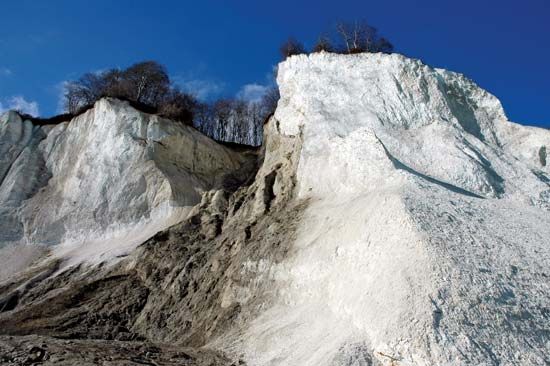
Coastal erosion shapes cliffs primarily through the persistent force of waves, which act as the primary agents of change along rocky shorelines. This process involves several key mechanisms:
- Basal Erosion: Waves batter the base of the cliff, often carving out a notch. This concentrated erosion at the shoreline undermines the stability of the rock face above, eventually leading to structural collapse.67
- Abrasion and Impact: Waves erode bedrock through mechanical impact and abrasion. Suspended sediment—ranging from sand to large boulders—acts like sandpaper, wearing down the rock surface over time.1
- Formation of Platforms: As cliffs retreat, they often leave behind a flat, benchlike feature at the base known as a wave-cut platform. These platforms indicate the historical positions of the cliff face and sea level.8
- Protective Buffering: The presence of a beach at the base can slow this process by absorbing wave energy and shielding the bedrock from direct attack.6
What is the difference between a cliff and a bluff?
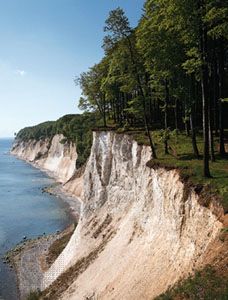
While the terms “cliff” and “bluff” are often used interchangeably to describe a steep wall of rock, earth, or ice, they are essentially synonyms for the same type of geological feature.451
A cliff is defined as a nearly vertical slope, typically composed of rock, which may be formed by structural processes like faulting or by erosional forces along shorelines and valleys. Because they share the same definition in geological and linguistic contexts, there is no formal technical distinction between a cliff and a bluff; both are categorized alongside related landforms such as escarpments, precipices, and crags.3451
How do geological faults create cliffs?
Geological faults create cliffs through the displacement of the Earth’s crust, which occurs when rocks shift to release accumulated strain. This process can manifest in two primary ways:9
- Fault Scarps: These are cliffs or escarpments that form directly from the vertical movement along a fault. While a single earthquake may only produce a few meters of displacement, repeated faulting along the same zone over geological time can create massive cliffs thousands of meters high.910
- Fault-line Scarps: These features arise indirectly through erosion. When faulting brings a layer of soft rock into contact with a layer of hard rock, the softer material erodes more rapidly. This differential erosion leaves the more resistant rock standing as a prominent cliff or escarpment.11
Additionally, large-scale tectonic processes, such as ramp overthrusts, can uplift deep crystalline rocks to the surface, creating high-relief mountain ranges and steep slopes. These structural cliffs are distinct from erosional cliffs, which are primarily shaped by the action of water or ice at the base of a slope.112
Sources
- cliff — Encyclopædia Britannica
- cliffs — Merriam-Webster
- bluff — Merriam-Webster
- bluffs — Merriam-Webster
- cliff — Merriam-Webster
- coastal landforms - Sea cliffs — Encyclopædia Britannica
- coastal landforms - Wave-cut platforms — Encyclopædia Britannica
- coastal landforms - Waves — Encyclopædia Britannica
- mountain - Alpine- (or Himalayan-)type belts — Encyclopædia Britannica
- river - Falls attributable to discordance of river profile — Encyclopædia Britannica
- fault scarp — Merriam-Webster
- fault-line scarp — Merriam-Webster
Published on · 3 min read