Cloudberry
The cloudberry (Rubus chamaemorus) is a low-growing perennial herbaceous plant native to Arctic and subarctic regions.
What are the key characteristics and appearance of the cloudberry plant?
The cloudberry (Rubus chamaemorus) is a low-growing perennial herbaceous plant native to Arctic and subarctic regions.1
Key Characteristics and Appearance
- Growth Habit: The plant spreads through a creeping, rootlike stem known as a rhizome.1
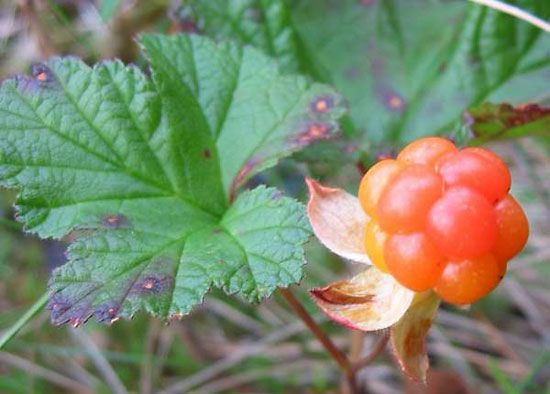
- Leaves: It features circular, toothed leaves characterized by rounded lobes.1
- Reproduction: The species is dioecious, meaning individual plants are strictly male or female.1
- Flowers: Female plants produce a white flower measuring approximately 2.5 cm (1 inch) in diameter.1
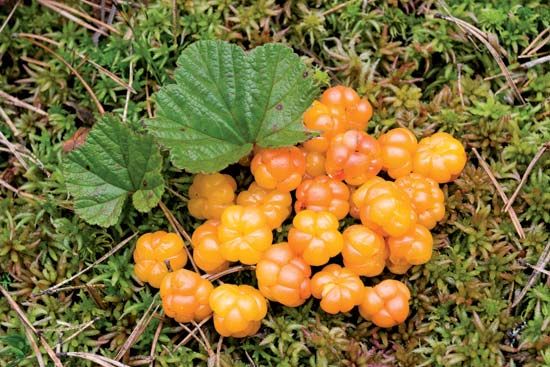
- Fruit: The plant produces a sweet, juicy, raspberry-like fruit that is yellow or amber in color. Technically an aggregate of druplets, these fruits are borne on stalks that reach a height of 7.6–25 cm (3–10 inches).1
Due to their unique flavor, these berries are highly valued in northern regions for use in preserves, tarts, and liqueurs.1
How are cloudberries harvested and what products are made from them?
Cloudberries are harvested by hand during the autumn season, a tradition long practiced by Inuit and Sami peoples. Once collected, the sweet, juicy fruits are often frozen to preserve them for use as a winter food source1.
In northern Scandinavian markets, these berries are highly sought after for their culinary versatility. Common products and uses include:
- Preserves and Tarts: The berries are frequently processed into jams or used as a primary ingredient in various confections.1
- Liqueurs: Cloudberries are also utilized in the production of specialized liqueurs.1
What role do cloudberries play in their ecosystem?
The cloudberry (Rubus chamaemorus) is a native perennial plant that thrives in the harsh conditions of the Arctic and subarctic regions. Within its ecosystem, the cloudberry serves as a source of food for various organisms, including humans, who have long harvested the berries for sustenance.21
While the broader tundra vegetation provides essential forage for northern grazing mammals, the cloudberry is specifically noted for its palatability to humans, particularly in comparison to other regional berries. As a low-growing plant that spreads via rhizomes, it is well-adapted to the short growing season and cold, infertile soils characteristic of these polar environments.21
What are the nutritional benefits and traditional uses of cloudberries?
Cloudberries (Rubus chamaemorus) are highly valued for their role as a traditional food source, particularly among Inuit and Sami peoples. These herbaceous plants produce sweet, juicy, amber-colored fruits that are harvested in the autumn and traditionally frozen to provide essential sustenance throughout the winter months.1
Regarding their nutritional benefits, while the provided information highlights their status as a significant food source, the Britannica knowledge base does not contain specific data regarding their detailed nutritional profile, such as vitamin or mineral content.
In terms of culinary use, cloudberries are a staple in northern Scandinavian markets. They are commonly prepared as:
Sources
- cloudberry — Encyclopædia Britannica
- Arctic - Vegetation — Encyclopædia Britannica
Published on · 2 min read