Coco Plum
The coco plum (Chrysobalanus icaco) is an evergreen tree belonging to the family Chrysobalanaceae, native to tropical regions of Africa and the Americas.
What is coco plum?
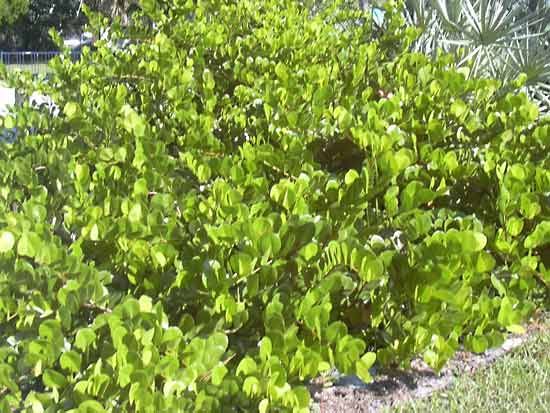
The coco plum (Chrysobalanus icaco) is an evergreen tree belonging to the family Chrysobalanaceae, native to tropical regions of Africa and the Americas.12
Growing up to 9 meters (30 feet) tall, the tree features round, shiny green leaves and clusters of white flowers. It produces a pulpy fruit that can reach up to 4 centimeters in length. These fruits vary in color from nearly white to almost black and are known for being sweet, though somewhat bland in flavor; they are occasionally used to make preserves. In parts of the subtropical United States, the tree is sometimes cultivated as an ornamental plant.12
What are some other types of tropical fruits?
Tropical regions produce a vast array of fruits, many of which are prized for their unique flavors, nutritional profiles, and culinary versatility. Below are several notable types of tropical fruits:
Common Tropical Fruits
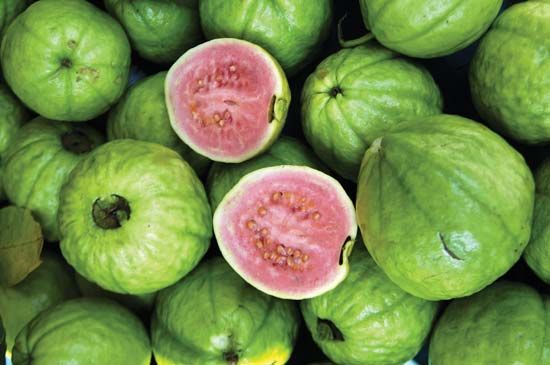
- Guava: Known for its sweet, aromatic pulp, this fruit is rich in vitamins A, B, and C and is frequently used in jams and desserts.34
- Papaya: A nutrient-dense fruit that is an excellent source of vitamin C and beta-carotene.54
- Mango: Widely cultivated in tropical environments, mangoes are highly regarded for their sweet, vibrant flavor.54
- Pineapple: A staple tropical crop that is both refreshing and high in carbohydrates.564
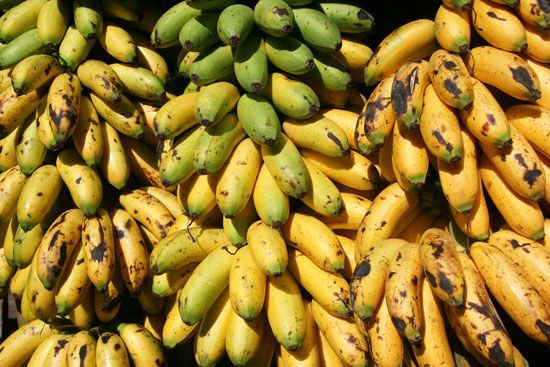
- Banana: A globally important food item that thrives in humid tropical climates.64
Unique and Exotic Varieties
- Jackfruit: The largest tree-borne fruit, which can weigh up to 36 kg (80 pounds). Its flavor is often described as a combination of apple, pineapple, mango, and banana.7
- Durian: Famous for its pungent odor, this fruit is often described as having a banana-lemon custard taste.7
- Mangosteen: Known for its tangy, sweet, citrus-like pulp that is often described as melting in the mouth.7
- Custard Apple: A family of fruits, including the sweetsop and soursop, known for their creamy, aromatic, and sweet flesh.8
- Ice Cream Bean: A South American fruit that grows in giant pods filled with a pulp that tastes like vanilla ice cream.7
How do evergreen trees adapt to tropical climates?
Evergreen trees in tropical climates adapt to their environment primarily through specialized leaf structures and physiological strategies that allow them to thrive in perpetually hot and often wet conditions. Unlike deciduous trees, which shed their leaves during dry seasons, tropical evergreens retain their foliage year-round, ensuring they are always prepared to collect solar energy.1011
Key adaptations include:
- Leaf Morphology: Many tropical evergreens possess broad, leathery leaves. These leaves are often thicker and more durable than those of deciduous species, which helps them withstand the intense sunlight and high humidity of the equatorial belt.1012
- Microclimate Regulation: Within the dense structure of a tropical rainforest, these trees create a microclimate that moderates temperature and wind speed. Their foliage effectively captures rainfall, which is then absorbed by the tree or evaporated back into the atmosphere, helping the plant manage water resources.11
- Nutrient Management: Because tropical soils are often leached of nutrients due to high rainfall, many evergreens have evolved to concentrate their roots in the uppermost soil layers. This allows them to quickly access nutrients released from decomposing organic litter.11
- Chemical Defenses: To protect their persistent foliage from herbivores in a high-competition environment, a significant proportion of these plants produce leaves containing toxic or unpalatable substances.11
What is the difference between a drupe and other fruit types?
In botany, a drupe is a type of simple fleshy fruit derived from a single ovary of an individual flower. The primary characteristic that distinguishes a drupe from other fleshy fruits is the structure of its pericarp (the ripened ovary wall), which is divided into three distinct layers:14
- Exocarp: The thin outer skin or peel.14
- Mesocarp: The middle layer, which is typically thick and fleshy, though it can be fibrous or tough in some species.14
- Endocarp: The inner layer, which is hard and stony, forming a “pit” or “stone” that encloses the seed14.15
Comparison with Other Fruit Types
- Berries: Unlike drupes, which have a stony endocarp, berries are fleshy throughout, meaning both the mesocarp and endocarp are succulent.1415
- Pomes: These are accessory fruits where the fleshy part is derived largely from floral parts other than the ovary, such as the hypanthium, with the true pericarp forming only the central “core”.1615
- Aggregate Fruits: Fruits like raspberries are not true berries; they are aggregates of many tiny drupes, known as drupelets, clumped together from a single flower.1415
- Dry Fruits: Unlike fleshy fruits, the pericarp of dry fruits becomes dry at maturity. These are further categorized as dehiscent (splitting open to release seeds, such as legumes) or indehiscent (remaining intact, such as nuts or achenes).1615
Sources
- coco plum — Encyclopædia Britannica
- coco plum — Merriam-Webster
- Did you know? — Merriam-Webster
- Magnoliales - Fruit — Encyclopædia Britannica
- A Kiwi a Day — Encyclopædia Britannica
- list of culinary fruits — Encyclopædia Britannica
- Agricultural technology - Tropical farming — Encyclopædia Britannica
- South America - Food crops — Encyclopædia Britannica
- 8 Fruits to Try Before You Die — Encyclopædia Britannica
- Evergreen — Encyclopædia Britannica
- Tree - Leaf adaptations — Encyclopædia Britannica
- Tropical rainforest - Environment — Encyclopædia Britannica
- Angiosperm - Uptake of water and mineral nutrients from the soil — Encyclopædia Britannica
- Drupe — Encyclopædia Britannica
- Fruit - Types of fruits — Encyclopædia Britannica
- Angiosperm - Fruits — Encyclopædia Britannica
Published on · 4 min read