Cocklebur
Cocklebur is a weedy annual plant belonging to the genus Xanthium within the Asteraceae family. It is found throughout much of Europe and parts of North…
What is Cocklebur?
Cocklebur is a weedy annual plant belonging to the genus Xanthium within the Asteraceae family. It is found throughout much of Europe and parts of North America.1
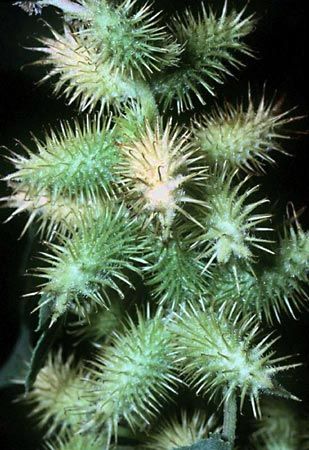
The plant is characterized by its distinct fruit: female flowers are enclosed in oval green, yellow, or brown burs covered in many hooked spines and two large, hornlike spines. These burs are designed to adhere to the hair of animals, which facilitates the wide dissemination of the plant.1
While the plant was historically used in herbal remedies, it is important to note that the common cocklebur (X. strumarium) is poisonous to grazing animals.1
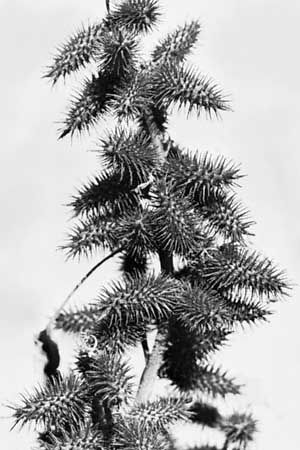
How do the hooked spines on cocklebur burs help the plant spread its seeds?
The hooked spines on cocklebur burs facilitate seed dispersal through a process known as epizoochory, where plants rely on animals to inadvertently transport their seeds.56
In the case of the cocklebur (Xanthium), the female flowers are enclosed within protective bracts that form an oval bur. These burs are equipped with numerous hooked spines and two larger, hornlike spines. When an animal brushes against the plant, these hooks cling tenaciously to the animal’s fur or hair. Because the entire bur—containing the seeds—remains attached to the animal, the plant is effectively transported to new locations as the animal moves through its environment. This mechanism allows the plant to achieve wide dissemination without needing to produce fleshy fruits to attract animal consumption.7156
What are some other examples of plants that use animals to disperse their seeds?
Plants utilize a variety of methods to disperse their seeds via animals, a process known as zoochory. These strategies generally fall into two categories: external transport (epizoochory) and internal transport (endozoochory).8
Epizoochory (External Transport)
Many plants produce “hitchhiking” seeds or fruits equipped with hooks, barbs, bristles, or spines that cling to the fur of passing animals. Examples include:59
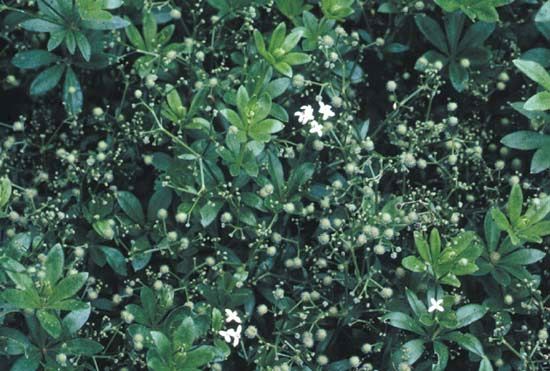
- Hooked fruits: Bedstraw (Galium aparine) and enchanter’s nightshade (Circaea lutetiana).59
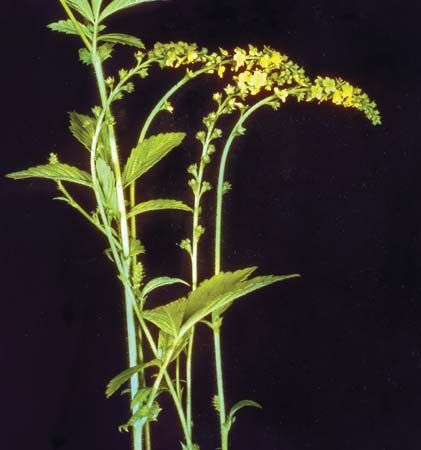
- Persistent calyx hooks: Agrimony (Agrimonia eupatoria).59
- Hooked styles: Wood avens (Geum urbanum).59
- Other burrs: Beggar’s-ticks, buffalo bur, burdock, and various Medicago species.59
- Trample burrs: Plants like the mule grab and the African grapple plant lodge themselves into the hooves of grazing mammals.59
Endozoochory (Internal Transport)
Many plants rely on animals to consume their fruits and pass the seeds through their digestive systems.68
- Frugivory: Fig trees and mistletoes are classic examples of plants that have evolved mutualistic relationships with fruit-eating animals.6
- Bat dispersal (Chiropterochory): In the tropics, flying foxes and other fruit bats disperse large, fragrant fruits like mangoes, guavas, breadfruit, and carob5.9
- Specialized relationships: The desert melon is dispersed by aardvarks, which bury their dung containing the seeds.59
Why are some plants considered invasive in certain environments?
Plants are considered invasive when they are introduced to a new environment and significantly disrupt the local ecosystem. While most nonnative species fail to survive in new habitats, some become invasive because they possess a competitive advantage over indigenous species, often thriving in areas that lack natural predators or pathogens to keep their populations in check.10
Invasive plants typically disrupt ecosystems through several mechanisms:
- Resource Competition: They may outcompete native species by monopolizing essential resources such as sunlight, water, and living space. For example, the common buckthorn creates dense vegetation that blocks sunlight, effectively displacing native plants.1011
- Allelopathy: Some species, such as Japanese knotweed, release chemicals into the soil that inhibit the growth and survival of surrounding native vegetation.12
- Rapid Proliferation: Invasive plants often spread quickly through aggressive growth patterns, such as extensive rhizome networks, or by producing large quantities of seeds that are easily dispersed by wind and water.12
- Ecosystem Alteration: By forming dense, monospecies stands, these plants reduce local biodiversity and provide little support for native wildlife.1312
Sources
- Cocklebur — Encyclopædia Britannica
- poison - Plant poisons (phytotoxins) — Encyclopædia Britannica
- cocklebur — Merriam-Webster
- Xanthium — Merriam-Webster
- Seed - Dispersal by animals — Encyclopædia Britannica
- Seed dispersal - Mammals — Encyclopædia Britannica
- Asteraceae - Fruit and seeds — Encyclopædia Britannica
- Seed dispersal - Zoochory: animal dispersal — Encyclopædia Britannica
- Seed - Agents of dispersal — Encyclopædia Britannica
- invasive species — Encyclopædia Britannica
- conservation - Removing invasive species — Encyclopædia Britannica
- habitat loss — Encyclopædia Britannica
- Japanese knotweed — Encyclopædia Britannica
Published on · 3 min read