Cnidarian
The phylum Cnidaria is classified into four distinct classes based on their body forms and life cycles. While their classification is generally stable, some…
How are cnidarians classified, and what are the major groups within this phylum?
The phylum Cnidaria is classified into four distinct classes based on their body forms and life cycles. While their classification is generally stable, some evolutionary relationships—particularly within the class Anthozoa—remain subjects of scientific study and debate.12
The four major groups are:
- Hydrozoa: A diverse group where the polyp phase is often more conspicuous than the medusa phase. Some species may lack a medusa stage entirely, or the medusae may remain attached to the polyps.13
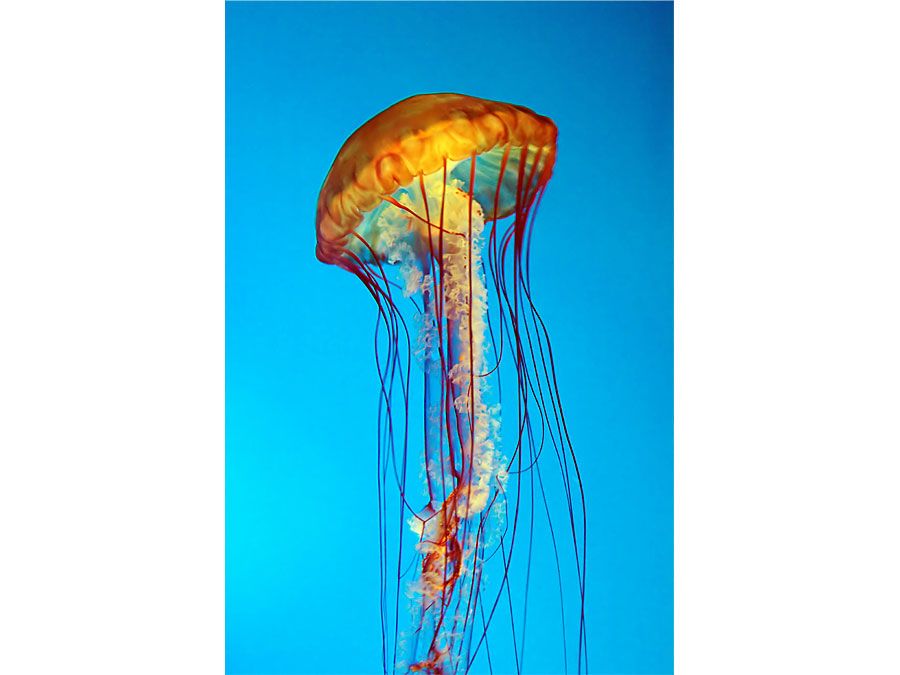
- Scyphozoa: Commonly known as true jellyfish, these animals are characterized by a dominant, large medusa form.13
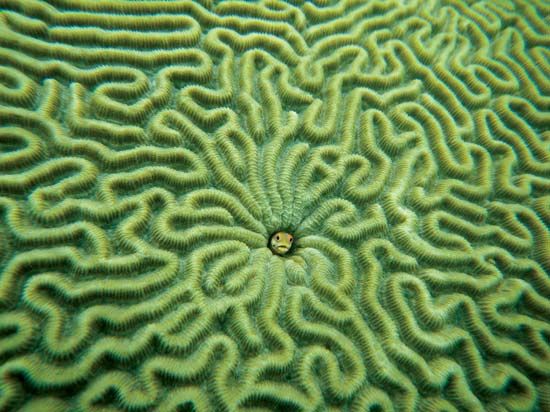
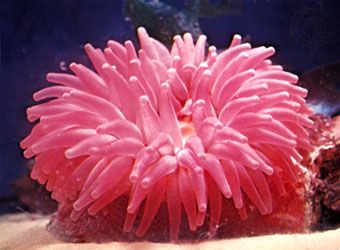
- Anthozoa: This group includes corals and sea anemones. Unlike other cnidarians, anthozoans exist exclusively as polyps and lack a medusa stage.13
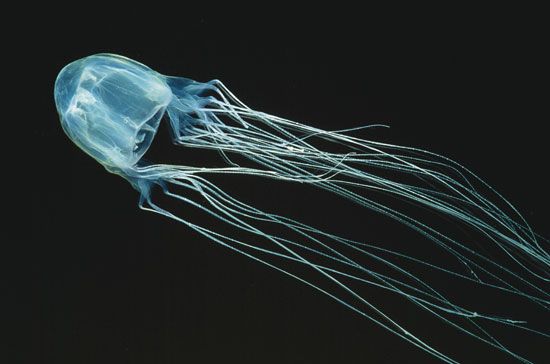
- Cubozoa: Known as box jellyfish, these animals are sometimes classified as an order of Scyphozoa, though their unique metamorphosis supports their placement as a distinct class.12
Can you explain the difference between polyp and medusa forms in cnidarians?
Cnidarians exhibit two primary body forms, the polyp and the medusa, which often represent different stages in a single life cycle.3
The Polyp Form
The polyp is typically a cylindrical, sedentary form attached to a firm substrate at one end. Its mouth and surrounding tentacles face upward. In many species, the polyp serves as the juvenile stage, reproducing asexually to produce medusae. While many polyps are tiny, they can form large, long-lived colonies, such as those seen in corals and hydroids.3
The Medusa Form
The medusa, commonly known as a jellyfish, is typically a bell- or umbrella-shaped, free-swimming, planktonic animal. Its tentacles hang downward from the margin of the bell, and a tubelike manubrium connects the mouth to the internal coelenteron. The medusa is generally considered the adult form, responsible for sexual reproduction.3
While many classes cycle between these forms, Anthozoa—which includes sea anemones and corals—exists exclusively as polyps.3
What roles do cnidarians play in marine ecosystems?
Cnidarians play vital roles in marine ecosystems, primarily as foundational architects, predators, and symbiotic partners.
Ecosystem Engineering
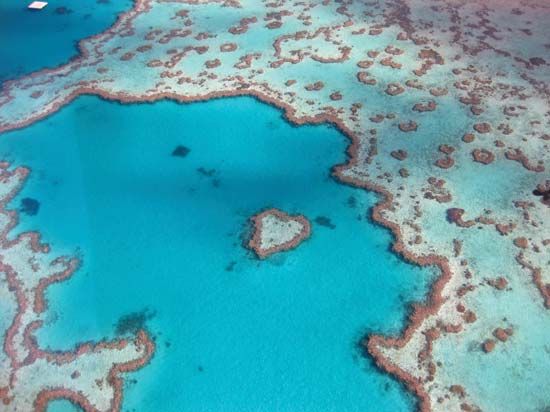
Reef-building stony corals (Scleractinia) are essential ecosystem engineers. Through a mutualistic symbiosis with photosynthetic algae called zooxanthellae, these polyps secrete a rigid calcium carbonate matrix. This structure creates coral reefs, which are among the most complex and biodiverse habitats on Earth, providing shelter and substrate for a vast array of marine life.456
Trophic Roles and Predation
As carnivores, cnidarians occupy significant positions in marine food webs. They use specialized stinging cells called nematocysts to capture prey, including small crustaceans, fish larvae, and plankton. Conversely, they serve as food for various specialists, such as nudibranchs, parrot fishes, and marine turtles.789
Symbiotic Associations
Cnidarians frequently engage in complex relationships that enhance the survival of other species:
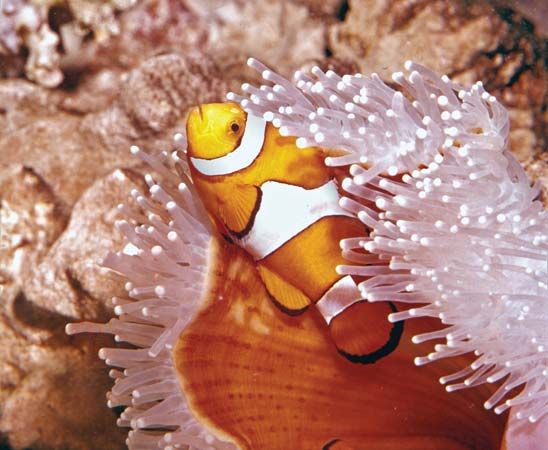
- Protective Shelter: Anemone fish (such as clownfish) live among the tentacles of tropical anemones, gaining protection from predators while defending their hosts in return.4
- Transport and Defense: Some hermit crabs carry sea anemones on their shells, providing the anemones with mobility while receiving protection from predators.4
- Defensive Sequestration: Certain nudibranchs consume cnidarians and sequester their undischarged nematocysts to use for their own defense.4
How do cnidarians feed and defend themselves?
Cnidarians are exclusively carnivorous animals that utilize specialized structures for both feeding and defense.
Defense and Prey Capture
The defining feature of the phylum is the production of nematocysts (or cnidae), which are complex, microscopic stinging capsules. When a cnidarian contacts a predator or prey, the capsule discharges a hollow tubule that may:1011
- Adhere to the target.10
- Entangle the target.10
- Penetrate the target using spines and inject toxins.10
Each cnida can be fired only once, after which it must be replaced.10
Feeding and Digestion
Cnidarians do not actively pursue prey; instead, they rely on contact. Sessile polyps capture organisms that touch their tentacles, while medusae may “fish” by trailing tentacles while sinking. Some species also collect particulate matter in mucus moved by cilia. Once captured, tentacles move food to the mouth, where muscular actions complete the swallowing process.7
Digestion occurs in the coelenteron, a central body cavity. Food is broken down extracellularly before being taken up by endodermal cells for final intracellular digestion. Additionally, many cnidarians derive nutrients from symbiotic algae (such as zooxanthellae) living within their cells.17
Sources
- cnidarian — Encyclopædia Britannica
- cnidarian - Critical appraisal — Encyclopædia Britannica
- cnidarian - Size range and diversity of structure — Encyclopædia Britannica
- cnidarian - Associations — Encyclopædia Britannica
- cnidarian - Ecology and habitats — Encyclopædia Britannica
- jellyfish — Encyclopædia Britannica
- cnidarian - Food and feeding — Encyclopædia Britannica
- Marine ecosystem - Benthos — Encyclopædia Britannica
- coral reef - Corals and other reef-building organisms — Encyclopædia Britannica
- cnidarian - Defense and aggression: nematocysts — Encyclopædia Britannica
- cnidarian - Digestion, respiration, and excretion — Encyclopædia Britannica
Published on · 3 min read