Coast Ranges
The Coast Ranges are part of the broader Pacific mountain system, which serves as a major destination for outdoor enthusiasts due to its diverse landscapes…
What are some popular recreational activities in the Coast Ranges?
The Coast Ranges are part of the broader Pacific mountain system, which serves as a major destination for outdoor enthusiasts due to its diverse landscapes and year-round recreational opportunities.1
While specific activities vary by location, the region is widely recognized for the following:
- Camping: Extensive national forest lands throughout the United States portion of the ranges provide numerous designated campsites and recreation areas.1
- Winter Sports: The system hosts some of North America’s premier Alpine skiing and Nordic skiing facilities, many of which are conveniently located near large urban centers.1
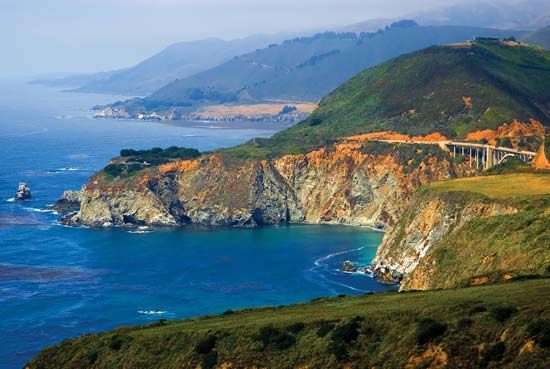
- Sightseeing and Exploration: The region features over a dozen national parks, monuments, and recreation areas, alongside numerous provincial, state, and county parks that attract large numbers of tourists drawn to the area’s scenery.1
How do the Coast Ranges impact the climate and ecosystems of the regions they traverse?
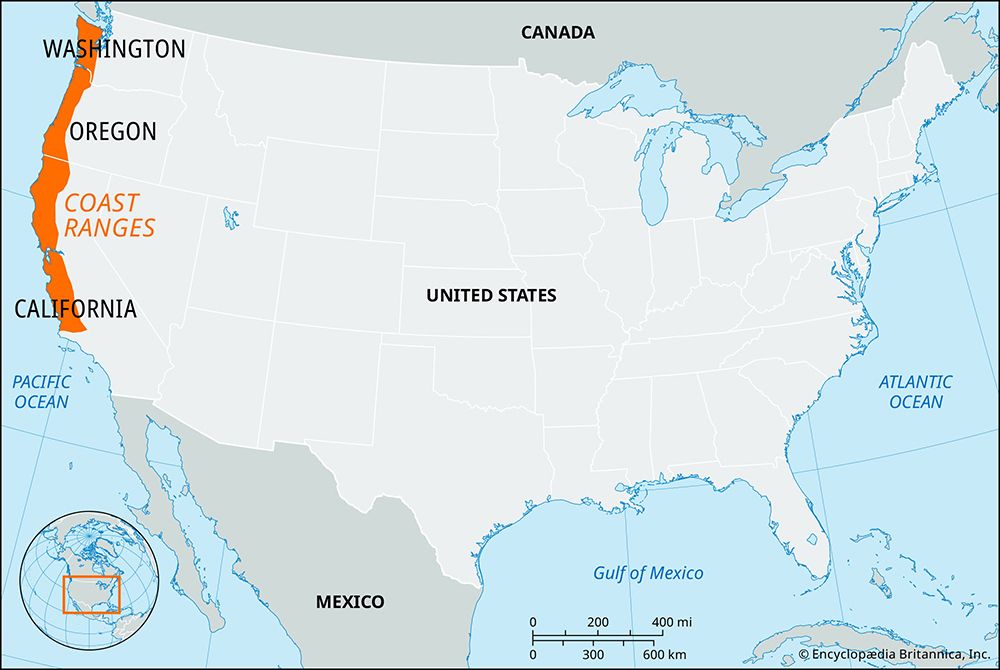
The Coast Ranges exert a profound influence on the climate and ecosystems of western North America by acting as a significant orographic barrier to moisture-laden storms arriving from the Pacific Ocean4.
Climate Impact
As these mountains intercept air masses, they force air upward, causing it to cool and release precipitation on the windward (western) slopes. This process creates a distinct climatic gradient:1
- Windward Precipitation: The western slopes receive high levels of rainfall, with some areas experiencing over 50 inches (1,250 mm) annually.1
- Rain Shadow Effect: As air descends on the eastern side of the ranges, it becomes drier, creating a “rain shadow” that results in significantly lower annual precipitation levels.1
- Latitudinal Variation: The climate shifts from cool, wet winters and dry summers in the north to progressively drier conditions as one moves south toward California.4
Ecosystem Influence
This climatic variation directly shapes the region’s diverse ecosystems:
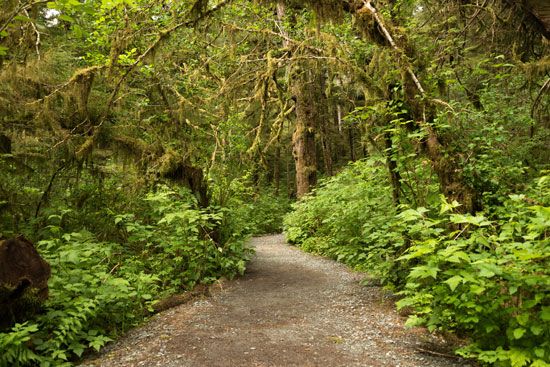
- Vegetation: The moisture-rich coastal environments support iconic forests, such as the giant redwoods of southern Oregon and northern California. Inland, the landscape transitions to mixed forests of broad-leaved hardwoods and conifers, while higher, cooler elevations support Spodosols under coniferous cover.45
- Soil Development: The climate and topography influence soil formation, with Inceptisols dominating the cooler northern ranges and organic-rich mollisols found in the southern California sections.5
- Wildlife: The varied habitats support a range of large mammals, including bears, elk, and deer, alongside smaller fur-bearing animals.4
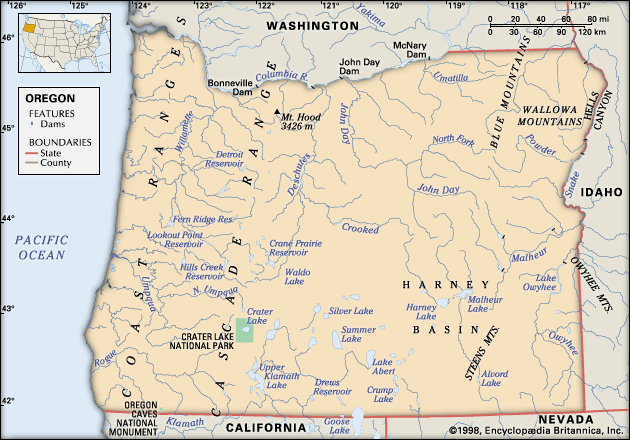
How have the Coast Ranges influenced the cultural heritage of indigenous peoples in the region?
The Coast Ranges have profoundly shaped the cultural heritage of Indigenous peoples by providing diverse microenvironments that dictated traditional subsistence, technology, and social organization.
Environmental Influence on Culture
The region’s varied topography—ranging from coastal tidewaters and redwood forests to inland valleys—allowed for highly specialized adaptations. Indigenous groups developed distinct economies based on their specific local resources:
- Coastal Peoples: Groups such as the Chumash utilized the ocean and coastal forests, crafting seaworthy plank canoes for hunting sea mammals and relying on shellfish and fish as staples.1
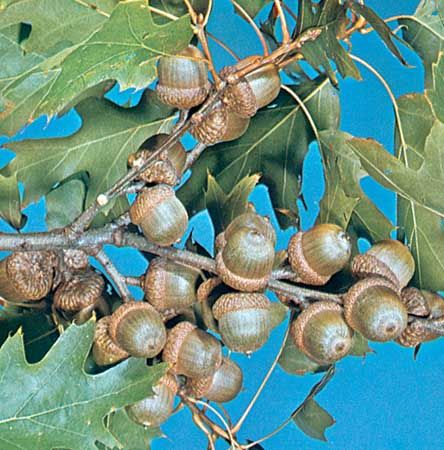
- Inland Groups: Those in the foothills and valleys centered their subsistence on gathering acorns, which they processed using sophisticated leaching techniques to remove toxins, ensuring a reliable food supply.17
- Technological Innovation: To maximize the productivity of these environments, Native peoples created specialized tools, including nets, baskets, and diverse watercraft like tule rafts and dugouts.1
Cultural Continuity and Resilience
While the arrival of colonial powers—including Spanish missions and the 1848 gold rush—initiated a period of severe cultural rupture and population collapse, Indigenous heritage remains vibrant. Today, many communities maintain traditional practices, such as basket weaving and the use of traditional foods, while actively engaging in political and educational activism to preserve their languages and history.8
What types of wildlife are commonly found in the Coast Ranges?
The Coast Ranges support a diverse array of wildlife, ranging from marine species in coastal waters to various land mammals inhabiting the mountains and forests.
Aquatic and Marine Life
The streams and rivers draining the mountains are home to several species of anadromous salmon, including pink, chum, coho, sockeye, and chinook. Additionally, the American shad, an introduced species, has successfully adapted to these coastal streams. The coastal waters themselves host a variety of marine mammals, such as:13
- Harbor seals
- Northern fur seals
- Northern elephant seals
- Sea otters
- Northern and California sea lions13
Land Mammals
The terrestrial ecosystems of the Coast Ranges support a wide variety of mammals, including:
- Large Mammals: Roosevelt elk, black bears, and various deer species, such as black-tailed deer and white-tailed deer.131
- Predators: The region is home to members of the cat family, including the lynx, bobcat, and puma (mountain lion).13
- Small Fur-bearing Animals: Beavers, muskrats, and rabbits are commonly found throughout the ranges.131
Sources
- Coast Ranges — Encyclopædia Britannica
- Pacific mountain system - Physiography — Encyclopædia Britannica
- Pacific mountain system - Recreation — Encyclopædia Britannica
- Pacific mountain system - Climate — Encyclopædia Britannica
- Pacific mountain system - Soils — Encyclopædia Britannica
- Pacific mountain system — Encyclopædia Britannica
- Indigenous peoples of California: Top Questions — Encyclopædia Britannica
- Indigenous peoples of California - Production and technology — Encyclopædia Britannica
- Northwest Coast Indian — Encyclopædia Britannica
- Native American - California — Encyclopædia Britannica
- Plateau Indian - Belief systems — Encyclopædia Britannica
- Indigenous peoples of California - Cultural continuity and change — Encyclopædia Britannica
- Pacific mountain system - Animal life — Encyclopædia Britannica
Published on · 4 min read