Acorn
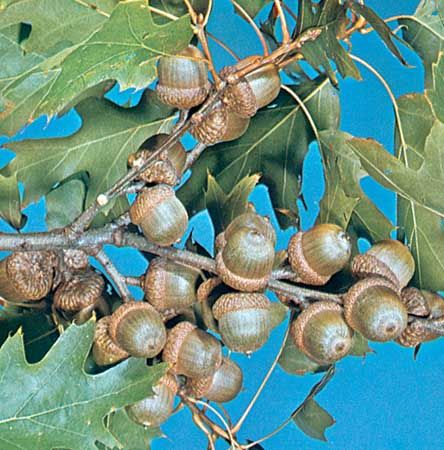
An acorn is the nut produced by the oak tree. It is characterized by being seated in or surrounded by a hard, woody cupule composed of indurated bracts.
What is acorn?
An acorn is the nut produced by the oak tree. It is characterized by being seated in or surrounded by a hard, woody cupule composed of indurated bracts.12
Depending on the specific species of oak, acorns typically reach maturity within one to two seasons. These nuts serve as a vital source of food for various wildlife and have historically been used to fatten livestock, such as swine and poultry. The term is also associated with the wood duck, which is sometimes referred to as an “acorn duck” due to its habit of consuming these nuts.13
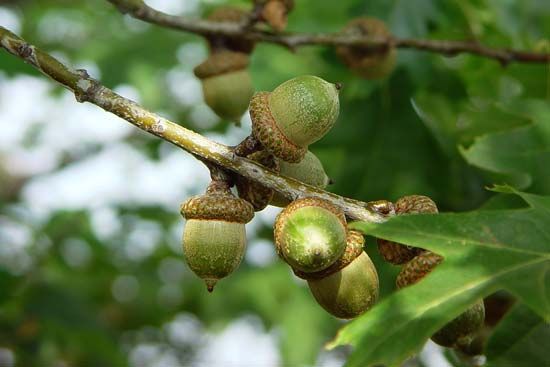
How do squirrels help oak trees spread?
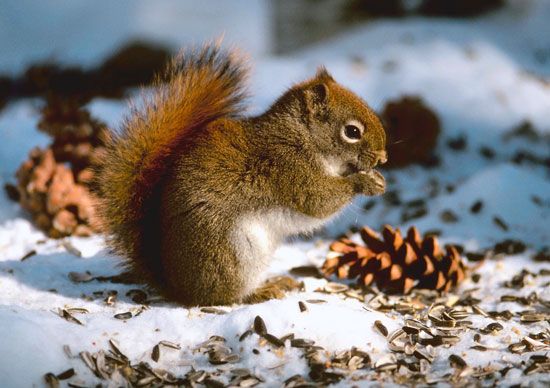
Squirrels play a significant role in the propagation of oak trees through their food-caching behaviors. As part of their strategy to survive, squirrels collect and bury acorns in various locations across an area to store them for later consumption.4
While squirrels are often organized and use systems like “spatially chunking” to remember their caches, they do not always recover every nut they bury. Some acorns are abandoned in favor of more easily accessible food, while others may be forgotten entirely. These unrecovered acorns, having been moved and planted by the squirrels, are then able to germinate and grow into new trees, effectively aiding in the dispersal and expansion of oak populations. Additionally, rodents may further contribute to this process by stealing and re-burying acorns that were previously cached by other animals, such as birds.45
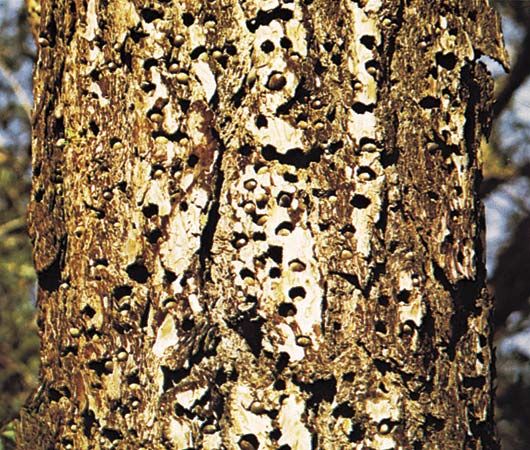
What are the different types of oak trees?
The genus Quercus comprises approximately 450 species of trees and shrubs. While many plants are colloquially called “oaks,” they are not true members of this genus. True oaks are generally categorized into three distinct groups or subgenera:6
- White Oaks (Leucobalanus): These species are characterized by smooth, non-bristle-tipped leaves. Their acorns typically mature in a single season, have sweet-tasting seeds, and germinate shortly after falling.6
- Red and Black Oaks (Erythrobalanus): These are identified by their bristle-tipped leaves. Their acorns have hairy-lined shells, contain bitter fruit, and require two growing seasons to reach maturity.6
- Cyclobalanus: This is the third recognized group within the genus.6
Notable species include the white oak (Q. alba) and bur oak of the United States, the northern red oak (Q. rubra), and the English oak. Other economically significant species include the cork oak, which provides commercial cork, and the Aleppo oak, used in tannin production.6
How long does it take for an acorn to become a mature tree?
While the provided search results do not specify a precise number of years required for an acorn to reach maturity, they note that oaks are long-lived, hardy trees that can be easily propagated from acorns.1
The growth process begins when an acorn germinates—white oak acorns, for instance, germinate within a few days of falling, while others may take longer. Once established, oaks continue to grow throughout their lives, adding layers of wood annually in temperate regions, which allows their age to be tracked through annual rings. Because oaks are long-lived, they can reach significant ages, though their development into a “mature” tree is a gradual process influenced by environmental conditions.16
Sources
- acorn — Encyclopædia Britannica
- acorn — Merriam-Webster
- acorn duck — Merriam-Webster
- Is It True That Squirrels Forget Where They Bury About Half of Their Food? — Encyclopædia Britannica
- Seed - Dispersal by birds — Encyclopædia Britannica
- oak — Encyclopædia Britannica
- life span - Problem of defining age — Encyclopædia Britannica
Published on · 3 min read