Cobra
Cobra venom is a complex mixture of toxic enzymes and proteins that primarily functions to paralyze or kill prey. The primary danger to humans stems from the…
How does a cobra’s venom work and what makes it so dangerous?
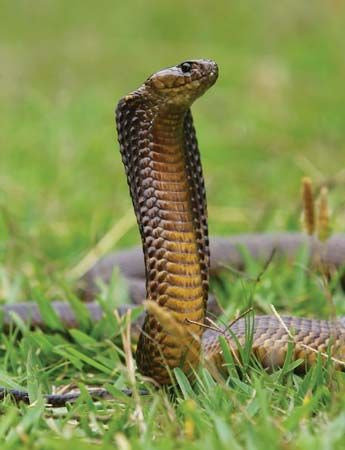
Cobra venom is a complex mixture of toxic enzymes and proteins that primarily functions to paralyze or kill prey. The primary danger to humans stems from the presence of neurotoxins, which target the nervous system.12
When injected through a cobra’s short, front-facing fangs, these neurotoxins can cause severe symptoms, including pain, headache, nausea, vomiting, and blurred vision. Most critically, they interfere with the body’s ability to regulate vital functions, leading to paralysis, breathing difficulties, and potentially fatal respiratory failure or cardiac arrest.132
Additionally, some species known as spitting cobras can eject venom from their fangs toward a threat’s face. This venom is specifically adapted to cause intense pain and damage to the eyes, which can result in temporary or permanent blindness if not treated immediately. Because these effects can escalate rapidly, antivenin must be administered promptly following a bite to ensure survival.413
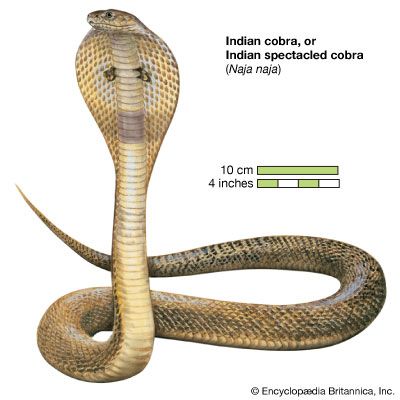
How do cobras hunt and what are their primary prey?
Cobras are active hunters that rely on a combination of sensory adaptations to locate and secure their meals. Like many snakes, they utilize chemoreception to track prey, flicking their forked tongues to collect scent particles from the air and ground. These particles are then transferred to the Jacobson’s organ in the roof of the mouth, which acts as a highly sensitive chemical sensor.1
Once prey is located, cobras use their speed and precision to deliver a bite. They possess short, fixed front fangs that inject potent neurotoxic venom, which quickly paralyzes the victim by interfering with its nervous system.56
Their diet varies by species and habitat:
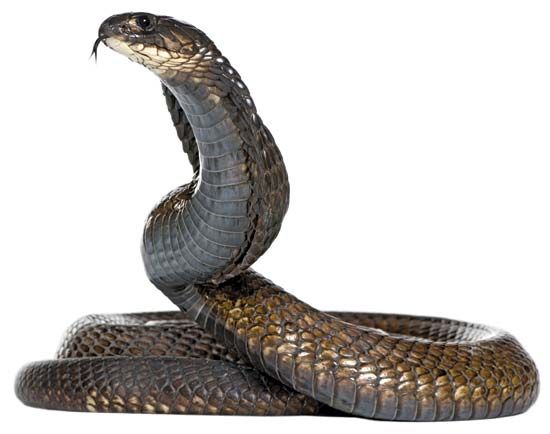
- Generalist Cobras: Many species, such as the Egyptian cobra, forage nocturnally for a diverse diet including toads, lizards, and birds.56
- Specialist Cobras: The king cobra is a notable specialist, preying almost exclusively on other snakes.57
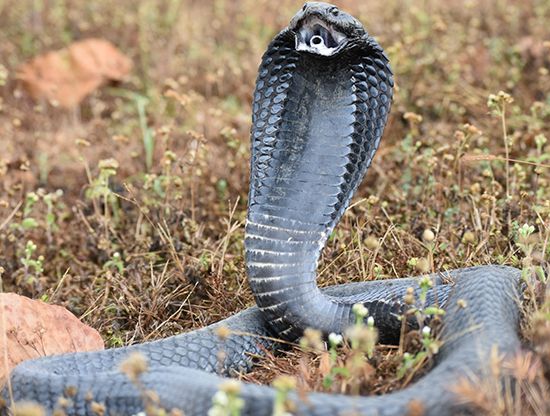
Where are cobras primarily found in the world?
Cobras are widely distributed across the globe, primarily inhabiting regions spanning from southern Africa through southern Asia and into the islands of Southeast Asia.1
Their geographic presence is categorized by distinct regional groups:
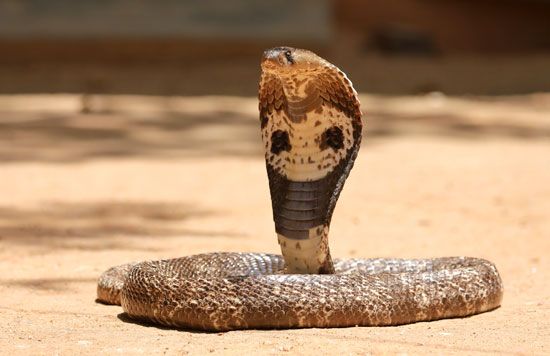
- Asia: Cobras are found throughout the Indian subcontinent, including India, Pakistan, Sri Lanka, Bangladesh, Nepal, and Afghanistan.3 The king cobra is also found across forests from India through Southeast Asia to the Philippines and Indonesia.13
- Africa: Various species of cobras, including both spitting and non-spitting varieties, are distributed across the continent. For example, the Egyptian cobra ranges over much of Africa and extends eastward to Arabia.1
How do cobras reproduce and care for their young?
Cobras are oviparous, meaning they reproduce by laying eggs. While most snakes abandon their eggs after laying them, some cobras exhibit notable parental care.8639
Reproductive Behavior
- Nesting: Mating typically occurs in the spring or early months of the year, depending on the species and region. Females often select secluded sites such as tree hollows, termite mounds, or rock piles to lay their eggs.83
- Nest Building: The king cobra is particularly unique; the female constructs an elaborate nest mound using her body to gather dead leaves, soil, and ground litter.16
- Clutch Size: Depending on the species, a female may lay anywhere from 10 to 50 eggs.813
Parental Care
Unlike many other reptiles, some cobras actively protect their offspring:
- Guarding: Female Indian cobras guard their eggs throughout the incubation period, which typically lasts 50 to 70 days, leaving only to feed.3
- Defense: King cobras are known to fiercely defend their nesting grounds, and some reports suggest that the male may also remain nearby to help guard the area. These parents will strike if a predator or human approaches the nest too closely.16
Upon hatching, the young are fully independent, possessing functional fangs and venom.3
Sources
- cobra — Encyclopædia Britannica
- Venom — Encyclopædia Britannica
- Indian cobra — Encyclopædia Britannica
- spitting cobra — Encyclopædia Britannica
- Egyptian cobra — Encyclopædia Britannica
- king cobra — Encyclopædia Britannica
- reptile - Chemoreception — Encyclopædia Britannica
- forest cobra — Encyclopædia Britannica
- reptile - Embryonic development and parental care — Encyclopædia Britannica
Published on · 3 min read