Comb-clawed Beetle
A comb-clawed beetle belongs to the subfamily Alleculinae, which is part of the order Coleoptera. These insects are named for the distinctive, comblike…
What is comb-clawed beetle?
A comb-clawed beetle belongs to the subfamily Alleculinae, which is part of the order Coleoptera. These insects are named for the distinctive, comblike appearance of their claws.1
Typically measuring between 4 and 12 mm (0.16 to 0.47 inch) in length, these beetles possess oval-shaped bodies that are usually a glossy brown or black color. Their life cycle involves different habitats: adults are commonly found on flowers or leaves, while the larvae typically reside in humus or rotten wood.1
What is the difference between Alleculinae and other beetle subfamilies?
The subfamily Alleculinae, commonly known as comb-clawed beetles, is distinguished primarily by the unique, comblike appearance of its claws. While they share the order Coleoptera with a vast array of other beetles, they possess specific morphological traits that set them apart from their relatives.14
Distinguishing Features of Alleculinae
- Claw Morphology: The defining characteristic is the presence of comblike claws, a feature not found in other beetle subfamilies.1
- Physical Appearance: These beetles typically exhibit an oval body shape with a glossy brown or black coloration, ranging from 4 to 12 mm in length.1
- Behavioral Differences: While they bear a physical resemblance to certain slender members of the Tenebrionidae (darkling beetles) family, Alleculinae are generally noted for being more active than those counterparts.4
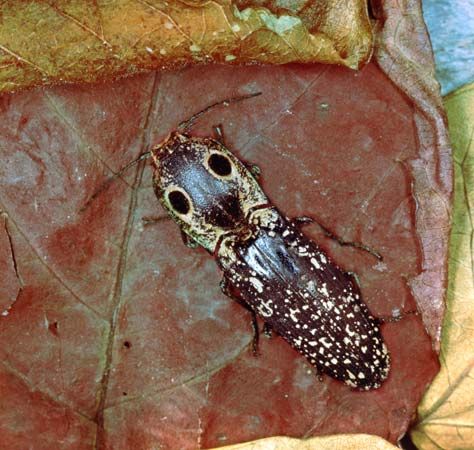
In contrast, other beetle subfamilies are categorized by vastly different structural adaptations, such as the specialized jumping mechanism of click beetles, the shortened elytra of rove beetles, or the snout-like projections found on weevils.4
How do larvae contribute to the decomposition of rotten wood?
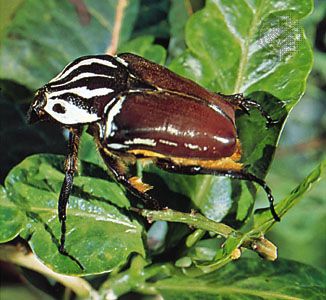
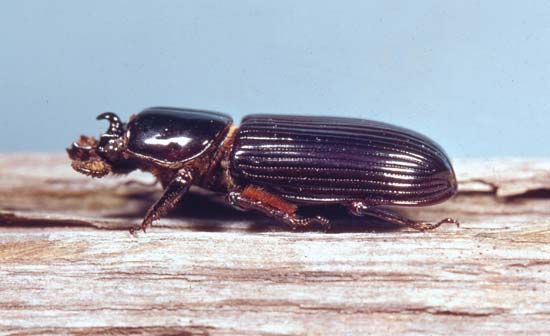
Larvae contribute to the decomposition of rotten wood primarily by physically breaking down woody material and facilitating its digestion through specialized biological associations. Many beetle larvae, such as those of the Dynastinae (rhinoceros, Hercules, and elephant beetles), Passalidae, and Lucanidae, reside within logs and stumps, consuming the decaying organic matter as they tunnel through it.6
This process is aided by specific physiological adaptations:
- Symbiotic Digestion: Wood-boring larvae, such as those of Cerambycidae and Buprestidae, often harbor yeast or other microorganisms within their digestive tracts. These symbionts assist in converting complex wood components into digestible compounds.7
- Mechanical Breakdown: By boring into the wood, larvae create galleries and tunnels that increase the surface area of the material, which further exposes it to fungi and bacteria—the primary saprotrophs responsible for chemical decomposition.897
- Nutrient Cycling: As larvae feed and move through rotten wood, they process organic matter, effectively recycling nutrients back into the ecosystem.69
What are some other common types of beetles found in gardens?
Gardens host a wide variety of beetles, which can be categorized by their roles as either beneficial predators or plant-feeding pests.
Beneficial Predatory Beetles
Many beetles are helpful to gardeners because they prey on common insect pests, such as aphids, caterpillars, and mites.1011
- Ladybugs (family Coccinellidae): Both adults and larvae are voracious predators of aphids and scale insects.1011
- Ground beetles (family Carabidae): These nocturnal hunters feed on a range of small insects, worms, and snails.1012
- Rove beetles (family Staphylinidae): Generally predatory in both their larval and adult stages, they help control other insect populations.1013
Plant-Feeding Beetles
Some beetles are considered pests because they feed on garden plants, roots, or stems.14
- Leaf beetles (family Chrysomelidae): This group includes the cucumber beetle, which damages garden plants, and the Colorado potato beetle.156
- Scarab beetles (family Scarabaeidae): Many, such as the Japanese beetle and various chafers, can be destructive; their larvae (often called white grubs) frequently feed on grass roots.1413
Sources
- comb-clawed beetle — Encyclopædia Britannica
- Tenebrionidae — Merriam-Webster
- tenebrionid — Merriam-Webster
- neuropteran - Distinguishing taxonomic features — Encyclopædia Britannica
- Coleoptera - Size range and diversity of structure — Encyclopædia Britannica
- Coleoptera - Feeding habits and habitats — Encyclopædia Britannica
- bark beetle — Encyclopædia Britannica
- saprotroph — Encyclopædia Britannica
- Coleoptera - Larval features — Encyclopædia Britannica
- Coleoptera - As predators — Encyclopædia Britannica
- ladybug — Encyclopædia Britannica
- Coleoptera - As plant feeders — Encyclopædia Britannica
- Coleoptera - Annotated classification — Encyclopædia Britannica
- ground beetle — Encyclopædia Britannica
- cucumber beetle — Encyclopædia Britannica
- List of insects - beetles and weevils (order Coleoptera) — Encyclopædia Britannica
Published on · 3 min read