Cocoa Bean
A cocoa bean (also known as cacao) is the dried, fermented seed of the cacao tree (Theobroma cacao), a tropical evergreen native to the Amazon and Orinoco…
What is a cocoa bean?
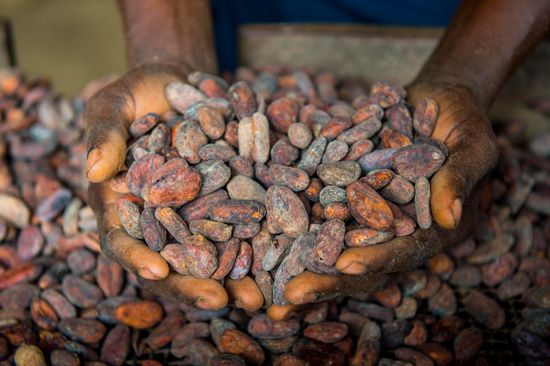
A cocoa bean (also known as cacao) is the dried, fermented seed of the cacao tree (Theobroma cacao), a tropical evergreen native to the Amazon and Orinoco river basins.123
These seeds are the essential raw material used to create cocoa, cocoa butter, and chocolate. Each mature cacao tree produces elongated fruit pods, each containing 20 to 60 oval-shaped seeds covered in a sweet, sticky white pulp.23
The processing of these beans is a meticulous journey:
- Harvesting: Ripe pods are split open to remove the beans and pulp.42
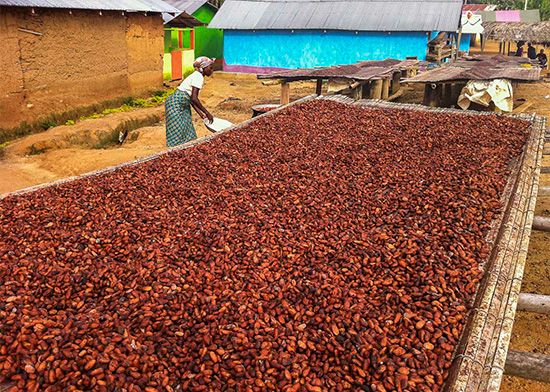
- Fermentation: The beans are fermented for one to seven days, which kills the germ, develops flavor, and drains away the pulp.2
- Drying and Roasting: After drying to reduce moisture, the beans are typically roasted to further develop their characteristic flavor and facilitate the removal of their shells.2
- Refining: The remaining “nibs” are ground to release cocoa butter and form chocolate liquor, which is then processed into various cocoa products.2
Where does the cocoa bean come from?
The cocoa bean is the seed of the cacao tree (Theobroma cacao), a tropical evergreen native to the lowland rainforests of the Amazon and Orinoco river basins in South America.53
The plant was likely domesticated in the upper Amazon region and spread northward, with evidence of human consumption dating back 5,000 years in Ecuador. By 3,000 years ago, it was widely cultivated by the Maya, Toltec, and Aztec peoples, who used the beans for ceremonial beverages and as currency.54
Following the arrival of Europeans in the Americas, commercial cultivation expanded globally to regions within 20° of the Equator that provide the necessary rainfall, temperature, and soil conditions](https://www.britannica.com/place/Equator) that provide the necessary rainfall, temperature, and soil conditions. Today, while the tree originated in the Americas, Côte d’Ivoire is the world’s leading producer of cocoa beans.56
What does the fruit of the cocoa tree look like?
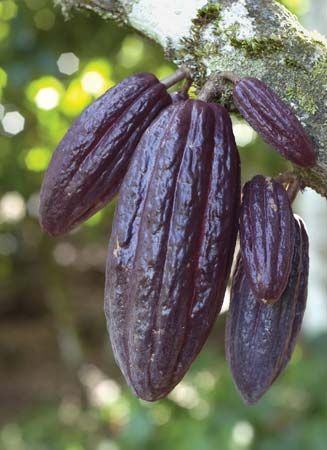
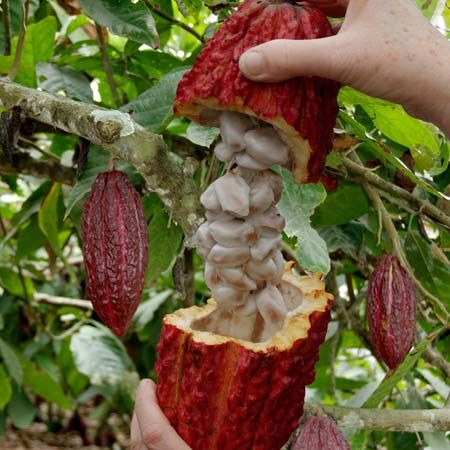
The fruit of the cacao tree grows as an elongated pod, often referred to as a cherelle. These pods exhibit the following characteristics:34
- Appearance: They are elongated in shape and feature numerous ridges running along their length.34
- Color: The pods range in color from bright yellow to deep purple.34
- Size: When fully ripened—a process that takes less than six months—they can reach up to 35 cm (14 inches) in length and 12 cm (4.7 inches) in width at the center.4
- Contents: Each pod contains between 20 and 60 oval-shaped seeds (cocoa beans) arranged around the long axis of the pod, all encased in a sweet, sticky white pulp.34
A single mature tree can yield up to 70 of these fruits annually.34
How are cocoa beans harvested from the fruit?
Harvesting cocoa beans is a labor-intensive process that occurs throughout the year, though the majority of the crop is gathered during two primary flush periods: October to February and May to August.23
The process involves the following steps:
- Cutting: Workers cut the ripe seed pods from the cacao tree using machetes.23
- Opening: The pods are split open, and the cocoa beans are removed along with the sweet, sticky white pulp that surrounds them.23
- Accumulation: Once removed, the beans and pulp are gathered in one of three ways to prepare for fermentation:
Following this initial harvest, the beans undergo fermentation for one to seven days, which is essential for developing the characteristic flavor of the cocoa.3
Sources
- cocoa bean — Merriam-Webster
- cocoa - Harvesting — Encyclopædia Britannica
- Cocoa bean — Encyclopædia Britannica
- Cacao — Encyclopædia Britannica
- cocoa - History of use — Encyclopædia Britannica
- Côte d’Ivoire: Top Questions — Encyclopædia Britannica
- cocoa - Cleaning, roasting, and grinding — Encyclopædia Britannica
Published on · 3 min read