Drainage
Farmers determine the most effective drainage system by evaluating several interconnected environmental and agricultural factors, as there is no single…
How do farmers determine the best drainage system for their specific land and crops?
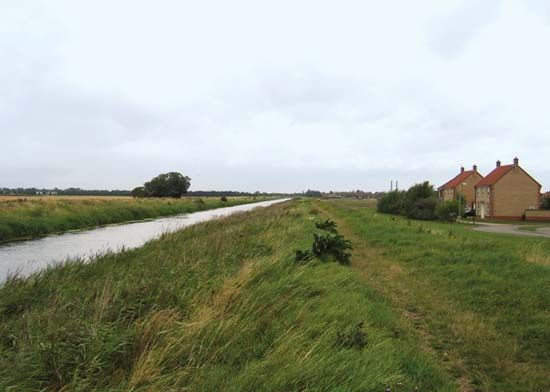
Farmers determine the most effective drainage system by evaluating several interconnected environmental and agricultural factors, as there is no single universal design. The primary considerations include:1
- Soil Type: This is the most critical factor. Soils with high sand or silt content typically allow for subsurface drainage, while high-clay soils generally require surface drainage because they transmit water too slowly for subsurface systems.12
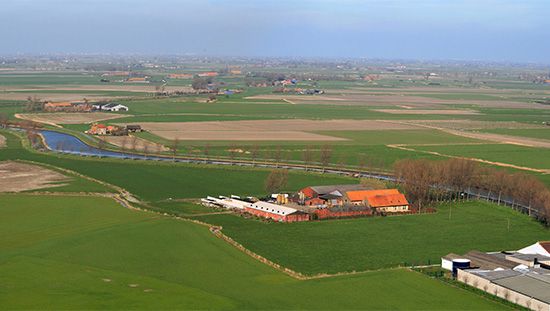
- Topography: Land configuration and slope are analyzed using contour maps to identify low-lying areas and potential water outlets. Fields often require land grading to ensure water flows toward drainage channels.12
- Crop Requirements: The system capacity is influenced by the crop’s water tolerance, growth patterns, planting and harvest dates, and overall economic value.12
- Hydrology and Climate: Farmers assess local rainfall patterns and the depth of the water table to determine the necessary intensity of the drainage improvements.12
Modern planning often utilizes computer models to evaluate various design possibilities, balancing these variables to optimize soil moisture for crop health.32
How do drainage practices differ between annual crops and perennial crops or orchards?
Drainage practices are primarily dictated by soil properties, topography, and the specific water requirements of the crops being grown, rather than a strict division between annual and perennial categories. However, the management of these systems often reflects the different cultivation cycles and root structures of these plants.15
Drainage Considerations for Annual vs. Perennial Crops
- System Design and Flexibility: For annual crops, drainage systems are often designed to accommodate seasonal tillage and planting cycles. Because annuals are replanted each year, surface drainage channels—which are often shallow with flat sides—are frequently arranged so that crops can be planted perpendicular to the channels, allowing water to flow between rows. In contrast, perennial crops and orchards, which remain in place for many years, require more permanent, stable infrastructure that does not interfere with long-term root development or orchard floor management.53
- Root Systems and Soil Health: Perennial crops possess extensive, deep root systems that help stabilize soil and improve structure over time. While annual crops may require more intensive drainage management to ensure the soil warms up quickly in the spring for timely planting, perennials benefit from consistent moisture regulation that supports their long-term growth and carbon sequestration.35
- Orchard Management: In orchards, drainage is often integrated with other soil management practices like permanent sod culture or strip chemical control. Because orchards are not tilled annually, drainage systems must be carefully planned to avoid damaging established tree roots. Modern orchard management often utilizes mowed sod middles and strip chemical control under trees, which helps manage water penetration and erosion alongside the drainage infrastructure.6
Regardless of the crop type, the fundamental goal remains the same: ensuring the soil provides a proper balance of water and air to the roots to prevent “drowning” and to maintain optimal growth conditions.57
How has drainage technology in agriculture evolved over time?
Agricultural drainage is an ancient practice, historically focused on simple ditching to channel floodwaters away from fields. While the fundamental goal—removing excess water to improve crop health and soil workability—remains unchanged, the technology used to achieve this has evolved significantly.183
Historical and Technical Evolution
- Early Methods: Initial drainage relied on basic open ditches, sometimes lined with less porous materials to improve efficiency. Ancient civilizations, including the Romans, utilized these techniques to reclaim wetlands.18
- Subsurface Advancements: The transition from open ditches to tile lines marked a major shift. Traditionally constructed from fired clay or concrete, these underground systems allowed farmers to cultivate over the drains, increasing field efficiency. The development of low-cost, flexible corrugated plastic tubing later revolutionized the installation of these systems.8
- Mole Drainage: This technique involves drawing a bullet-shaped tool through the subsoil to create unlined channels. While historically temporary, modern innovations now allow for the insertion of perforated plastic liners to extend the lifespan of these drains.8
- Modern Planning and Grading: The most significant 20th-century development was the application of precise land-grading techniques to ensure uniform runoff. Historically, the calculations required for such designs were time-consuming, but today, computer models allow designers to rapidly evaluate numerous possibilities before finalizing a system.19
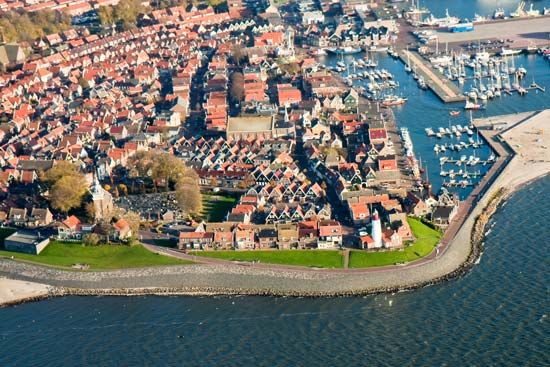
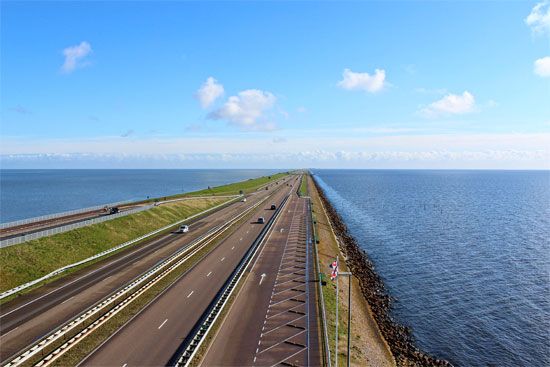
Today, drainage is often integrated with large-scale water management projects, such as levees and pumping stations, to protect land from flooding and manage soil salinity in irrigated regions.894
What is agricultural drainage and why is it important for farmland?
Agricultural drainage is the artificial removal of water from land to improve soil conditions for crop production. It is a critical practice used to reclaim wetlands, prevent erosion, and manage soil moisture in both high-rainfall areas and arid regions where it often complements irrigation.42
The importance of drainage for farmland includes several key benefits:
- Soil Health and Nutrient Retention: By removing excess water before it saturates the soil, drainage prevents the leaching of essential nutrients and eliminates standing surface water.4
- Operational Efficiency: Effective drainage allows for earlier spring planting, as it ensures the soil is workable and properly aerated.4
- Crop Optimization: Modern agriculture requires a precise balance of soil moisture tailored to specific crop needs. Drainage systems help maintain this balance, supporting the high-quality yields demanded by modern markets.2
- Flood Prevention: Drainage infrastructure, such as surface drains or subsurface drainage tile fields, helps manage the water table and protects land from waterlogging.21
Sources
- Drainage - Planning a drainage system — Encyclopædia Britannica
- horticulture - Water management — Encyclopædia Britannica
- Drainage - Types of drainage systems — Encyclopædia Britannica
- Drainage — Encyclopædia Britannica
- Fruit farming - Soil management — Encyclopædia Britannica
- Perennial agriculture — Encyclopædia Britannica
- gardening - Drainage — Encyclopædia Britannica
- land reclamation - Reclamation of swampy lands — Encyclopædia Britannica
- Origins of agriculture - Irrigation — Encyclopædia Britannica
- brick and tile - Structural clay drainage products — Encyclopædia Britannica
- Drainage - Land reclamation — Encyclopædia Britannica
Published on · 4 min read