Colorado River
There are two distinct rivers in the United States known as the Colorado River:
What is Colorado River?
There are two distinct rivers in the United States known as the Colorado River:
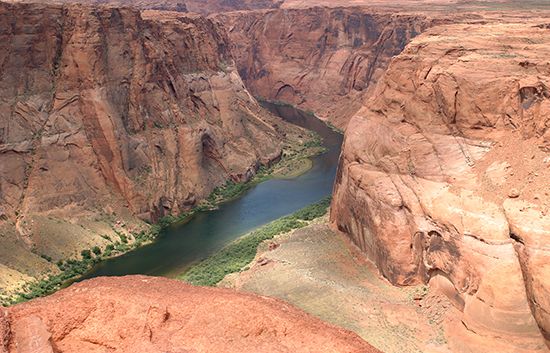
- The Colorado River (Southwest): This major North American river rises in the Rocky Mountains of Colorado and flows 1,450 miles to the Gulf of California in Mexico. Often called the “Lifeline of the Southwest,” it drains a vast arid region across seven U.S. states. It is heavily managed through a complex system of dams, such as the Hoover Dam and Glen Canyon Dam, which provide water for irrigation, hydroelectric power, and municipal use in cities like Phoenix and Los Angeles.12
- The Colorado River (Texas): This river rises in western Texas on the Llano Estacado and flows 862 miles southeast to enter Matagorda Bay. It is the largest river located entirely within Texas and features a series of reservoirs known as the Highland Lakes.3
How do dams like the Hoover Dam impact the river’s ecosystem?
Dams like the Hoover Dam have fundamentally altered the Colorado River ecosystem by disrupting natural processes and native habitats.25
Environmental Impacts
- Sediment Trapping: Dams impound water, causing flow velocity to decrease and sediment to deposit in reservoirs rather than moving downstream. This deprives the river of the material needed to maintain sandbars and channel beds.24
- Channel Erosion: Because released water is largely free of its natural sediment load, it possesses increased “transporting capacity,” which leads to significant erosion of the downstream river channel.46
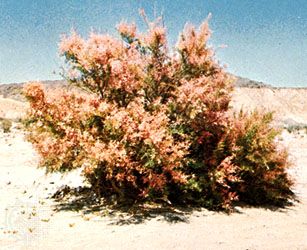
- Habitat Disruption: Dams restrict the movement of fish and alter the thermal climate of the water, which can be detrimental to native species. In the Colorado basin, these changes—along with the introduction of invasive species like the tamarisk—have led to the decline of native fish populations, such as the humpback chub and razorback sucker.75
- Flow Modification: To mitigate these effects, the U.S. Department of the Interior has experimented with releasing large, controlled flows during spring to mimic natural floods, aiming to redistribute sediment and flush out contaminants.2
What are the main causes of water scarcity in the Colorado River basin?
Water scarcity in the Colorado River basin is driven by several interconnected factors:
- Over-apportionment: Initial water allocation agreements, such as the 1922 Colorado River Compact, were based on data from an abnormally wet period. It was later discovered that the river’s actual annual flow is significantly lower than the amounts promised to the seven basin states and Mexico, leading to a system that is fundamentally over-allocated2.
- Intense Demand: The river is heavily utilized for irrigation, municipal water supplies for rapidly growing cities like Phoenix and Los Angeles, and hydroelectric power generation. Water is often diverted across basins to support these needs, leaving the river a mere trickle by the time it reaches its delta.212
- Environmental and Climatic Pressures: The basin faces ongoing challenges from drought and the potential impacts of global climatic change. Additionally, invasive species like the tamarisk consume large quantities of water through high rates of transpiration, further straining the limited supply.24
How does the Colorado River Compact influence modern water management?
The Colorado River Compact of 1922 remains a foundational, albeit problematic, influence on modern water management. By dividing the river at Lees Ferry into upper and lower basins, it established the framework for federal investment in large-scale infrastructure, such as the Hoover Dam and the Central Arizona Project.2
However, the compact’s legacy is defined by two major challenges:
- Over-apportionment: The agreement was based on flow estimates from an abnormally wet period. Because the actual annual supply is significantly lower than the allocated amounts, the basin is perpetually over-committed, leading to ongoing litigation and intense competition among states.2
- Policy Evolution: The rigid allocation model has forced modern managers to move beyond simple dam construction. Today, the system serves as a “laboratory” for water-resource innovation, shifting focus toward policy analysis, environmental protection, and flow modification to mitigate the ecological damage caused by decades of intensive diversion.2
Sources
- Colorado River — Encyclopædia Britannica
- Colorado River - Economic development — Encyclopædia Britannica
- Colorado River — Encyclopædia Britannica
- Colorado River - Plant and animal life — Encyclopædia Britannica
- reservoir — Encyclopædia Britannica
- lake - The water budget — Encyclopædia Britannica
- dam - Fish passes — Encyclopædia Britannica
- U.S. Bureau of Reclamation — Encyclopædia Britannica
- dam - Rise of environmental and economic concerns — Encyclopædia Britannica
- Hoover Dam — Encyclopædia Britannica
- Yangtze River - Human impact on the environment — Encyclopædia Britannica
- Rocky Mountains - Water resources — Encyclopædia Britannica
Published on · 3 min read