Colossal Squid
The colossal squid (Mesonychoteuthis hamiltoni) is a massive, elusive cephalopod that inhabits the cold, deep waters of the Southern Ocean. Often considered…
What is colossal squid?
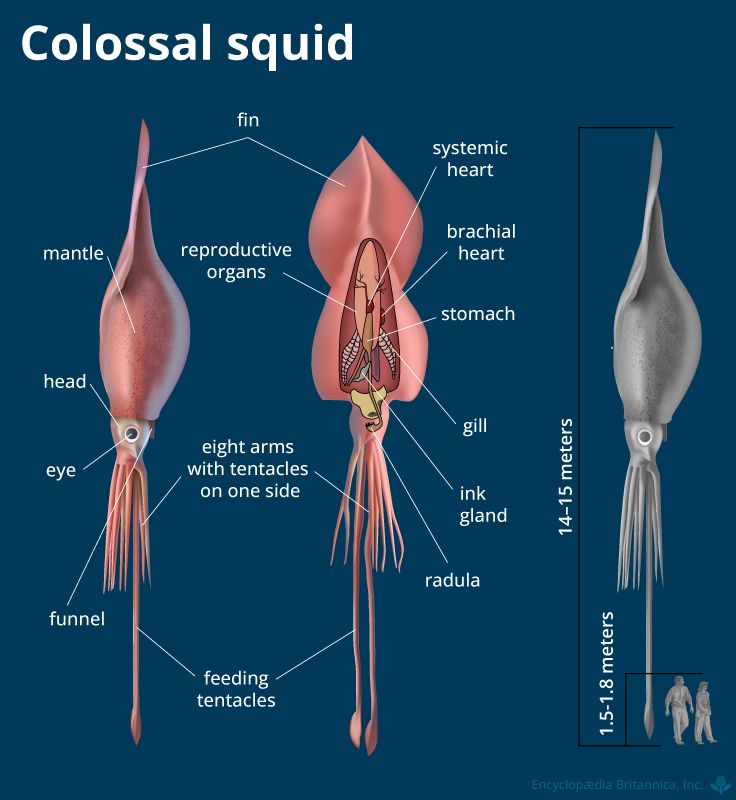
The colossal squid (Mesonychoteuthis hamiltoni) is a massive, elusive cephalopod that inhabits the cold, deep waters of the Southern Ocean. Often considered the world’s largest invertebrate, it shares this title with the giant squid, though the colossal squid is generally heavier and more robust.123
Key characteristics include:
- Physicality: It possesses the largest eyes of any animal, measuring approximately 27 cm (10 inches) in diameter. Its arms are equipped with rows of sharp, rotating hooks used for grabbing prey.1
- Size: While data is limited due to the species’ rarity, some researchers estimate they can reach lengths of up to 14 meters (46 feet) and weights exceeding 500 kg (1,102 pounds).12
- Habitat: They are circumpolar, typically found at depths between 20 and 2,000 meters.1
- Diet: They prey on fishes, such as toothfish, and other squids, while serving as prey for sperm whales.1
How do the eyes of a colossal squid help it survive in the deep ocean?
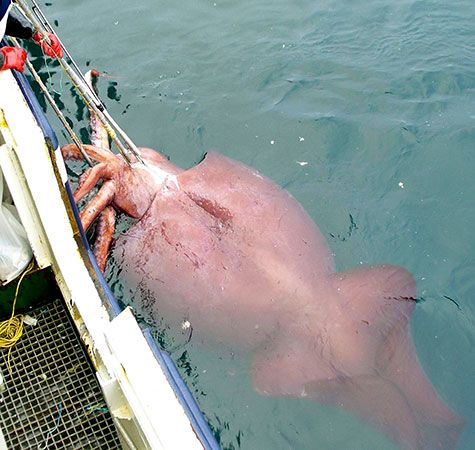
The colossal squid (Mesonychoteuthis hamiltoni) possesses the largest eyes of any animal in the world, measuring approximately 27 cm (10 inches) in diameter. These massive organs are essential for survival in the extreme, light-deprived depths of the Southern Ocean, where the species resides at depths ranging from 20 to 2,000 meters.3
The colossal squid’s visual system is highly specialized to support its life in the deep sea:
- Advanced Processing: The squid’s brain features two large optic lobes specifically dedicated to processing the vast amount of visual information captured by its massive eyes.3
- Lens-Based Vision: Like other cephalopods, the colossal squid utilizes lens eyes. These eyes are spherical and contain a gradient-index lens, which allows for the formation of high-quality, bright images by focusing light onto the retina. This structure is particularly advantageous for gathering light in the dim environment of the deep ocean.2
- Detection of Bioluminescence: While specific behavioral studies on the colossal squid are limited due to its elusive nature, its large eyes are likely adapted to detect bioluminescence—the light produced by other deep-sea organisms. Detecting such light is a critical survival strategy for many deep-sea creatures, allowing them to locate prey, recognize members of their own species, or identify potential threats in the darkness.3567
What are the main differences between a colossal squid and a giant squid?
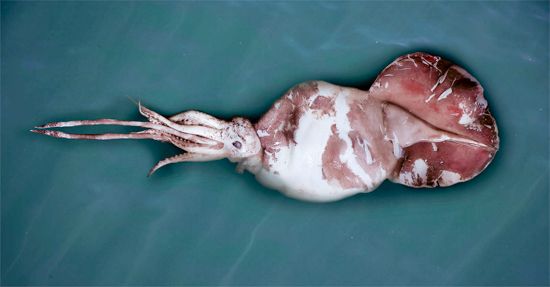
The colossal squid (Mesonychoteuthis hamiltoni) and the giant squid (Architeuthis) are both considered the world’s largest invertebrates, and there is ongoing scientific debate regarding which species holds the title for the greatest size. While they share many similarities, they possess distinct physical and biological differences:11212
Feature
Colossal Squid
Giant Squid
Body Build
Heavier and more robust.
Generally more slender.
Weight
Can weigh more than 500 kg (1,102 pounds).
Can reach weights up to a ton (907 kg).
Length
Combined length up to 14 meters (46 feet).
Maximum examined length is roughly 13 meters (43 feet).
Armament
Arms and tentacles feature sharp, rotating hooks.
Tentacles typically feature suckers with toothed, horny rings.
Habitat
Primarily the
Southern Ocean
(circumpolar).
Found in various oceanic regions, including the
North Pacific
.
Both species are elusive, deep-sea cephalopods that serve as prey for sperm whales. Because they inhabit such extreme depths, much of our understanding remains based on limited specimens and rare observations.234
Why is it so difficult for scientists to study deep-sea creatures like the colossal squid?
Studying deep-sea creatures like the colossal squid (Mesonychoteuthis hamiltoni) presents significant challenges for scientists primarily due to the extreme and inaccessible nature of their habitat.
The difficulties in research stem from several key factors:
- Extreme Depths: The colossal squid inhabits the cold, deep regions of the Southern Ocean at depths ranging from 20 to 2,000 meters. These depths are rarely visited by humans, making direct observation exceptionally difficult.2
- Opaque Environment: The deep ocean is opaque to light, meaning the seafloor and its inhabitants cannot be seen from the surface. While modern sonar and underwater cameras have improved our capabilities, the vastness of the ocean makes locating elusive species like the colossal squid a rare occurrence.2133
- Limited Specimens: Because the species is so elusive, there are very few specimens in scientific institutions worldwide. Most of our current knowledge is derived from a handful of dead individuals, which limits the ability of researchers to assess population trends or understand their life cycles.214
- Fragility and Sampling: Marine biologists face challenges in obtaining representative samples. Traditional methods, such as midwater trawls, are often insufficient for capturing fast-swimming or deep-dwelling organisms without damaging them, and the fragility of these creatures makes maintaining them in laboratory settings difficult.315
Sources
- colossal squid — Merriam-Webster
- colossal squid — Encyclopædia Britannica
- How Big Is the Giant Squid? — Encyclopædia Britannica
- squid — Encyclopædia Britannica
- Marine bioluminescence — Encyclopædia Britannica
- Bioluminescence - The role of bioluminescence in behavior — Encyclopædia Britannica
- Photoreception - Pinhole eyes — Encyclopædia Britannica
- Photoreception - Lens eyes — Encyclopædia Britannica
- cephalopod - Behaviour — Encyclopædia Britannica
- Photoreception - Concave mirror eyes — Encyclopædia Britannica
- colossal squid: Top Questions — Encyclopædia Britannica
- giant squid: Top Questions — Encyclopædia Britannica
- ocean basin - Exploration of the ocean basins — Encyclopædia Britannica
- Marine biology — Encyclopædia Britannica
- undersea exploration - Collection of biological samples — Encyclopædia Britannica
Published on · 4 min read