Ear Shell
The term "ear shell" is most commonly used to refer to marine snails in the genus Haliotis, which are also widely known as abalone. These gastropods are…
What is the scientific name for ear shell gastropods, and why are they called that?
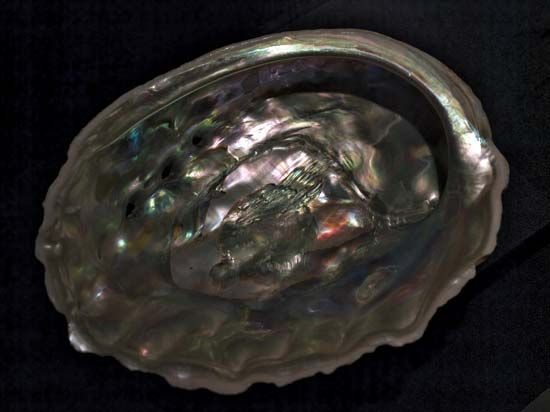
The term “ear shell” is most commonly used to refer to marine snails in the genus Haliotis, which are also widely known as abalone. These gastropods are called “ear shells” because their characteristic planispiral shell features a broad, oblique aperture that gives it an earlike shape.1
It is important to note that the term can be ambiguous; while it typically refers to the family Haliotidae, it is also sometimes used to describe gastropods in the family Ellobiidae, which are likewise named for their ear-shaped shells.2
Where are ear shell gastropods commonly found in nature?
Ear shell gastropods, commonly known as abalone, are found in warm seas across the globe. They typically inhabit the shallow waters of rocky shores, where they live attached to rocks by a large, muscular foot.12
Their distribution is widespread, though specific species are concentrated in certain regions. For instance, several notable species are found along the western coast of North America, including the red, green, black, and pink abalones. Due to their ecological and commercial significance, these gastropods are also cultivated in hatcheries and farms in various locations, including Australia, Japan, China, and the United States.21
Because of overexploitation, many natural populations have been reduced, leading to the implementation of catch limits and protective measures in several parts of the world.2
What are the key characteristics of ear shell gastropods?
Ear shell gastropods, primarily belonging to the genus Haliotis and family Haliotidae, are defined by several distinct biological and physical characteristics:
- Shell Morphology: They possess a characteristic planispiral shell with a broad, oblique aperture, which creates their signature earlike shape. The spiral coiling is minimal, as the final body whorl occupies more than 90 percent of the shell’s total volume.12
- Perforations: A defining feature is a series of holes along the outer surface of the shell. These perforations are used to direct water flow and serve as outlets for the snail’s waste products.16
- Internal Composition: The interior of the shell is nacreous, often displaying iridescent greens and blues, and is highly valued for ornamental use.16
- Feeding and Habitat: These gastropods are herbivores that feed on algae. They live in shallow, rocky coastal waters, where they remain firmly attached to surfaces using a large, muscular foot.16
While the term “ear shell” is most commonly associated with the Haliotidae family, it is also occasionally used for the family Ellobiidae, which are pulmonate snails characterized by conoidal shells with strongly toothed, ear-shaped apertures.7
What role do ear shell gastropods play in marine ecosystems?
Ear shell gastropods, or abalone, play a significant role in marine ecosystems primarily as herbivores. By feeding on algae, they help regulate algal growth on rocky substrates in shallow coastal waters worldwide.1
Beyond their role as grazers, these gastropods are integral components of the food web in their respective habitats. Their presence supports biodiversity, though they are also subject to significant human impact. Due to their status as a delicacy and the value of their nacreous shells for ornamental use, many populations have faced severe decline from overexploitation. This has necessitated the implementation of strict catch limits and protective measures to prevent further loss of these species in their natural environments.12
While they are essential to the health of rocky shore ecosystems, their populations are increasingly managed through commercial cultivation in hatcheries to reduce pressure on wild stocks.12
Sources
- ear shell — Encyclopædia Britannica
- abalone — Encyclopædia Britannica
- gastropod - Classification — Encyclopædia Britannica
- ear shell — Merriam-Webster
- ear snail — Merriam-Webster
- Ellobiidae — Merriam-Webster
- gastropod - The shell — Encyclopædia Britannica
- mollusk - Muscles and tissues — Encyclopædia Britannica
Published on · 3 min read