Columbia River
The Columbia River served as a vital transportation artery for the Corps of Discovery during the final stages of their journey to the Pacific Ocean and their…
What role did the Columbia River play in the Lewis and Clark expedition?
The Columbia River served as a vital transportation artery for the Corps of Discovery during the final stages of their journey to the Pacific Ocean and their subsequent return trip.12
After crossing the Bitterroot Range and reaching the Nez Percé villages, the expedition constructed canoes and traveled down the Clearwater and Snake rivers to reach the Columbia on October 16, 1805. They followed the river to its mouth, where they spent a difficult winter at Fort Clatsop near present-day Astoria, Oregon.12
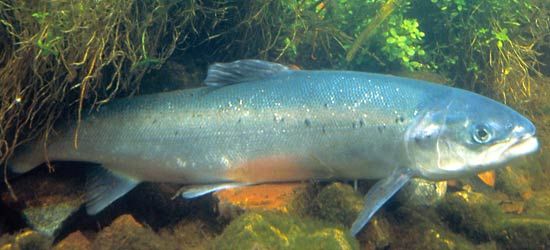
In the spring of 1806, the expedition used the Columbia River as their primary route to begin their journey back toward the Missouri River. Throughout their time in the region, the explorers relied on the river’s path to navigate the interior, while also documenting the local geography and the abundance of salmon that sustained the indigenous populations.213
How has the Columbia River been important for transportation and trade in the Pacific Northwest?
The Columbia River has been a cornerstone of commerce and transportation in the Pacific Northwest for centuries, evolving from a natural corridor for indigenous trade to a highly engineered industrial artery.
Early Transportation and Trade
Historically, the river served as the primary sea-level route to the interior. Before the arrival of railroads, it was the essential path for fur traders, explorers, and early immigrants who utilized canoes, barges, and later, river steamers to navigate the basin. The river’s strategic importance led to the establishment of key trading posts, such as Fort Astoria, Fort Vancouver, and Fort Walla Walla. By the mid-19th century, Portland dominated the region’s agricultural and mining trade by monopolizing river steamer transport.3
Modern Infrastructure and Navigation
The river’s role was transformed in the 1930s through the construction of major dams, including Grand Coulee and Bonneville. These projects converted the river into a series of “stair steps” with large navigation locks, enabling barge traffic to reach as far inland as Lewiston, Idaho. Today, dredged channels allow oceangoing vessels to reach ports in Portland and Vancouver.45
Economic Impact
Beyond navigation, the river is a vital source of hydroelectric power and irrigation, supporting the Columbia Basin Irrigation Project. While the river remains an economic powerhouse, its development has sparked long-standing controversies regarding the protection of salmon populations and the rights of indigenous peoples.34
What indigenous peoples have historically lived along the Columbia River, and how did they use the river?
Numerous Native American peoples have inhabited the Columbia River basin for thousands of years, with the river serving as a central element of their cultures and economies.
Indigenous Peoples of the Basin
The river basin was home to diverse groups, including the Chinook, who lived from the river’s mouth to The Dalles, and various Salish tribes, such as the Coeur d’Alene, Flathead, and Okanagon, who resided in the upper basins and tributaries.378
Use of the River
- Economic Foundation: The river was a rich source of salmon, which formed the basis of the regional economy. Groups like the Chinook traded dried fish extensively with both coastal and interior peoples.8
- Trade Thoroughfare: The Columbia functioned as a major indigenous thoroughfare. The Chinook, in particular, were renowned traders, facilitating the exchange of goods such as slaves, Nuu-chah-nulth canoes, and dentalium shells. This trade network was supported by Chinook Jargon, a trade language used across a vast territory.8
- Cultural Significance: The river was central to spiritual life, exemplified by the “first-salmon rite,” a ritual welcoming the annual salmon run. Additionally, many groups practiced the vision quest to acquire guardian spirits for personal power and guidance.78
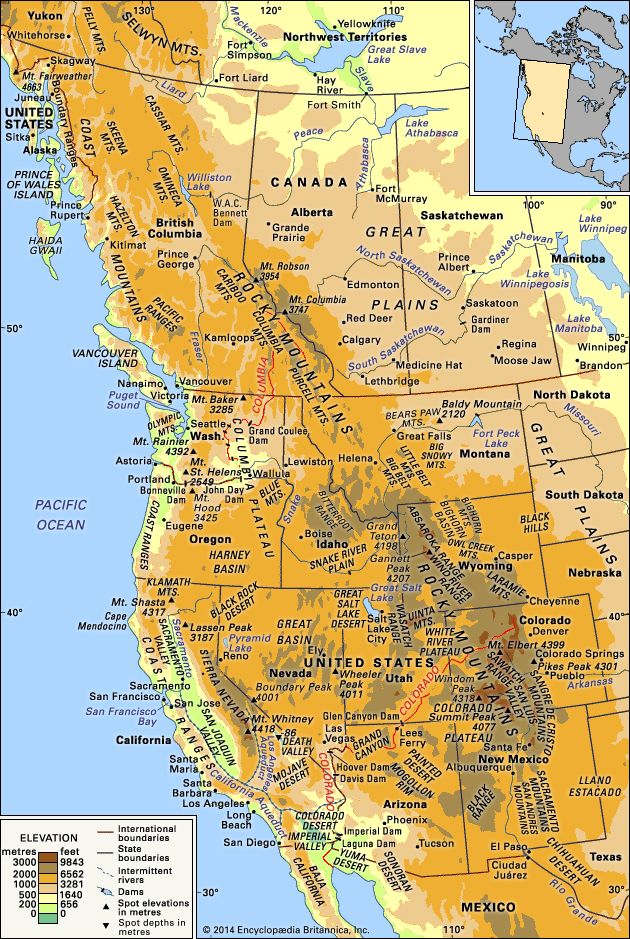
What is the geographical location and extent of the Columbia River?
The Columbia River is the largest river in North America flowing into the Pacific Ocean. It spans a total length of 1,240 miles (2,000 km), with approximately 500 miles (800 km) of its course located in Canada and the remainder in the United States.9
Geographical Course
The river originates at Columbia Lake in British Columbia, near the Rocky Mountains, at an elevation of 2,700 feet (820 meters). Its path is defined by several distinct segments:
- Upper Course: It flows northwesterly for 190 miles (305 km) before turning south for 270 miles (435 km) to enter northeastern Washington.9
- Central Basin: It traverses east-central Washington in a curve known as the Big Bend.9
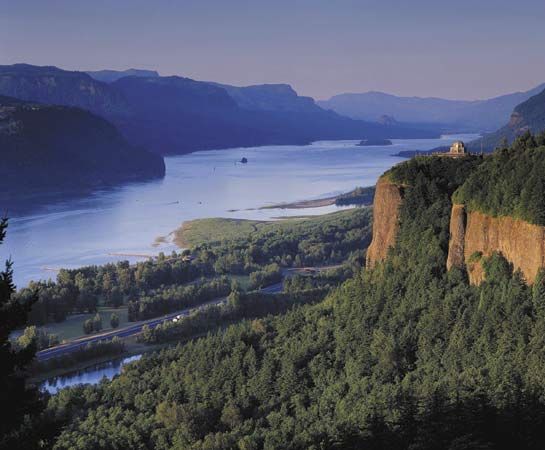
- Lower Course: After its confluence with the Snake River, the Columbia turns west, forming the border between Oregon and Washington, and cuts through the Cascade Range before reaching the ocean at Astoria.9
The river drains a watershed of approximately 258,000 square miles (668,000 square km).9
Sources
- Lewis and Clark Expedition - Expedition from May 14, 1804, to October 16, 1805 — Encyclopædia Britannica
- Lewis and Clark Expedition - Pacific Ocean and return — Encyclopædia Britannica
- Columbia River - History — Encyclopædia Britannica
- Columbia River - Economy of the Columbia River — Encyclopædia Britannica
- Columbia River - Physiography and hydrology — Encyclopædia Britannica
- American Fur Company — Encyclopædia Britannica
- Salish — Encyclopædia Britannica
- Chinook — Encyclopædia Britannica
- Columbia River — Encyclopædia Britannica
- Columbia River - Climate — Encyclopædia Britannica
Published on · 4 min read