Commelinales
The order Commelinales includes several plants that are commonly recognized as garden ornamentals, houseplants, or aquatic species. These plants belong to…
What are some common examples of Commelinales plants that people might recognize?
The order Commelinales includes several plants that are commonly recognized as garden ornamentals, houseplants, or aquatic species. These plants belong to five distinct families, with the spiderwort family (Commelinaceae) being the most familiar to many gardeners.1
Commonly recognized examples include:
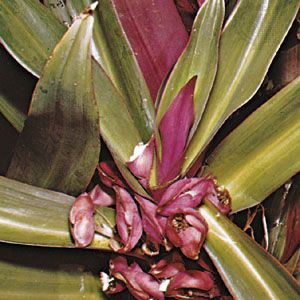
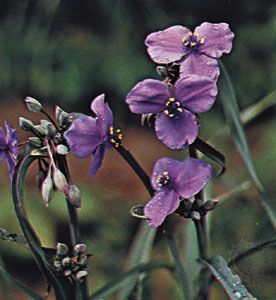
- Spiderworts and Relatives: The genus Tradescantia is widely known, featuring the common spiderwort (T. virginiana) and popular trailing plants often called wandering Jew (T. fluminensis, T. pallida, and T. zebrina). Another notable member is Moses-in-the-cradle, frequently kept as a houseplant for its distinct purple-toned foliage.1
- Dayflowers: Members of the dayflower genus (Commelina) are often grown for their vibrant blue flowers.1
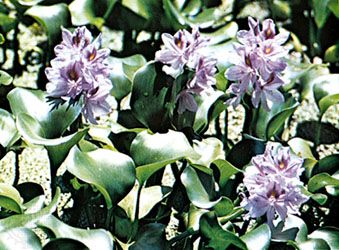
- Aquatic Plants: The pickerelweed family (Pontederiaceae) includes the water hyacinth, a well-known aquatic plant found in tropical and subtropical still waters.1
- Kangaroo Paws: Native to Australia, the kangaroo paws (Anigozanthos) are striking members of the bloodwort family (Haemodoraceae) recognized for their unique flower shapes and bright colors.1
How do scientists study and research Commelinales plants?
Scientists study and research plants in the order Commelinales by employing a combination of morphological, molecular, and experimental techniques.
Morphological and Microscopic Analysis
Researchers examine the physical structures of these plants, such as their rhizomatous growth, leaf arrangement, and floral organization. To investigate internal structures, scientists use advanced microscopy:
- Compound and Phase Microscopes: These allow for the study of plant tissues and cells, often utilizing staining techniques to highlight specific components like the nucleus.
- Electron Microscopy: The electron microscope and scanning electron microscope provide high-magnification, three-dimensional views of cell structures, helping researchers identify sites of biochemical activity like photosynthesis.1
Molecular and Evolutionary Research
Botanists classify and understand the relationships between the five families of Commelinales—Commelinaceae, Pontederiaceae, Haemodoraceae, Philydraceae, and Hanguanaceae—by analyzing shared characteristics. This includes studying:
- Molecular Evidence: DNA and genetic data help clarify evolutionary lineages, such as the placement of the genus Hanguana.2
- Shared Traits: Researchers look for commonalities like stomatal complexes, ultraviolet-fluorescent compounds in cell walls, and specific epicuticular waxes to group these plants within the Commelinids.2
Experimental Research
For studies on morphogenesis, scientists grow isolated organs, cell clumps, or individual cells in a culture medium to observe development under controlled conditions.1
Are there any rare or endangered species within the Commelinales order?
The provided Britannica knowledge base does not contain specific information regarding rare or endangered species within the Commelinales order. While the order comprises more than 800 species of mostly tropical and subtropical herbs, the available data does not identify which, if any, are currently classified as rare or endangered.
How have Commelinales plants evolved over time?
The evolutionary history of Commelinales is best understood through their classification as Commelinids, a group of advanced monocotyledons.
Historically, families such as Pontederiaceae, Haemodoraceae, Philydraceae, and Hanguanaceae were categorized within the lily order, Liliales. However, modern botanical research—specifically the Angiosperm Phylogeny Group (APG) system—has reorganized these families into the order Commelinales based on shared evolutionary traits. These defining characteristics include:
- Stomatal complexes: The presence of specific subsidiary cells.
- Cell wall chemistry: The existence of ultraviolet-fluorescent compounds.
- Epicuticular wax: The presence of the Strelitzia-type wax.
- Seed structure: The possession of starchy endosperm.
While morphological evidence occasionally suggests links to other groups, such as the Zingiberales (ginger order) for the genus Hanguana, molecular evidence strongly supports the current grouping of these five families. This reorganization reflects a deeper understanding of how these plants diverged and adapted, transitioning from their ancestral roots to the diverse terrestrial and aquatic herbs observed today.
Sources
- Commelinales — Encyclopædia Britannica
- Commelinaceae — Merriam-Webster
- botany - Morphological aspects — Encyclopædia Britannica
- magnoliid clade - Ecology and habitats — Encyclopædia Britannica
Published on · 3 min read