Butterflyfish
Butterflyfishes are typically found in tropical reef environments across the globe. While they inhabit various tropical waters, they are most heavily…
Where are butterflyfish typically found in the ocean?
Butterflyfishes are typically found in tropical reef environments across the globe. While they inhabit various tropical waters, they are most heavily concentrated in the Indo-Pacific oceanic region.1
These small, quick-moving fish generally frequent shallow inshore waters, where they utilize their specialized snouts to feed on coral polyps and various crustaceans. Their bright coloration and darting movements are well-adapted to the complex structures of these reef ecosystems.1
What are the defining characteristics of butterflyfish?
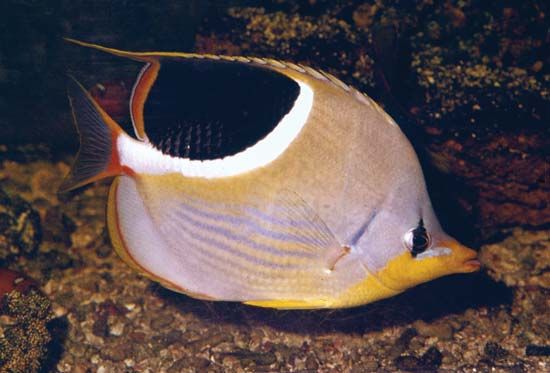
Butterflyfishes are small, quick-moving marine fish belonging to the family Chaetodontidae. They are defined by several distinct physical and behavioral characteristics:
- Body Shape: They are deep-bodied and laterally compressed (thin from side to side), typically reaching a maximum length of about 20 cm (8 inches).1
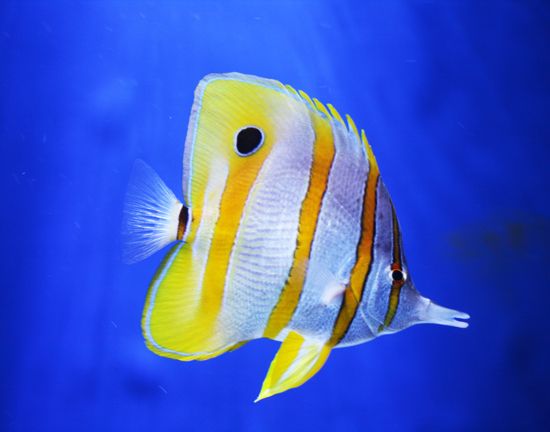
- Anatomy: They possess a single dorsal fin, often featuring strong, prominent spines on the front portion. Their mouths are small with tiny, bristlelike teeth, and in some species, the jaws are extended into a elongated snout.1
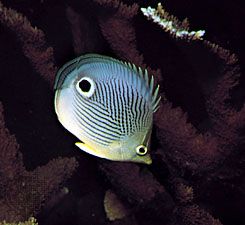
- Coloration: They are known for being very brightly colored, with black and yellow shades predominating. Many species display dark bands and large spots, known as ocelli, which are thought to confuse predators.1
- Behavior: They exhibit a characteristic flitting, darting motion while navigating tropical reef environments.1
- Diet: They primarily inhabit shallow inshore waters, where they feed on coral polyps and various crustaceans.1
While they are closely related to angelfishes, butterflyfish lack the sharp cheek spine that distinguishes the family Pomacanthidae.12
How many species of butterflyfish exist, and what are some notable examples?
There are approximately 115 species of butterflyfish recognized within the family Chaetodontidae. These species are organized into 12 genera, with the genus Chaetodon being the most diverse, containing nearly 90 of them.1
Notable examples of these fish include:
- Longnose (or copperband) butterflyfish (Chelmon rostratus): An Indo-Pacific species characterized by an elongated snout.1
- Long-snouted (or long-nosed) butterflyfish (Forcipiger flavissimus): A species found in the Atlantic that also features a drawn-out, specialized snout.1
- Foureye butterflyfish (Chaetodon capistratus): A common West Indian species distinguished by a white-ringed black ocellus (spot) near its tail.1
- Spotfin butterflyfish (C. ocellatus): A western Atlantic species known for its yellow fins and a dark spot located at the base of its dorsal fin.1
- Pennant coralfish (Heniochus acuminatus): An Indo-Pacific species featuring black-and-white stripes and a notably long spine on its dorsal fin.1
What role do butterflyfish play in coral reef ecosystems?
Butterflyfish play a significant role in the health and maintenance of coral reef ecosystems primarily through their feeding habits. As inhabitants of shallow inshore waters, these fish are specialized predators that consume a variety of small crustaceans and coral polyps.1
By feeding on coral polyps, butterflyfish act as active participants in the reef’s biological community. Their presence and movement patterns, characterized by a flitting and darting motion, contribute to the dynamic activity observed within tropical reef environments worldwide.1
We could dive deeper into how their specialized anatomy, such as their elongated snouts, allows them to access food sources that other reef fish cannot reach.
Sources
- butterflyfish — Encyclopædia Britannica
- angelfish — Encyclopædia Britannica
Published on · 3 min read